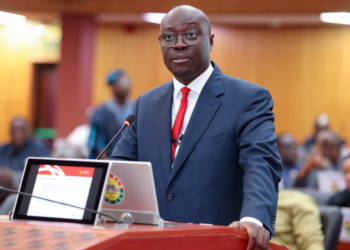
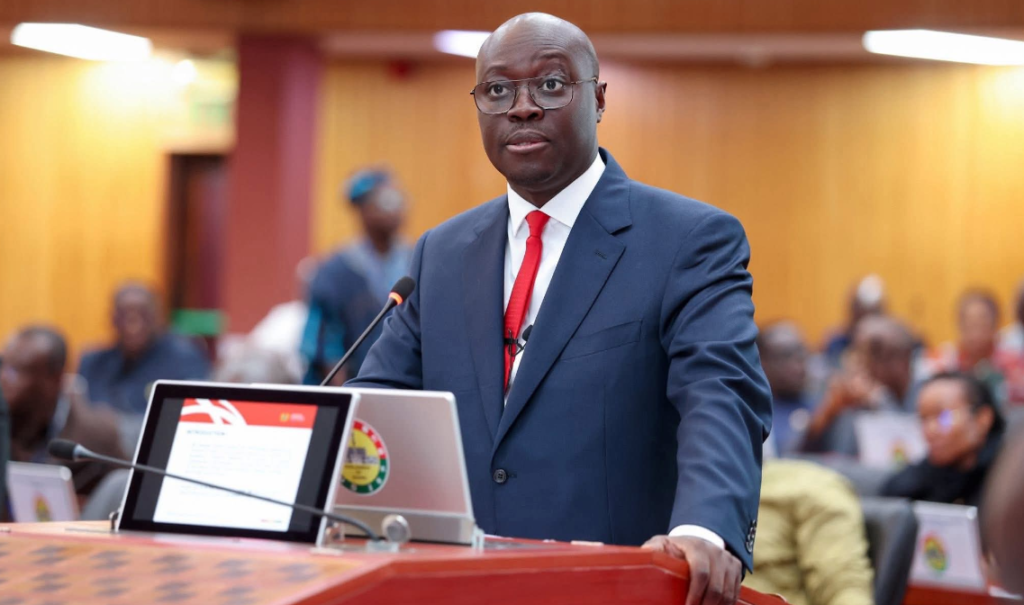
Ghana has made important strides in stabilising its economy, but the next big question is whether those gains can be sustained. Finance Minister Dr Cassiel Ato Forson is expected to address this challenge when he presents the 2027 Budget on November 12, 2026.
After two years of aggressive fiscal consolidation, debt restructuring and monetary tightening, the government faces a more complicated challenge: turning improved economic indicators into sustainable growth, productive investment and better living conditions.
The stakes are considerably higher this time. Inflation has declined, economic growth has strengthened, international reserves have improved and investor confidence has gradually returned. Yet these achievements have not automatically translated into enough decent jobs, stronger household incomes or a sufficiently competitive productive economy.
The 2027 Budget must therefore demonstrate whether Ghana can move beyond economic stabilisation without sacrificing the fiscal discipline that made the recovery possible.
The Recovery Has Created Expectations
Ghana’s economic performance provides the government with a stronger foundation than it inherited at the beginning of 2025. The country has made significant progress in restoring macroeconomic stability following the severe economic crisis that culminated in the 2022 debt default.
According to the International Monetary Fund (IMF), real Gross Domestic Product (GDP) expanded by 6.2 per cent year-on-year during the first half of 2026, with full-year growth projected at 5.7 per cent. The Fund has also described macroeconomic stability as increasingly entrenched following its first review of Ghana’s 36-month Policy Coordination Instrument.
These developments represent meaningful progress. However, headline economic growth alone cannot determine whether ordinary Ghanaians are experiencing a genuine improvement in their financial circumstances.
The Ghana Statistical Service has previously highlighted the disconnect between economic expansion and decent employment. The Government Statistician, Dr Alhassan Iddrisu, noted that the economy recorded six per cent growth in 2025, but that expansion had not translated sufficiently into gainful employment.
That distinction should shape the priorities of the incoming budget.
The New Economy Must Deliver More Than Promises
At the centre of the government’s 2027 economic agenda is the proposed US$10 billion New Economy programme, designed to accelerate investment in agriculture, manufacturing, infrastructure, technology and value addition between 2027 and 2030.
The programme represents an attempt to reposition Ghana’s economy from one heavily dependent on commodity exports and consumption towards production, industrialisation and export competitiveness.
Dr Forson has indicated that the budget will explain how the government intends to translate economic recovery into employment and higher incomes.
“Ghanaians made sacrifices to get our economy back on its feet. Now, that recovery must mean decent jobs for our young people, better incomes for our farmers and room for Ghanaian businesses to grow and hire.”
Dr Ato Forson
However, the programme’s success will depend on the quality of investment rather than the size of the financial commitment alone.
Ghana has previously announced ambitious industrialisation initiatives that struggled to deliver their expected economic impact. The 2027 Budget must provide credible implementation arrangements, measurable targets and clear timelines to prevent the New Economy agenda from becoming another collection of expensive policy ambitions.
Fiscal Discipline Faces a New Test
Perhaps the most important economic question confronting the Finance Minister is how to finance the proposed investment programme without reopening the debt vulnerabilities that plunged Ghana into crisis.
The IMF has indicated that the 2027 fiscal framework will target a primary surplus of 0.5 per cent of GDP on a commitment basis, compared with the 1.5 per cent target for 2026.
The adjustment is intended to create additional fiscal space for productive investment while maintaining a primary surplus.
The government has also indicated that the New Economy programme will be financed through additional domestic revenue mobilisation and the reallocation of fiscal resources rather than fresh government borrowing.
Dr Forson recently explained that the financing arrangement would involve allocating 0.5 per cent of GDP from additional revenue and using the fiscal space created by reducing the primary surplus target.
The IMF, however, has stressed that the available resources must be protected through rigorous project appraisal, competitive procurement and strict expenditure controls.
This is particularly important given Ghana’s history of cost overruns, poorly prioritised projects and fiscal commitments that have placed pressure on public finances.
The challenge is not simply finding money to invest. It is ensuring that every cedi allocated generates measurable economic value.
Revenue Mobilisation Cannot Be Ignored
Ghana’s ability to sustain higher development expenditure will depend heavily on its capacity to expand domestic revenue.
The IMF has identified improvements in customs administration, excise reforms and electronic fiscal devices as important measures for strengthening non-oil revenue collection.
This is critical because excessive dependence on gold, cocoa and crude oil exposes government finances to international commodity price movements.
A broader and more efficient tax base would give the government greater flexibility to finance infrastructure, education, healthcare and industrial development without repeatedly turning to borrowing.
Nevertheless, revenue mobilisation must be carefully balanced against the need to support private-sector expansion. Businesses already face operational costs, financing constraints and infrastructure challenges. An approach that increases their tax burden without improving the business environment could undermine the very investment and employment objectives the government wants to achieve.
Jobs and Productivity Will Define Success
The real test of the 2027 Budget will ultimately be whether it improves the productive capacity of the economy.
Agriculture must become more commercially viable through irrigation, mechanisation, storage and agro-processing. Manufacturing requires affordable financing, reliable energy and improved access to export markets.
Small businesses also need more than policy announcements. They require access to credit, technology, infrastructure and opportunities to expand into larger, more competitive enterprises.
As economist Professor Godfred Alufar Bokpin has cautioned, Ghana must deliberately direct investment towards sectors capable of generating employment.
“The growth that we have celebrated have come from less desirable areas. We need to direct investment into sectors that when you get a business, you also get employment.”
Godfred Alufar Bokpin
The Budget Must Prove Recovery Can Last
Ghana enters the 2027 fiscal year with stronger macroeconomic foundations but substantial development challenges.
Debt sustainability, revenue mobilisation, private-sector credit, employment creation and exposure to external shocks remain important considerations. The IMF has specifically warned about commodity price volatility, energy-sector pressures and domestic debt rollover requirements.
Consequently, the next budget must strike a difficult balance between investing for growth and preserving fiscal credibility.
The government has already demonstrated that it can pursue economic stabilisation through difficult policy decisions. Its next challenge is to demonstrate that those sacrifices can produce lasting economic benefits.
Ultimately, Ghana’s 2027 Budget should not be judged simply by how much government intends to spend or how many initiatives it announces. Its true measure will be whether businesses become more productive, jobs become more accessible, household incomes improve and the economy becomes less vulnerable to recurring financial crises.
The era of stabilisation has created an opportunity. Whether Ghana can turn that opportunity into sustainable prosperity will depend on the economic choices made in the 2027 Budget.
READ ALSO: Ghana Stocks Extend Monthly Losses Despite 777% Turnover Explosion