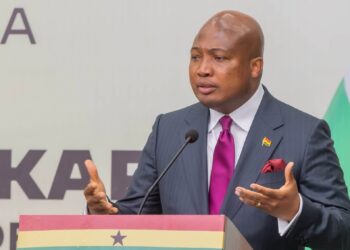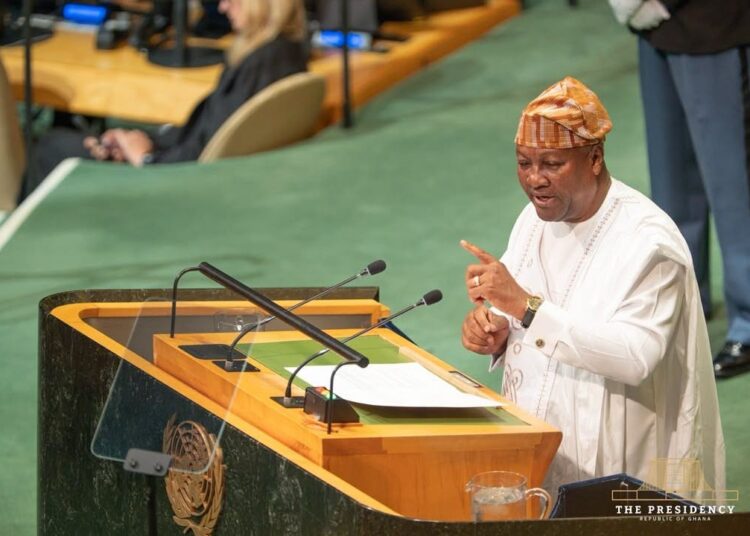
President John Dramani Mahama has demanded permanent African representation on the United Nations Security Council, telling the General Assembly that a continent of 1.5 billion people cannot remain excluded from the body that decides on war and peace.
He delivered Ghana’s national statement on Thursday, 24 September 2026, during the General Debate of the 81st Session in New York. The President linked that exclusion to a wider pattern, arguing that the same inequalities shape what developing countries pay to borrow and who profits from African minerals.
He closed with a warning that the international system itself is breaking down, drawing a comparison with the collapse of the League of Nations.
The Numbers Behind The Demand
President Mahama opened with arithmetic. Africa is home to 1.5 billion people, more than 18 per cent of humanity, and constitutes the largest regional voting bloc in the General Assembly, yet holds no permanent seat on the Security Council. “This is fundamentally unacceptable in the 21st century,” he said.
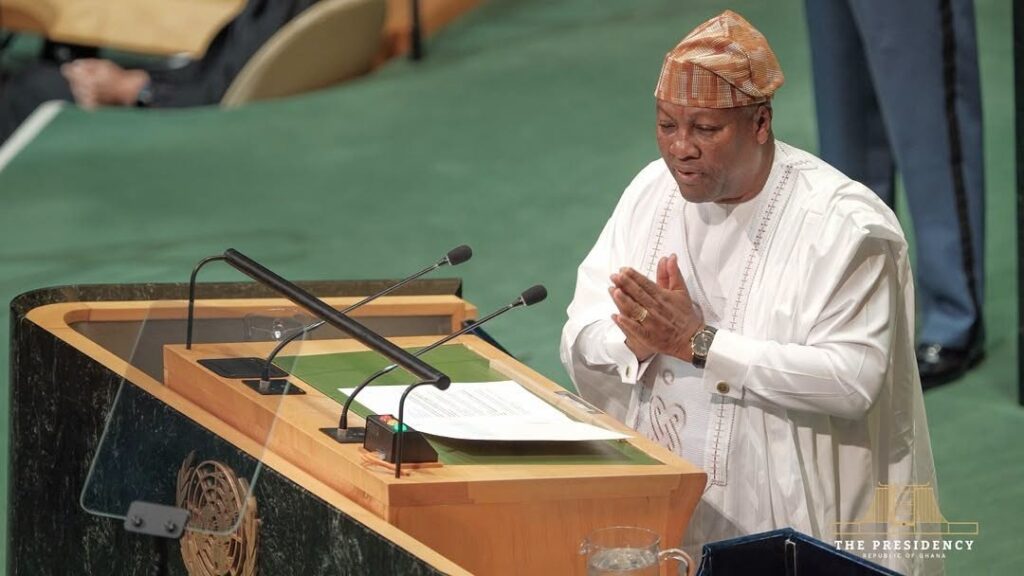
His demand was specific rather than aspirational. “Africa must be granted permanent representation on the UN Security Council, complete with all the rights and responsibilities,” he said, language that points to the veto rather than a seat without it.
That phrasing aligns Ghana with the African Union’s long-standing position, which calls for two permanent seats with full veto powers and additional non-permanent seats for the continent.
Not A Favour To Africa
The President rejected the framing that reform would be a concession granted to Africa by those who currently hold power. “Security Council reform is not a favour to Africa. It is an imperative for the legitimacy, the credibility and the survival of the United Nations,” he said.
He built that on a charge of inconsistency, arguing that the organisation cannot credibly champion the sovereign equality of nations while preserving a governance structure designed for post-war geopolitical realities that no longer exist.
The argument targets the institution’s self-interest rather than its conscience. A Council seen as unrepresentative by most member states loses the authority its decisions depend on.
Borrowing At Eight Times The Rate
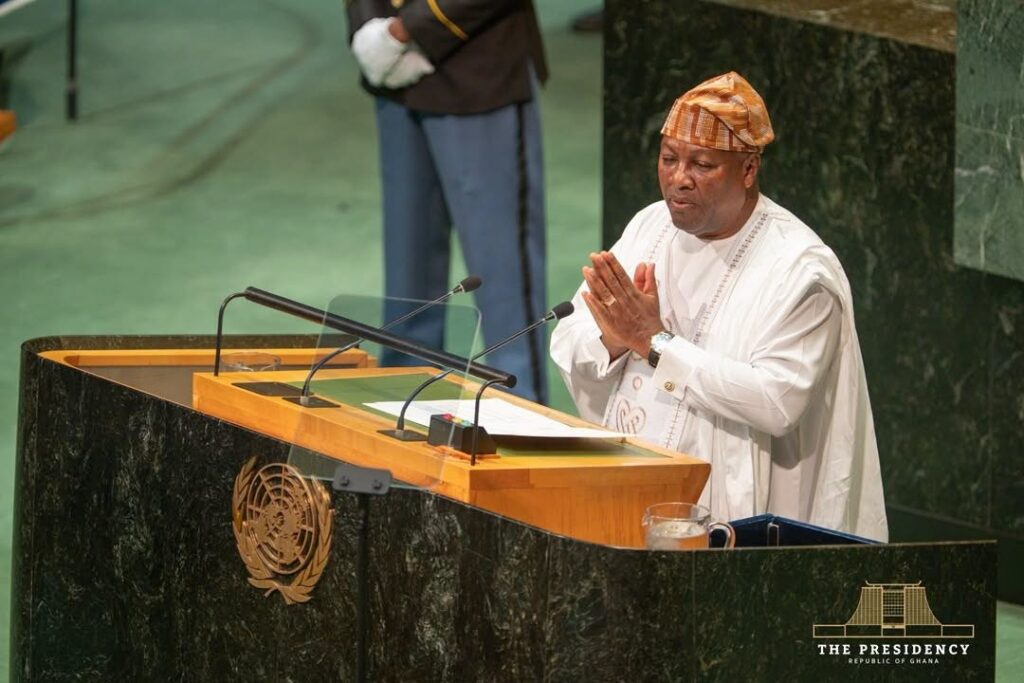
President Mahama then turned to money, where he said the same systemic inequalities apply. Developing nations and the Global South, he told the Assembly, borrow at interest rates up to eight times higher than industrialised countries.
African and Caribbean nations struck by climate disasters, he said, are forced into crippling debt to rebuild from floods and droughts they did not cause, leaving governments with an impossible allocation. “Governments are forced into a tragic choice to service predatory debts or to serve their people,” he said.
His demand was for long-term, affordable and accessible concessionary financing that would let developing economies invest in human capital, industrialisation and climate adaptation.
No New Scramble For Minerals
The section on resources carried the address’s sharpest language. President Mahama listed what Africa brings to the global economy: the world’s youngest population, vast arable land, cultural vitality and the critical minerals required for the green energy transition.
He then set a boundary. “Africa will not remain a passive arena for a new scramble for resources,” he said, insisting that critical mineral extraction must not replicate colonial era exploitation.
What he proposed instead was value retention. “We will process our minerals at home,” he said, adding that Africa would build local industries creating dignified jobs for its youth and keep the value of its natural resources on the continent.
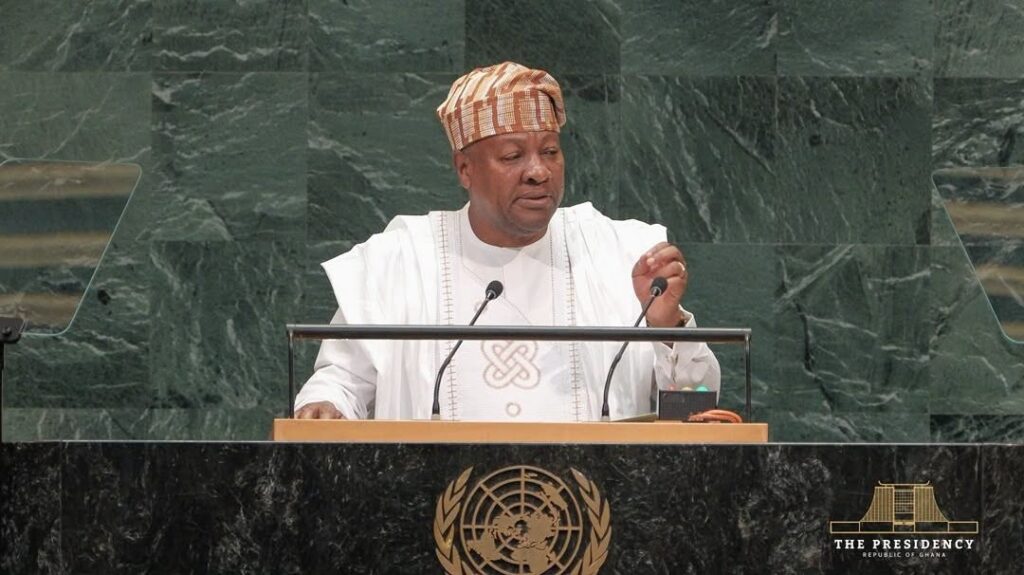
He pointed to the African Continental Free Trade Area, whose secretariat Ghana hosts in Accra, as the engine for intra-African trade, structural transformation and industrial growth.
The framing is one he has used consistently. “Africa does not seek charity. Africa seeks equal partnership,” he said, anchoring that partnership in mutual respect.
A Warning About The Global Order
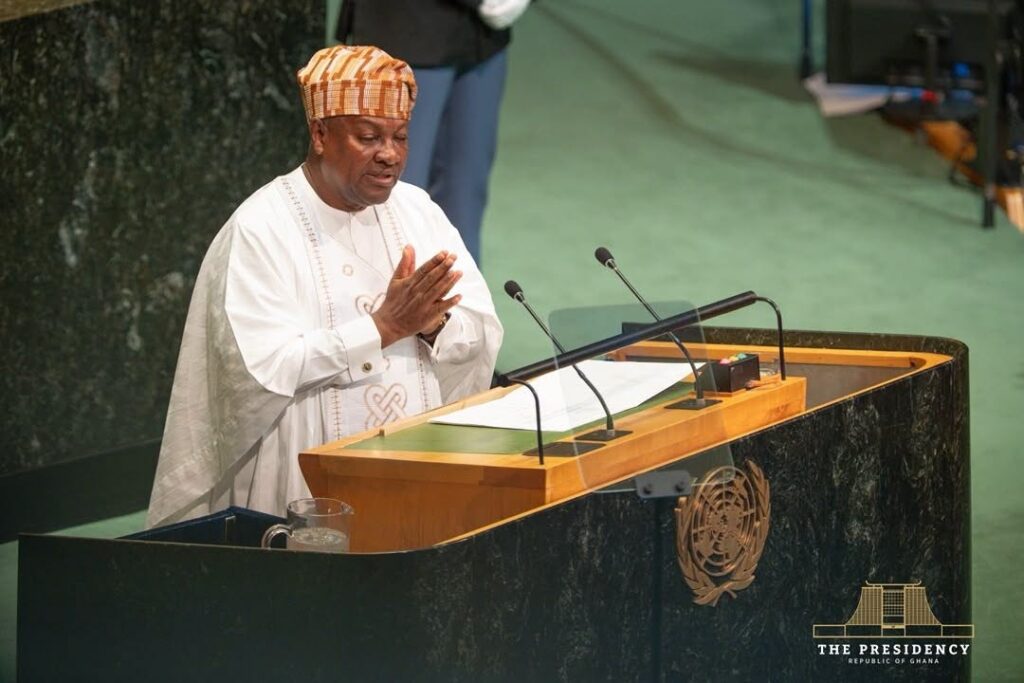
The final section moved from grievance to alarm. President Mahama described a dangerous shift towards unilateralism, lawlessness and the erosion of multilateral norms, and urged the United Nations to learn from the fate of the League of Nations, which collapsed when its members ignored its rules.
“The UN Charter must reign supreme over the cynical doctrine that might makes right. The veto power must never serve as a licence for impunity; sovereign equality cannot be a privilege that is reserved only for nations that are aligned with global superpowers.”
President John Dramani Mahama
Neither remark named a state, but the address comes as fighting involving the United States, Israel and Iran has continued through a closed Strait of Hormuz and a naval blockade, with the Security Council unable to produce a binding response.
The Obstacle He Did Not Mention
The route President Mahama is demanding runs through Article 108 of the Charter, which requires any amendment to be ratified by two-thirds of member states, including all five permanent members. The countries holding the veto would therefore have to agree to dilute it.
That has kept reform stalled for more than three decades. What has changed for Ghana is leverage, since it carried a reparations resolution through this Assembly in March and takes the African Union chairmanship in January, giving it a platform to hold the continent’s 54 votes behind one position.
READ ALSO: Stable Utility Tariffs Limit Ghana’s Q4 Inflation Pressure