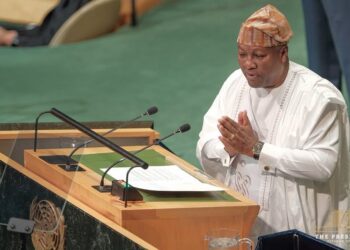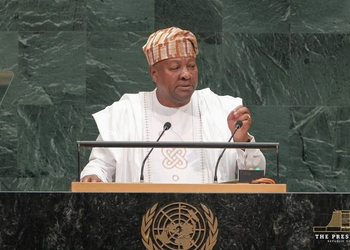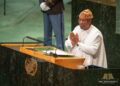
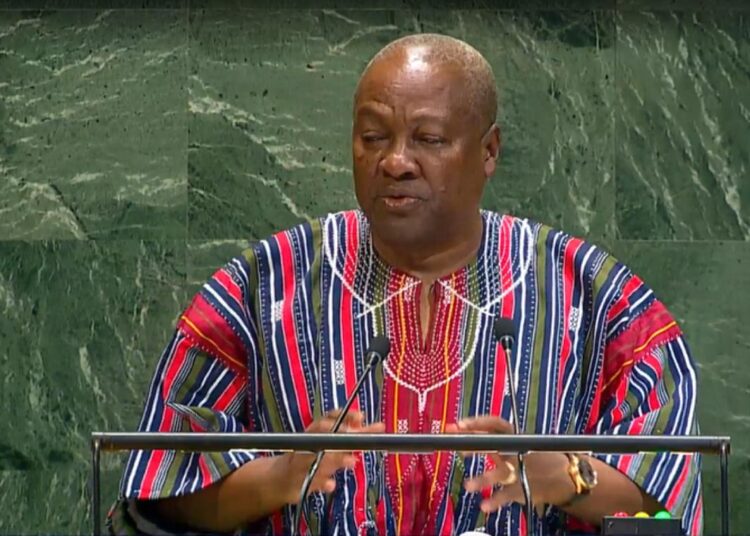
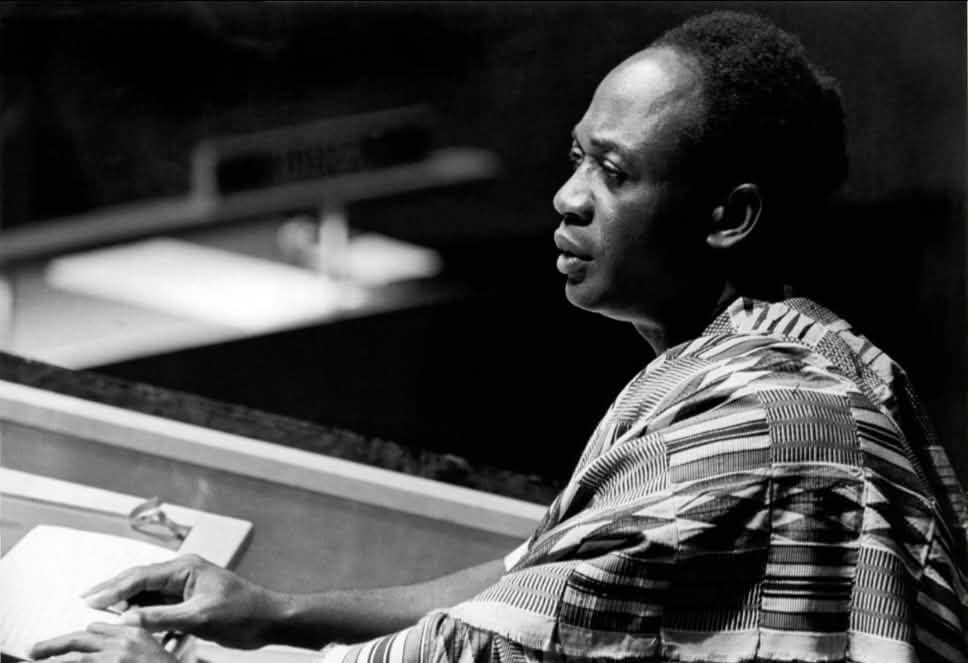
President John Dramani Mahama will deliver Ghana’s 25th presidential address to the United Nations General Assembly on Thursday, 24 September 2026, during the General Debate of the 81st Session. The appearance comes 66 years after Osagyefo Dr Kwame Nkrumah first took the podium in New York on 23 September 1960.
A compilation by Ghana’s Ministry of Foreign Affairs, drawn from United Nations records, shows that Ghanaian presidents have personally delivered the country’s statement 24 times between Nkrumah’s debut and the 80th Session last year.
President Mahama returns to that podium carrying a reparations resolution already won, a reform agenda a year old, and a Middle East war that has unsettled the global order he spent last year’s speech criticising.
The Foreign Ministry’s Tally
Nkrumah addressed the Assembly once, at the 15th Session in 1960, at the height of decolonisation and of his own campaign for African unity. What followed was a gap of 38 years before another Ghanaian president personally addressed the Assembly, a stretch covering coups, military governments and short-lived republics.
That absence from the podium was not an absence from the United Nations, since Foreign Ministers Ako Adjei and Kojo Botsio spoke in 1961 and 1963 respectively, and senior officials delivered the statement in other years.
The pattern changed in the Fourth Republic. Jerry John Rawlings spoke on 22 September 1998 at the 53rd Session, restoring a practice that had lapsed since 1960. John Agyekum Kufuor followed with six addresses between 2002 and 2008, and John Evans Atta Mills spoke twice, in 2009 and 2011, before his death in July 2012.
Nana Addo Dankwa Akufo-Addo holds the record with eight consecutive appearances from 2017 to 2024, including the pandemic session of 2020, when leaders submitted pre-recorded statements. Mahama has spoken six times, five in his first term and once at the 80th Session last year, making Thursday his seventh.
What He Said Last Year
President Mahama’s address on 25 September 2025 set the terms he is likely to return to. He told the Assembly that by 2050 more than a quarter of the world’s population and a third of all people aged 15 to 24 will be African, before delivering the line that drew the loudest response in the hall. “The future is African,” he said.
From that demographic argument he built a case for representation, noting that only four of the 51 founding member states in 1945 were African, a consequence he traced to the Berlin Conference and colonial partition.
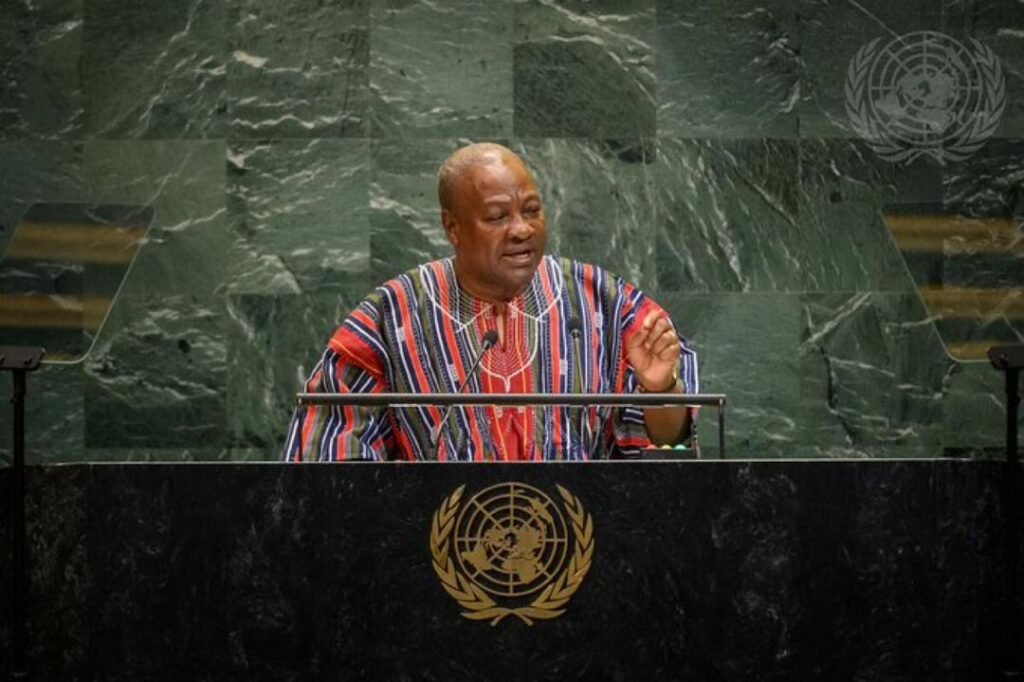
He demanded a permanent African seat on the Security Council with veto power, argued that the veto should be neither restricted to five nations nor absolute, and asked the Assembly, standing where Nelson Mandela stood in 1995, if not now, then when.
The demand extended to money. He called for a reset of the global financial architecture, which he described as rigged against Africa, and insisted the continent needed a greater say in multilateral financial institutions and sovereignty over its natural resources.
On conflict, he refused what he called the Assembly’s habit of playing hide-and-seek with language. “It doesn’t matter what you call it: if it looks like a duck, swims like a duck, and quacks like a duck, well then… It must be a duck. The crimes in Gaza must stop,” he said, backing a two-state solution as relief for civilians facing collective punishment.
He drew attention to Sudan, where twelve million people have fled their homes, and asked why they had not been met with the welcome extended to refugees from Ukraine.
He called for the removal of the blockade on Cuba, recalling that Cubans shed blood on African soil against apartheid, and defended migrants by naming Ghanaians who have shaped other countries, among them Kofi Annan.
From Speech To Resolution
The reparations demand in that speech became policy six months later. On 25 March 2026, the General Assembly adopted Resolution A/80/L.48, championed by Ghana and the African Union, declaring the trafficking of enslaved Africans and racialised chattel enslavement the gravest crime against humanity.
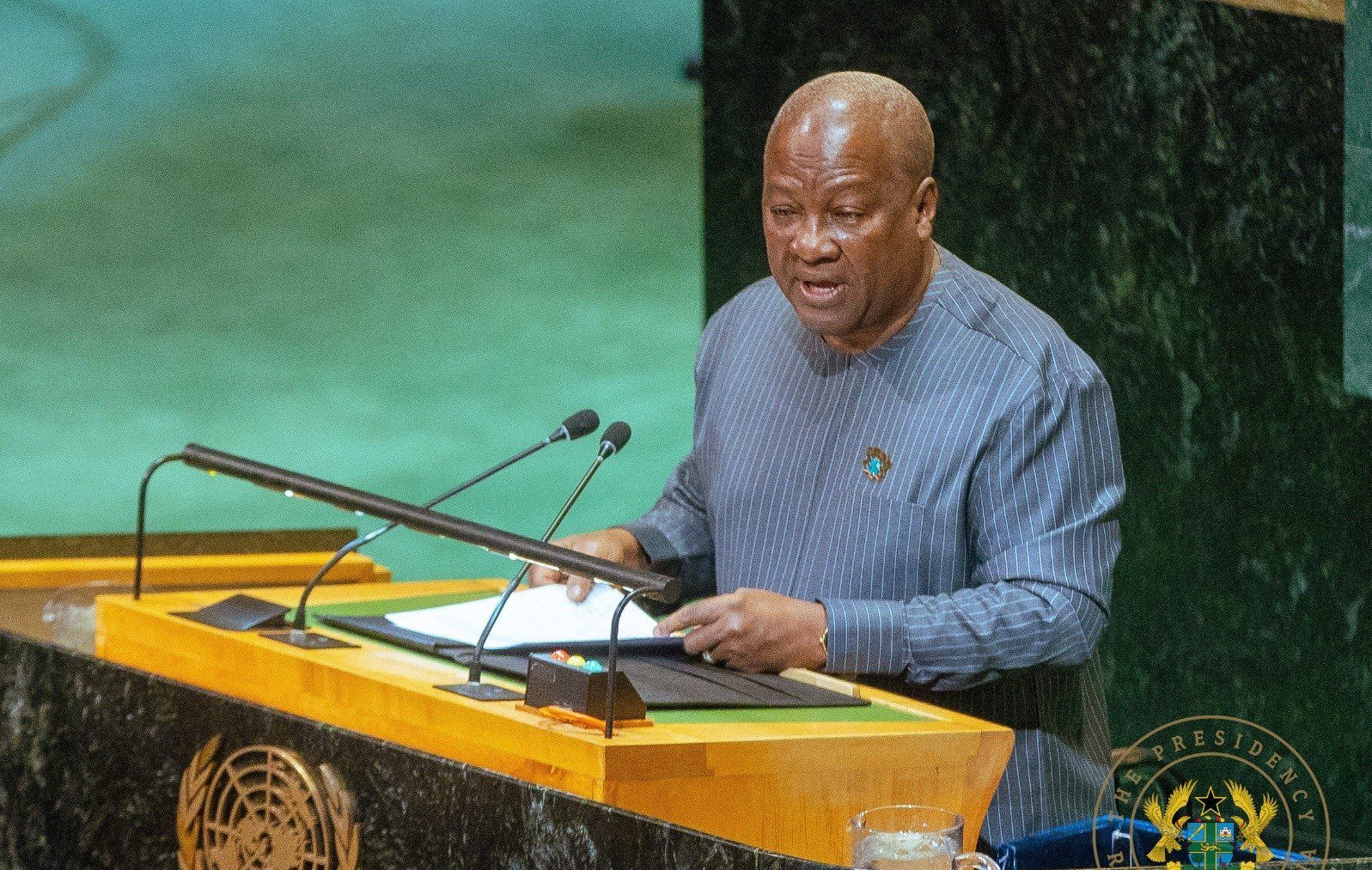
It passed by 123 votes to three, with the United States, Argentina and Israel opposed and 52 abstentions that included the European Union bloc, Canada, Australia and Japan. The text calls for restitution of looted cultural property, formal apologies and consideration of compensation.
President Mahama introduced it on behalf of the 54-member African Group, and Ghana followed with a reparative justice conference in Accra in June.
What To Expect On Thursday
Reparations will almost certainly return. Ghana hosted a side event on Wednesday to receive progress reports from the panels created to carry the agenda forward, with restitution of cultural property as the immediate frontier.
The Accra Reset gives him a second thread. Its High-Level Panel report on health sovereignty, launched on Monday, argues that Southern governments cannot own their health systems without controlling the financing behind them, an argument he has paired with a warning that control must be matched by domestic accountability.
The structural demands from last year are unlikely to soften. Security Council reform and the financial architecture remain unfinished business, and Ghana assumes the African Union chairmanship in January 2027, giving anything he says about continental representation an immediate institutional test.
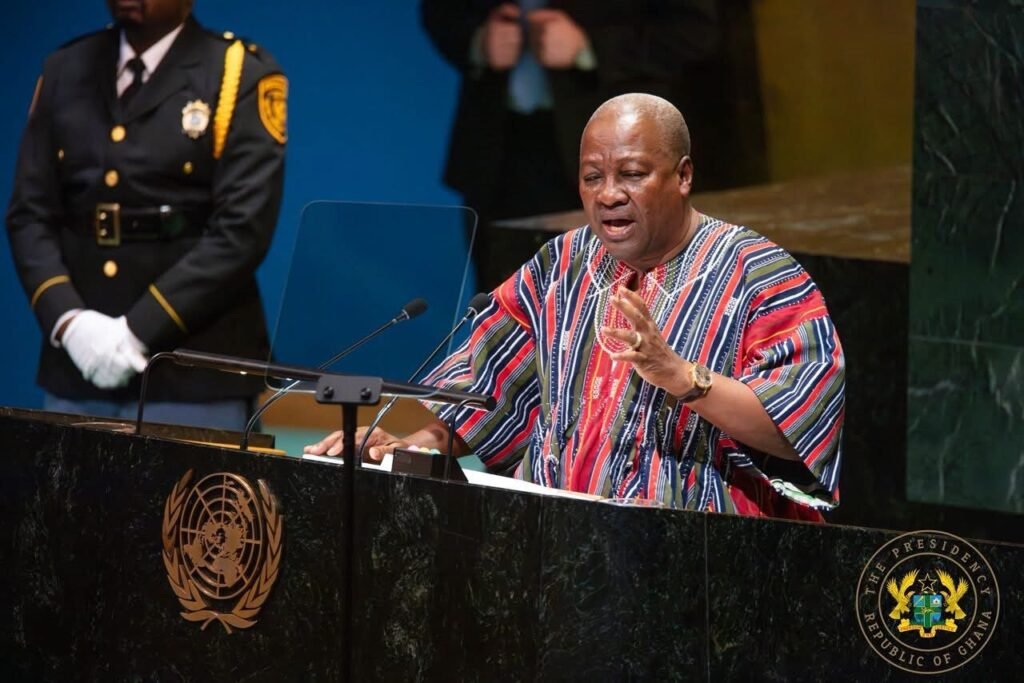
The harder question is the war. Fighting between the United States, Israel and Iran, which began with strikes on 28 February and has continued through a closed Strait of Hormuz, a naval blockade and renewed American strikes this month, has pushed oil toward one hundred dollars a barrel and sits directly on Ghana’s fuel import bill.
A President who argued last year that decisions taken thousands of kilometres away can undo national plans overnight now has the clearest possible illustration. Last year’s speech became a resolution within six months, a rare return on a General Debate address.
Whether the 25th produces anything comparable will depend less on its reception in the hall than on what Ghana does with the African Union chair it takes up in January.
READ ALSO: US$235m Water Award Deepens Ghana’s Fiscal Exposure