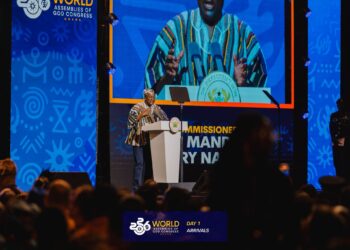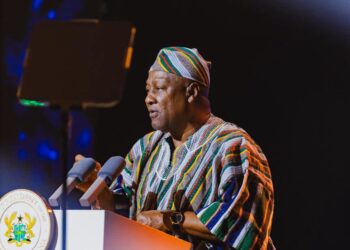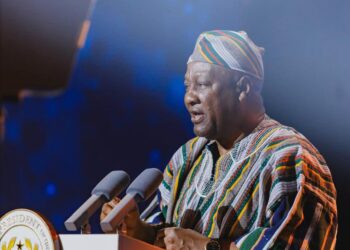
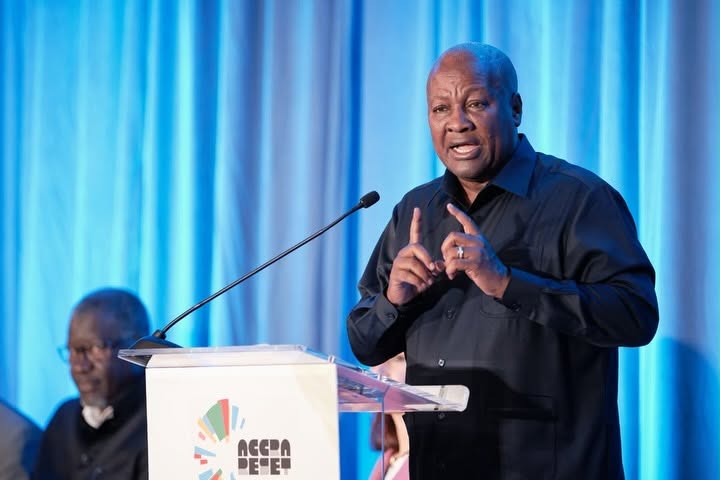
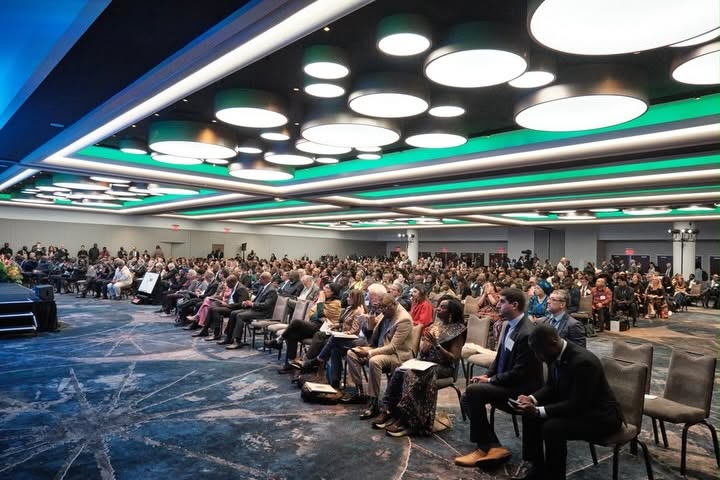
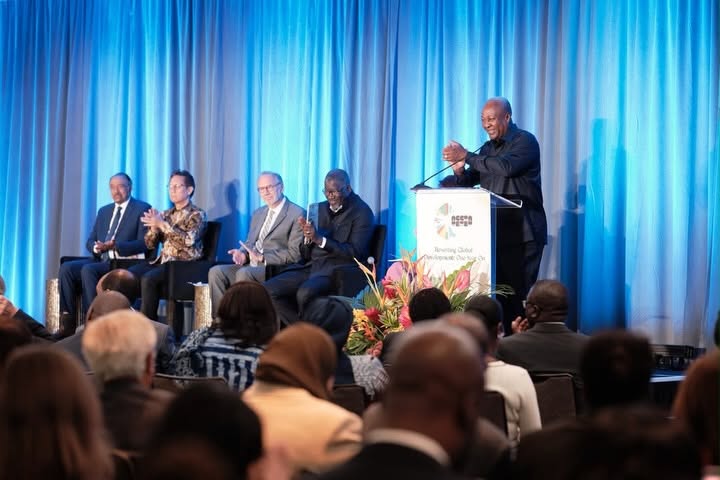
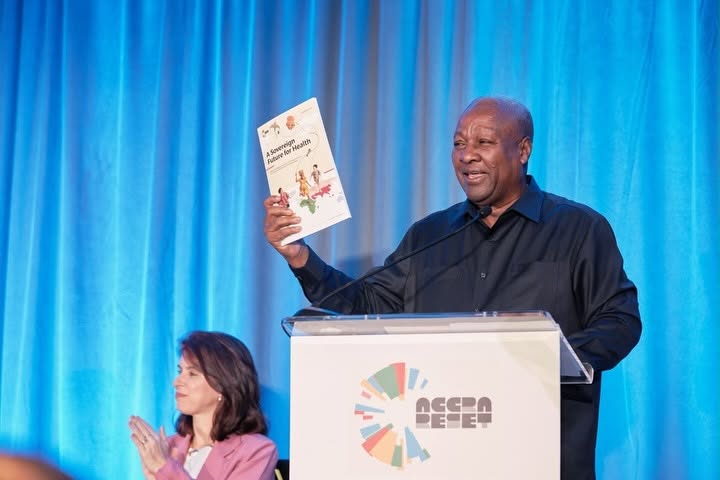
President John Dramani Mahama has launched the Accra Reset’s High-Level Panel report, “A Sovereign Future for Health,” declaring that countries of the Global South can have “no ownership without control” over their health systems. He unveiled the report on Monday, 21 September 2026, at a high-level event in New York on the sidelines of the 81st United Nations General Assembly.
The report sets out ten recommendations for reforming the global health architecture, and the President used its launch to argue that decades of donor-led “country ownership” gave developing nations responsibility without authority.
He paired that demand for control with a warning to fellow leaders that power moved from foreign capitals into unaccountable ministries at home would deliver no sovereignty at all.
From Bandung To Paris
President Mahama traced the argument through two landmark moments in the history of the developing world. In 1955, twenty-nine nations gathered at Bandung in Indonesia demanding a seat at the world’s table, and the struggle for political independence that followed was won across Africa and Asia.
Yet the levers of global trade, finance and health governance, he argued, remained anchored elsewhere even as new flags were raised and anthems sung. Fifty years later, the 2005 Paris Declaration crowned country ownership as a guiding principle of development cooperation.
President Mahama dismissed the result as a pleasant phrase that failed in practice, saying that “we were handed a broken cauldron where we were asked to own a soup that was cooked entirely in someone else’s kitchen.”
Sovereignty Is Not Signed Into Being
The central claim of the report, as he presented it, is that responsibility without authority is an empty arrangement. For decades, he said, nations of the Global South have been asked to own the results of health and development programmes while others keep control of the resources and decisions that produce them.
“Sovereignty does not magically appear because a country signed a donor agreement,” he said. The report is the work of the High-Level Panel on Reform of the Global Health Architecture and Governance, co-chaired by Peter Piot, Elhadj As Sy, Priscila Ferraz Soares and Budi Gunadi Sadikin, with Michel Sidibé as special adviser.
President Mahama also thanked the initiative’s Guardians’ Circle, former Presidents Olusegun Obasanjo, Ellen Johnson Sirleaf and Laura Chinchilla, describing them as the moral stewards and intellectual bedrock of the effort.
Control Must Be Earned At Home
The most striking passage of the speech turned the argument back on African and other Southern governments. President Mahama told his counterparts that shifting power from boardrooms in Geneva or Washington into an unaccountable ministry in Accra, Abuja or anywhere else would not produce sovereignty either.
“If we demand control, we must earn it through uncompromising domestic accountability,” he said. He pointed to his own government’s efforts to tighten fiscal controls, fight corruption and account for public money down to the last pesewa, and extended the principle across the Global South.
Control, in this framing, is conditional on accountability to citizens rather than a right claimed from donors. That condition exposes Southern governments to the same scrutiny they ask of their partners.
Interdependence, Not Isolation
President Mahama was careful to distance the agenda from any retreat from international cooperation. “We’re seeking pragmatic interdependence, a mature equal partnership where we see one another as equals,” he said.
He addressed possible anxieties in wealthy capitals directly. “Stronger, self-reliant southern partners are not a threat to the global north.” Resilient health systems in Africa, Asia and South America, he argued, make the entire world safer.
National And Global Reset As One
The President tied the global agenda to his domestic programme, describing the Resetting Ghana agenda as an effort to rebuild the national economy, fiscal management, governance structures and industrial sector.
That programme, he said, rests on economic self-reliance, local value addition, public health infrastructure, transparent governance and the 24-hour economy initiative. He insisted the two efforts depend on each other.
“A national reset without a global reset leaves us building on shifting sands,” the President stressed. A global reset without domestic discipline, he added, would be equally unworkable, making the two sides of the same coin.
The report now moves from launch to a harder phase. Its ten recommendations will be judged on whether donors accept a transfer of real authority, and on whether recipient governments meet the accountability standard President Mahama set for them in the same breath. The second condition may prove as difficult to satisfy as the first.
READ ALSO: Nkrumah’s Industrialisation Vision Meets Ghana’s Commodity Export Reality