Africa’s energy investment prospects are increasingly shaped by geopolitical realignments, renewed deepwater exploration and the expansion of digital infrastructure, but persistent weaknesses in power investment and dependence on imported energy remain significant constraints, according to a new continental outlook launched at African Energy Week (AEW) 2026 in Cape Town.
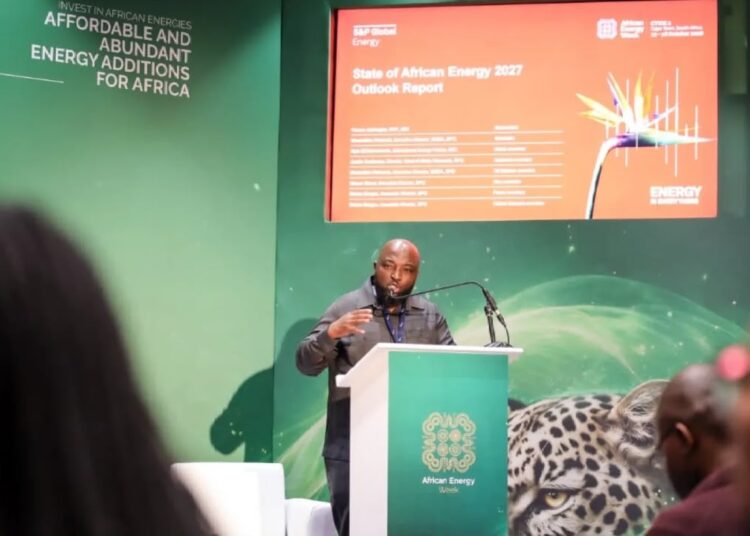
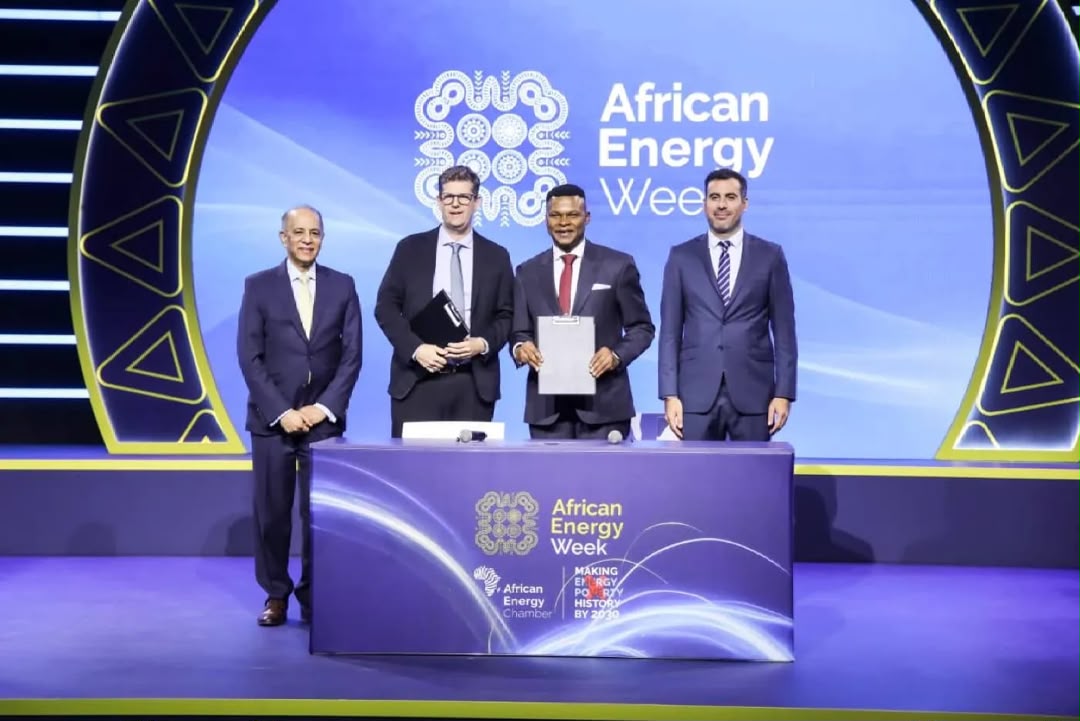
The African Energy Chamber (AEC) and market intelligence firm S&P Global have launched the AEC: State of African Energy 2027 Outlook, a report powered by S&P Global Energy data and designed to inform investment, policy and project development decisions across the continent’s energy value chain.
The report examines market trends, policy reforms and potential investment opportunities spanning upstream oil and gas, gas monetisation, electricity, critical minerals and data centres.
Its launch comes as changes in global geopolitics and supply chains influence where capital is deployed and how investors assess emerging energy markets.
For Africa, the opportunity is to attract investment into its energy resources and infrastructure.
The challenge is converting growing investor interest into commercially viable projects that improve energy access, strengthen domestic supply and support industrial development.
Verner Ayukegba, Senior Vice President at the AEC, said the report was intended to help stakeholders understand emerging trends and use data to plan across different segments of the energy industry.
“What the report is meant to do is to highlight trends in the sector going forward to help with planning and ensure the use of data to see what is happening and coming from upstream to downstream, critical minerals and data centers,”
The report’s broad scope reflects the increasing links between traditional energy production, electricity infrastructure and the digital economy.
However, the investment opportunities across these sectors will depend on different commercial, regulatory and infrastructure requirements.
Geopolitical Shifts Create Opportunities, But Import Exposure Remains
The outlook identifies geopolitical changes and technological expansion as important factors influencing Africa’s economic and energy investment environment.

Kyle DiPietrantonio, International Energy Fellow at the AEC, said Africa’s economy was projected to grow by an estimated 3.9% between 2026 and 2027, with new frontiers and digital-sector expansion contributing to the outlook.
“Growth is being driven by new frontiers and the digital space. On a macro level, Africa’s direct reliance on the GCC region is limited to around 10%, buffering it from deeper regional shocks despite ongoing risks around the Strait of Hormuz,”.
The assessment suggests that Africa’s relatively limited direct exposure to some regional economic relationships could provide a degree of insulation from certain external shocks.
However, DiPietrantonio also identified the continent’s dependence on energy imports from international markets as a vulnerability.
That distinction is important. Limited direct exposure to a particular region does not eliminate the effects of disruptions in global energy markets, where changes in supply, shipping routes and prices can affect import-dependent economies regardless of their immediate trading relationships.
For African countries, the ability to produce more energy domestically, strengthen regional supply networks and expand reliable electricity infrastructure will remain important to reducing exposure to external volatility.
Deepwater Exploration Returns To The Investment Spotlight
The report identifies renewed interest in deepwater exploration as a major development in Africa’s upstream petroleum sector, with international oil companies increasingly targeting frontier acreage.
Justin Cochrane, Director and Head of Africa Research at S&P Global, said international oil companies had expanded their deepwater presence since 2024.
“Since 2024 we have seen more deepwater presence by IOCs. Between 2025 and 2026, over 50% of global acreage globally was in Africa by global IOCs,”
He said the renewed interest was concentrated largely in liquid-rich basins in West and Southern Africa, contrasting with the more gas-oriented opportunities associated with parts of East Africa.
“Where the guys are entering is mainly the west and southern Africa and not much in east cost because the west coast is liquid prime and the east is gas prime.”
The distinction points to the importance of resource characteristics in shaping exploration decisions.
Investors assess acreage according to the potential size and commercial attractiveness of discoveries, as well as the infrastructure and market conditions required to develop them.
Cochrane also said companies were increasingly pursuing frontier blocks in search of large discoveries.
“Explorers are moving into greenfield where they are looking for big discoveries. The point is Africa offers something unique and to tap super giant discoveries. What we are going to see moving forward is the acreage capture will turn into seismic and then into drilling.”
The progression from acreage acquisition to seismic surveys and drilling will be an important test of whether renewed interest translates into substantive exploration activity.
Securing acreage is an early stage of the process; discoveries, commercial assessments and development decisions must follow before new resources can contribute to production.
For African governments, this means that exploration commitments should be assessed not only by the amount of acreage acquired but also by the subsequent work undertaken and the extent to which projects advance towards commercial development.
Gas Monetisation Gains Strategic Importance
Africa’s gas resources are also attracting attention as investors assess alternatives to supply routes and markets exposed to geopolitical uncertainty.
Simon Wood, Executive Director at S&P Global, said the continent’s position relative to some international transit bottlenecks was helping attract interest from frontier investors.
“Africa is not exposed to Hormuz and American politics hence frontier investors are turning to Africa. Africa is providing a blueprint to monetize stranded gas.”
The statement highlights the potential for African gas projects to attract capital as global investors reconsider supply security and the location of energy infrastructure.
Yet the commercial opportunity extends beyond producing gas. Monetising resources requires infrastructure to process, transport and deliver supplies to markets, alongside viable commercial arrangements and a regulatory environment that supports investment.
For countries with undeveloped or underutilised gas resources, the challenge is to establish whether projects can serve export markets, domestic power generation and industrial demand in a financially sustainable way.
Gas investment could support electricity production and industrial activity, but its contribution will depend on the availability of infrastructure, the cost of supply and the reliability of demand.
Investor interest alone does not guarantee that stranded resources will become commercially productive.
Power Investment Remains A Major Weakness
Despite renewed interest in upstream resources, the outlook identifies a substantial gap in investment in Africa’s electricity sector.
Rehan Burger, Associate Director at S&P Global, said the continent received only 2% of global investment in power, despite significant infrastructure requirements and expectations of rising electricity demand.
“We have only 2% of global investment into power. There is significant investment needed for energy access in Africa with demand set to double by 2050 and we will need 370kwh per person,”
The assessment highlights a structural imbalance: Africa may offer attractive opportunities in oil, gas and critical minerals, but investment in the electricity systems needed to support households and businesses remains inadequate.
Power-sector investment involves more than adding generation capacity. Countries also need transmission and distribution networks, grid upgrades and the infrastructure required to connect new generation sources with consumers.
Without adequate investment across these components, additional energy resources may not translate into reliable electricity access. Weak infrastructure can also constrain industrial development and limit the commercial benefits of investments in other parts of the energy value chain.
The projected doubling of electricity demand by 2050 adds urgency to the issue. Meeting that demand will require financing, effective regulation and projects capable of delivering power at costs that households and businesses can afford.
Digital Infrastructure Adds A New Dimension To Energy Demand
The inclusion of data centres and digital infrastructure in the report’s scope reflects the growing connection between technological expansion and energy investment.
Data centres require dependable electricity supplies, making power availability and reliability important considerations in decisions about where to locate digital infrastructure.
Their expansion could create additional demand for generation, transmission capacity and other supporting infrastructure.
For African economies seeking to attract digital investment, this creates both an opportunity and a challenge. New infrastructure can support economic activity, but its development also depends on electricity systems capable of meeting additional demand without undermining supply to existing consumers.
The relationship between digital expansion and energy security therefore reinforces the importance of coordinated investment planning.
Decisions about new energy projects increasingly need to account for changing demand from industry, households and technology infrastructure.
Turning Investment Interest Into Development Outcomes
The AEC: State of African Energy 2027 Outlook brings together several forces shaping the continent’s energy prospects: geopolitical realignment, renewed upstream exploration, gas monetisation, critical minerals and growing digital infrastructure.
The findings presented at the launch point to opportunities for African countries to attract capital and strengthen their position in global energy markets.
They also expose the limitations of an investment strategy focused primarily on resource development without comparable attention to electricity infrastructure and domestic energy needs.
For Ghana, the issues are relevant to efforts to sustain petroleum investment, develop gas resources, strengthen power supply and support industrial growth.
The country’s ability to benefit from changing global investment patterns will depend not only on the availability of resources but also on commercial conditions, infrastructure readiness and the reliability of its energy system.
The report’s launch does not, by itself, establish that new projects or investment commitments have been secured. Its value will depend on the quality of its analysis and whether governments, investors and project developers use its findings to inform practical decisions.
Ultimately, Africa’s energy challenge is not simply to attract more investment. It is to ensure that capital directed towards oil, gas, electricity, critical minerals and digital infrastructure produces commercially sustainable projects while addressing the continent’s persistent energy-access and reliability gaps.
READ ALSO: Merz Defends Ukraine Aid In Bundestag Speech