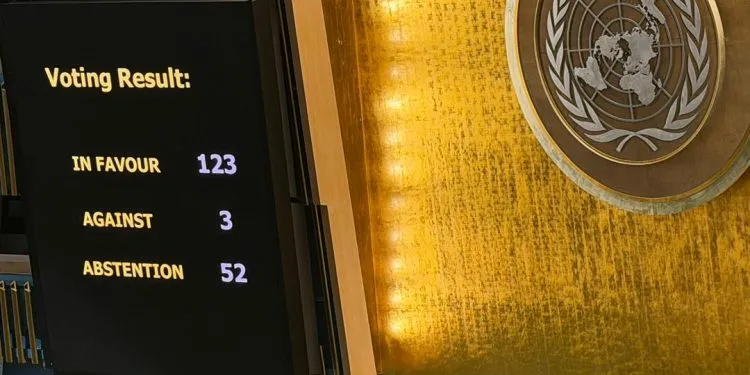
The United Nations General Assembly has adopted Ghana’s landmark resolution declaring the transatlantic slave trade as the gravest crime against humanity, marking a defining moment in global diplomacy and historical accountability.
The resolution secured overwhelming backing, with 123 countries voting in favour, three against, and 52 abstaining, underscoring broad international consensus despite notable divisions among some Western nations.
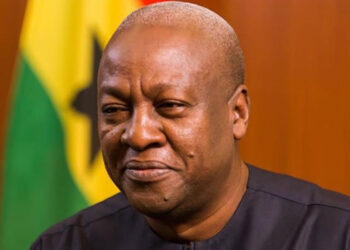
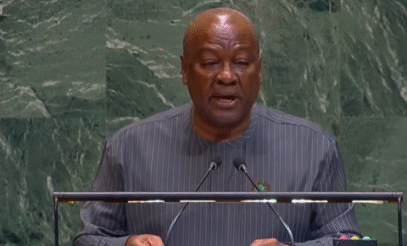
The adoption represents a major diplomatic achievement for Ghana, which led the initiative under the leadership of President John Dramani Mahama in his role as African Union Champion for Reparations.
The resolution seeks to move global discourse beyond symbolic remembrance toward a framework grounded in accountability, justice, and long-term healing. The voting outcome revealed both strong support and lingering geopolitical tensions surrounding the legacy of slavery.
Countries across Africa overwhelmingly endorsed the resolution, joined by major global players such as Russia, China, and Brazil. Their support signals a growing alignment among nations of the Global South on issues of historical justice and reparatory dialogue.
However, several Western countries, including Britain, Germany, Canada, Belgium, Japan, Italy, and Denmark, abstained, reflecting caution or unresolved policy considerations regarding the implications of the resolution.
Meanwhile, the United States, Argentina, and Israel voted against the motion, highlighting a clear divide on how the international community should formally address the legacy of the transatlantic slave trade.
Despite these divisions, the scale of support ensured the resolution’s passage, reinforcing its legitimacy as a multilateral statement on one of humanity’s most painful historical injustices.
Ghana Leads Push for Accountability
Ghana’s leadership in advancing the resolution has been widely viewed as a strategic effort to reposition the global conversation on slavery. Rather than limiting the issue to remembrance, the resolution calls for a deeper reckoning with the structures and consequences of racialised chattel enslavement.
By framing the transatlantic slave trade as the gravest crime against humanity, the initiative elevates the issue within international legal and moral discourse. It also creates a platform for future engagement on reparatory justice, encouraging nations to confront historical truths and consider pathways toward restitution and reconciliation.

The resolution builds on months of consultations involving African states, scholars, legal experts, and international partners, reflecting a coordinated effort to present a unified position grounded in both historical evidence and contemporary realities.
Foreign Minister Calls for Purposeful Remembrance
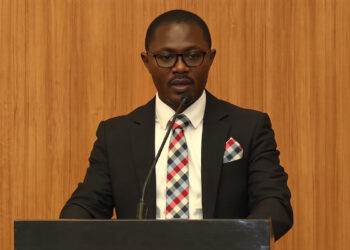
Following the adoption, Ghana’s Foreign Affairs Minister Hon Samuel Okudzeto Ablakwa emphasized the broader significance of the resolution, urging the international community to translate recognition into meaningful action.
He framed the moment as an opportunity to reshape how history is understood and how its legacy is addressed. “We cannot change history, but we can change how we remember it. And in doing so, we can change what we carry forward,” he stated, highlighting the importance of collective memory in shaping future global relations.
He further noted that the resolution represents a conscious decision by the international community to confront the past with intention and responsibility.
“Today, the world has chosen to remember with purpose, justice, and equity. Let that purpose guide us toward a future that is more just, more inclusive, and more profoundly human”.
Ghana’s Foreign Affairs Minister Hon Samuel Okudzeto Ablakwa
Beyond its symbolic value, the resolution is expected to open new avenues for dialogue on reparatory justice. Ghana has consistently framed reparations not as a transactional demand but as a comprehensive process involving acknowledgment, restoration, and partnership.

The Foreign Minister stressed that the adoption should serve as a starting point rather than a conclusion. He called on member states to engage in inclusive and good faith discussions aimed at addressing the enduring consequences of slavery and colonial exploitation.
“The work of justice does not end with remembrance,” he noted, emphasizing that systemic inequalities rooted in historical injustices must be addressed through deliberate and sustained efforts.
The resolution also encourages a reexamination of global systems that continue to reflect historical imbalances, calling for a shift toward frameworks that affirm equality and shared humanity.
The adoption has also brought recognition to Ghana’s diplomatic leadership, particularly the role played by President Mahama in mobilizing international support. The Foreign Minister expressed gratitude for the President’s commitment and effectiveness in advancing the resolution at a critical moment in global history.
He described the initiative as a milestone not only for Ghana but for Africa and people of African descent worldwide, noting that it represents a collective step toward reclaiming historical narratives and asserting dignity.
The resolution is expected to influence future policy discussions within international institutions, shaping how issues of historical injustice, racial inequality, and global development are addressed.
A Defining Moment in Global Discourse
The passage of the resolution signals a shift in how the international community engages with the legacy of slavery. It moves the conversation from passive remembrance to active consideration of justice and accountability.

For Ghana, the outcome reinforces its position as a leading voice in global advocacy for historical justice and equitable development. For the wider international community, it presents both an opportunity and a challenge to translate consensus into concrete action.
As the world reflects on this milestone, the focus now turns to how nations will respond to the call for deeper engagement, ensuring that the resolution serves not only as a statement of intent but as a foundation for lasting change.
READ ALSO: World Bank Backs Ghana’s Recovery Drive After Landmark Visit