The founder and General Overseer of Action Chapel International, Archbishop Nicholas Duncan-Williams, has expressed concern over what he describes as a leadership failure that has allowed the indiscriminate construction of buildings on waterways, a pattern he says continues to fuel recurring floods across parts of the country.
The Archbishop called for bold and decisive leadership to enforce planning regulations, and urged government, traditional authorities, urban planners and other stakeholders to work together to develop a new vision for Accra centred on sustainable urban planning and resilience against future flooding.
Archbishop Duncan-Williams framed the country’s flooding crisis as a leadership burden that demands both courage and public support, arguing that any serious attempt to clear waterways of illegal structures would carry a heavy political cost.
“It’s going to take a lot of courage and audacity to curtail this flood issue. Trying to move just ten persons or a hundred houses off waterways will not solve the current flood problem, and any President who attempts this will be committing political suicide.”
founder and General Overseer of Action Chapel International, Archbishop Nicholas Duncan-Williams,
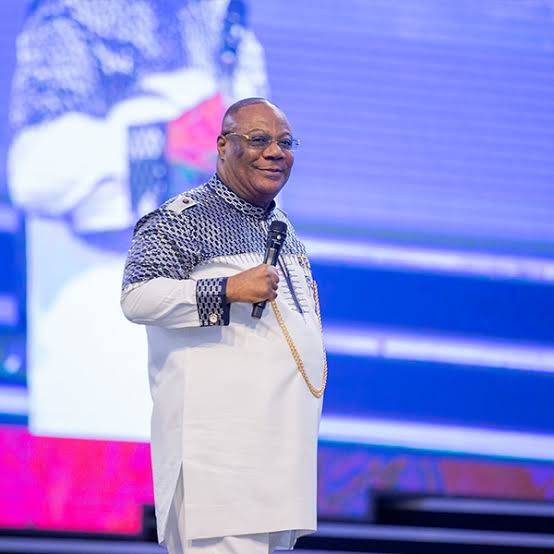
He said that reality is precisely why Ghanaians should be praying for those in authority, including the President, rather than expecting change to come without resistance from communities and interests affected by enforcement action.
The Country Needs Policy Reforms
Beyond enforcement, the Archbishop argued that Ghana’s flooding problem ultimately calls for a renewal of mindset and a fundamental restructuring of the capital itself, rather than piecemeal fixes applied after each disaster.
He went further, proposing a large-scale relocation effort as a practical starting point, suggesting that around 10,000 houses be built outside the city to resettle residents currently living in flood-prone areas, freeing space for Accra to be rebuilt with proper planning.
Problems That Outlasts Every Government
Archbishop Duncan-Williams stressed that Ghana’s flooding crisis is not tied to any single political party, but is a challenge every incoming government inherits regardless of which side of the political aisle it represents.
“We look forward to the day when we will have a President and a party that is not afraid of losing an election in order to correct these problems. The present situation, and the kind of democracy Ghana is operating, cannot fix this problem on its own.”
founder and General Overseer of Action Chapel International, Archbishop Nicholas Duncan-Williams
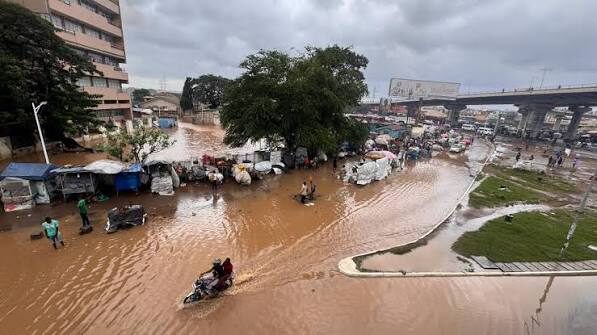
His remarks reflect a broader argument that has gained traction among urban planning experts and civil society groups in the aftermath of the country’s most recent flooding disaster that Ghana’s recurring floods stem less from rainfall itself than from decades of weak enforcement against construction on natural drainage channels and waterways.
Patterns Familiar to Faith Leaders on the Ground
The Archbishop’s Submissions follow a period in which he and other clergy have taken a direct, hands-on role in the country’s flood response, personally visiting some of the hardest-hit suburbs to distribute relief items to displaced families.
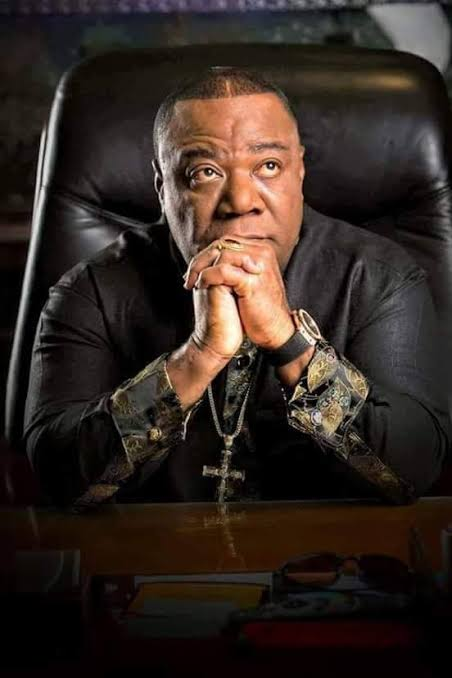
That on-the-ground exposure to the human cost of the disaster appears to inform the urgency of his call for structural, rather than symbolic, reform.
His intervention adds a religious leadership voice to a wider chorus of engineers, urban planners and policy analysts who have argued that Accra’s flooding is fundamentally a governance problem rather than a natural inevitability, with natural water retention areas and drainage channels having been steadily built over across several decades of unchecked urban expansion.
Whether government responds to calls of this kind with the scale of action the Archbishop is urging remains to be seen. His proposal for mass relocation and a rebuilt Accra sits well beyond the incremental measures, including contingency fund releases and the removal of individual illegal structures, that government has pursued so far.
For now, his remarks stand as a pointed reminder that solving Ghana’s flooding crisis may ultimately require political decisions few leaders have so far been willing to risk.
READ MORE: Oobake Experience 2026 Set to Light Up Bukom for Homowo Celebration