United Kingdom has announced a £135 million investment to strengthen the Royal Navy’s undersea defence capabilities, awarding a major contract to BAE Systems to maintain and repair the country’s frontline torpedo weapons while safeguarding hundreds of highly skilled jobs across Britain.
The three-year Torpedo Repair and Maintenance (TRAM) contract forms part of the government’s wider drive to modernise Britain’s armed forces amid an increasingly complex global security environment. Beyond ensuring the operational readiness of the Royal Navy’s underwater weapons, the agreement is expected to support more than 300 jobs and reinforce the UK’s domestic defence manufacturing base.
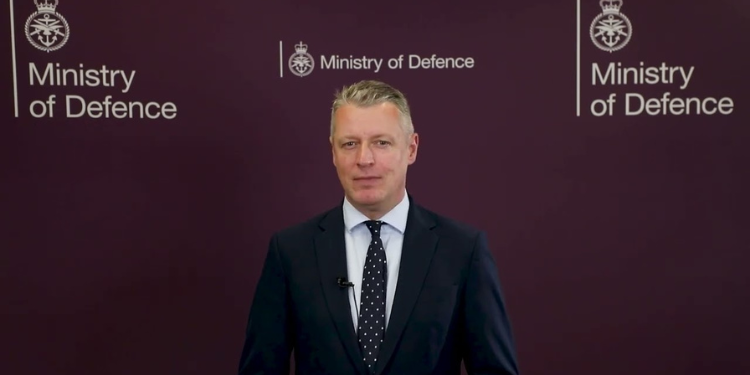
According to the Minister for Defence Readiness and Industry Luke Pollard, the contract as an example of defence investment delivering both security and economic dividends.
“This is defence spending doing exactly what it should – keeping our country safe while securing 315 skilled jobs and creating new opportunities across our country. We are proud to be backing British jobs, British skills and British industry.”
Luke Pollard
According to British government, the expenditure highlights the government’s dual goals of strengthening national security and boosting economic growth, advanced engineering, and sovereign industrial capabilities through defence spending.
Submarines, surface warships, and maritime patrol aircraft can identify and eliminate hostile submarines and other maritime threats thanks to torpedoes, which continue to be one of the Royal Navy’s most vital weaponry. Additionally, they are essential to maintaining the nation’s Continuous At Sea Deterrent, which is the cornerstone of the UK’s nuclear security posture, as well as securing international commerce routes and territorial seas.
Under the agreement, BAE Systems will continue providing maintenance and repair services for the Royal Navy’s Spearfish heavyweight torpedoes and Sting Ray lightweight torpedoes from July 2026 until June 2029.
The contract directly secures 150 specialist engineering and technician positions within BAE Systems, including around 100 jobs in Portsmouth and another 50 across Edinburgh, Chelmsford and facilities near Glasgow. A further 165 jobs will be supported through the company’s wider UK supply chain, bringing the total employment sustained by the programme to 315 positions.
The announcement comes as the British government seeks to translate increased defence expenditure into broader economic benefits. The contract is funded through the £298 billion Defence Investment Plan announced earlier this year, a long-term programme designed to modernise military capabilities while creating employment opportunities across the country.
In addition to bolstering national resilience, the government contend that investing in Britain’s defence sector supports high-value manufacturing, engineering, and technology sectors that make substantial contributions to economic growth.
The government has increasingly linked national security spending with its broader industrial strategy, arguing that procurement decisions should strengthen domestic manufacturing capacity while reducing reliance on overseas suppliers for critical military equipment.
The TRAM agreement also provides continuity ahead of the planned introduction of WHITEHEAD2, a next-generation torpedo support programme expected to begin in 2029. Defence officials say the future programme will modernise maintenance systems, improve equipment availability and ensure the Royal Navy remains equipped to address emerging underwater threats.
The announcement also comes at a time when maritime security has become an increasingly important issue for NATO members. Growing concerns over the vulnerability of undersea infrastructure including communication cables, energy pipelines and offshore installations have prompted Western governments to invest heavily in anti-submarine warfare capabilities and underwater surveillance systems.
Against this backdrop, maintaining reliable torpedo systems is viewed as a critical component of Britain’s wider maritime defence strategy.
New Defence Contract to Safeguard Naval Readiness
Senior military officials have welcomed the extension of the torpedo maintenance project, noting that continued assistance is critical to ensuring the Royal Navy’s operational readiness in an increasingly challenged security environment.
According to Rear Admiral Matt Stratton, the Royal Navy’s Director of Naval Acquisition, the arrangement ensures the continuous support of one of the service’s most vital weapons capabilities.
“This contract extension ensures the Royal Navy retains a safe, reliable and continuous torpedo support capability. It is a critical enabler of our operational readiness and directly supports the UK’s Continuous At Sea Deterrent.”
Rear Admiral Matt Stratton
The Continuous At Sea Deterrent, maintained by the Royal Navy’s fleet of nuclear-powered ballistic missile submarines, has formed the foundation of Britain’s strategic defence policy for decades. Ensuring the availability and reliability of supporting weapons systems is regarded as essential to maintaining that capability.
Moreover, Richard Murray, Director of Lethality and Protect within the National Armaments Director Group – Materiel, stated that the programme proved the importance of collaboration between the government, military forces, and industry.
“This contract extension secures continued, reliable support to the UK’s torpedo capability. Bringing together the Navy, National Armaments Director Group and industry as a single team has delivered real, tangible results for UK defence.”
Richard Murray
BAE Systems, which has overseen the Royal Navy’s torpedo support contract since 2019, emphasised its track record of ensuring weapon availability for frontline operations.
The new contract reflects a broader shift in Britain’s defence policy towards sustained investment in military readiness alongside industrial resilience. Rather than focusing solely on acquiring new equipment, the government has increasingly prioritised maintaining existing capabilities to ensure frontline forces remain prepared for evolving security challenges.
With geopolitical tensions persisting across Europe and increasing attention being paid to threats beneath the world’s oceans, British officials argue that maintaining reliable underwater warfare systems will remain essential to protecting national security, supporting NATO operations and ensuring the Royal Navy retains the capability to deter potential adversaries well into the future.
READ ALSO: Mahershala Ali and Bassam Tariq Reunite for Faith-Driven Action Film