The Alliance Fleuve Congo/March 23 Movement (AFC/M23) rebels have mounted a largely independent response to a small Ebola outbreak in eastern Democratic Republic of Congo (DRC), using the crisis to reinforce their claims of effective governance in territories under their control while receiving support from neighbouring Rwanda.
Following their quick territorial gains earlier this year, the rebels’ increasing efforts to create parallel state institutions in eastern Congo have been highlighted by the way the outbreak has been handled.
However, scientists and humanitarian officials caution that the presence of rival health administrations may compromise disease tracking and make attempts to contain Ebola more difficult if infections expand outside of the already impacted areas.
According to response teams, official health documents and humanitarian workers, the AFC/M23 administration coordinated much of the Ebola response independently of authorities in Kinshasa, relying instead on its own health structures while maintaining only limited technical cooperation with the Congolese government.
AFC/M23 also declared the outbreak over in its territory after a 21-day monitoring period without new cases.
The statement is a part of AFC/M23’s larger attempt to bolster its political legitimacy following a rapid military operation in early 2025 that expanded its control over significant portions of the provinces of North and South Kivu.
The rebels have established administrative systems that increasingly function independently of the central government, and they currently have control of the strategically important cities of Goma and Bukavu.
United Nations and several Western governments have repeatedly accused Rwanda of backing the rebel movement, allegations that Kigali has consistently denied. Nevertheless, the Ebola response has once again highlighted close cooperation between the rebels and Rwanda, particularly in the provision of technical expertise and medical supplies.
Although the number of Ebola cases in rebel-held territory has remained relatively small, the situation elsewhere in the DRC presents a far more serious public health challenge. Government data released over the weekend indicate that the wider outbreak has infected 1,873 people and claimed 672 lives, illustrating the vastly different epidemiological situations confronting authorities on either side of the conflict lines.
According to health experts, this difference has allowed AFC/M23 to present its response as more successful than the central government’s. They do, however, warn that given the far lower number of cases reported in rebel-controlled areas, comparisons should be seen in context.
Freddy Kaniki, AFC/M23’s deputy coordinator for the Ebola response added that almost 400 contacts were tracked during the outbreak, and 98% of them received daily follow-up. By June 18, 207 laboratory samples had been evaluated in rebel-controlled parts of North Kivu, according to response records seen by humanitarian partners.
Kaniki contended that increased discipline and readiness had helped the response, especially with the quick isolation of suspicious cases and close contact monitoring.
Parallel Health Structures Complicate Disease Control in Eastern Congo
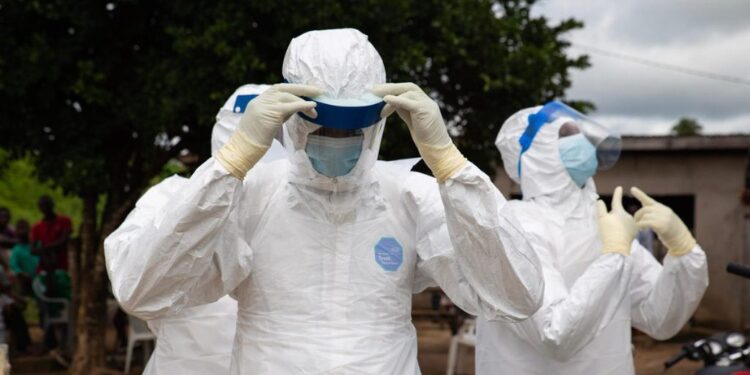
While the immediate outbreak appears to have been contained in areas under AFC/M23 control, analysts warn that eastern Congo’s fractured governance could create serious challenges if Ebola begins spreading more widely.
The rebels have established parallel health administrations responsible for coordinating hospitals, surveillance teams and emergency response operations within territories they administer.
Cooperation with Kinshasa has reportedly been limited largely to laboratory testing and the exchange of surveillance data, leaving much of the operational response divided between rival authorities.
By keeping lines of contact open between the two parties, humanitarian agencies have attempted to close those gaps.
UN’s temporary humanitarian coordinator in the Democratic Republic of the Congo, Damien Mama, stated that relief organisations had made coordination easier by using the country’s current disease surveillance systems to guarantee that reporting remained accurate despite political differences.
Rwanda’s direct assistance has been one of the most important components of the reaction. In order to address severe shortages of medications, protective gear, and technical staff, AFC/M23 turned to adjacent Rwanda since the Congolese government was unable to provide logistical support.
According to response committee members and humanitarian workers, Kigali deployed six specialists to Goma, including experts in laboratory management, epidemiological surveillance, logistics and safe burial procedures.
Response documents indicate that, Rwanda Biomedical Center had provided medical materials valued at nearly $6,900, while Gisenyi Hospital, located just across the border, supplied an additional $85,467 worth of protective equipment and medical supplies.
Rwandan government spokesperson Yolande Makolo defended the assistance, indicating that the country’s priority had been supporting regional preparedness and disease surveillance because infectious diseases “do not respect borders.”
Even with their donations, there are still a lot of operational difficulties. Internal response records detail ongoing shortages of vehicles, fuel, protective gear, and infection control kits. Additionally, laboratory capacity has been limited; by mid-June, Goma’s primary laboratory allegedly only had two extraction kits, which hindered its ability to analyse samples rapidly.
Relief efforts have been made more difficult by the wider war. Since the rebels took control of the city, Goma International Airport has remained closed, and financial service interruptions in rebel-controlled areas have made it more challenging to send money, buy supplies, and send humanitarian workers.
Reagan Miviri of the Ebuteli research institution in Kinshasa stated, “AFC/M23 is eager to demonstrate its capacity to function as a state and manage a public health crisis better than the Congolese government.However, it has been a restricted test thus far, with only four cases reported.”
Miviri warned that a larger outbreak extending into conflict zones could quickly overwhelm the fragile response system currently in place.
READ ALSO: Beyond the Two-Day National Clean-Up, Accra Needs Bold Action