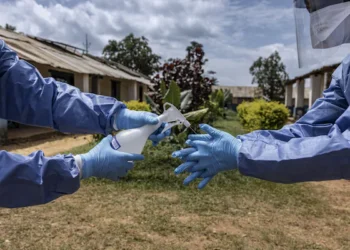
The Ebola outbreak sweeping across eastern Democratic Republic of the Congo (DRC) has crossed a grim new threshold, with confirmed cases surpassing 1,000 amid mounting concerns that frontline healthcare workers are becoming infected before realizing they are treating the deadly virus.
Health authorities and international partners warn that the growing number of infections among nurses, doctors and other medical personnel is exposing dangerous weaknesses in the response to one of the world’s fastest-growing Ebola epidemics. Despite a significant expansion of treatment facilities, laboratories and surveillance systems over the past month, experts say efforts remain well below the level required to bring the outbreak under control.
According to the Democratic Republic of the Congo’s National Public Health Institute, at least 78 healthcare workers have contracted the virus since the outbreak began, while 18 have died. Many of those infections occurred not in specialized Ebola treatment centres but in ordinary clinics and hospitals where patients initially sought care.
The development has heightened fears that the Bundibugyo strain of Ebola, for which there is currently no approved vaccine or proven treatment, may be spreading more widely than official figures indicate.
Unlike some previous Ebola outbreaks, Bundibugyo Ebola often begins with symptoms that closely resemble malaria, typhoid and other common tropical illnesses. As a result, healthcare workers can unknowingly come into direct contact with infected patients before Ebola is suspected and protective measures are activated.
According to Abdou Sebushishe, medical lead in Congo for International Medical Corps, “all infected health workers were infected outside Ebola treatment facilities so far.”
Sebushishe noted that, the infections have largely been linked to weaknesses that continue to plague many health facilities across affected regions, including inadequate infection-control procedures, shortages of protective equipment, insufficient staff training and weak surveillance systems.
The situation highlights the enormous challenge facing authorities as they attempt to contain an outbreak that has already spread across multiple provinces and crossed international borders into neighbouring Uganda.
One month after the outbreak was officially declared in both countries, case numbers continue to rise despite an increasingly complex response operation involving national governments, the World Health Organization (WHO), humanitarian agencies and local communities.
Health officials have significantly expanded emergency infrastructure in recent weeks. Around 400 treatment beds are now available across affected areas, while four operational laboratories have increased testing capacity. Two laboratories alone can process nearly 1,000 samples daily, dramatically improving diagnostic capabilities compared with the early days of the outbreak.
According to Dr. Rose Belizaire, Emergency Response Lead at WHO Africa,these improvements are still insufficient given the speed at which the epidemic is evolving.
“On a scale of zero to ten, compared with where this response needs to be, I would say we are at about three or four.
“The outbreak is evolving rapidly, and all partners need to step up their efforts on the ground in order to keep pace with the evolution of this epidemic.”
Dr. Rose Belizaire
Beyond the immediate public health emergency, officials are increasingly concerned about the broader impact of the outbreak on livelihoods, local economies and humanitarian operations. Communities affected by Ebola often face restrictions on movement, disruptions to trade and growing fear that can undermine cooperation with health authorities.
The outbreak is unfolding in an environment already strained by conflict, displacement and economic hardship, making containment efforts even more difficult.
Women and Children Among Hardest Hit as Cross-Border Efforts Intensify
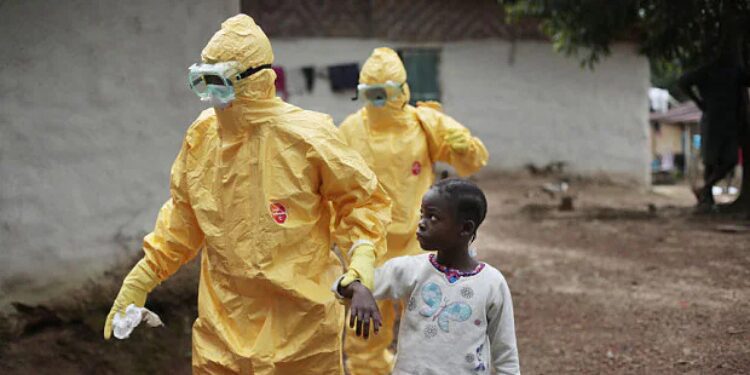
As the epidemic continues to evolve, health experts are observing important changes in the profile of those becoming infected.
While men between the ages of 20 and 49 were initially the most affected group, women have now emerged as the demographic most impacted by the outbreak. Cases among children are also increasing, raising fresh concerns about household transmission and community spread.
According to Dr. Belizaire, the change mirrors trends frequently seen during epidemics of infectious diseases.
“In outbreaks of infectious diseases, women are generally the most affected. They are the ones who care for family members, their husbands, their parents and their children.”
Dr. Rose Belizaire
The response effort itself has grown into a massive operation involving multiple layers of intervention beyond clinical treatment.
Dr. Rose Belizaire further noted that, “the response is organized around 11 pillars in the field.”
These pillars include community surveillance, case investigation teams, diagnostic laboratories, treatment centres, infection prevention measures, data management systems and support services for affected families.
Whenever a suspected case is reported, investigation teams are dispatched to assess the situation. Individuals believed to be infected are transferred to transit centres where they await laboratory confirmation before being moved to specialized treatment facilities if necessary.
The response also incorporates psychosocial care and nutritional assistance.
“We now have psychosocial support and nutritional support that provide assistance to confirmed patients, their families and the contacts we are monitoring, so that we can take a holistic approach to this outbreak.”
Dr. Rose Belizaire
At the same time, response teams continue implementing infection prevention measures designed to halt transmission. “This includes disinfection and the destruction of items contaminated by the virus,” Dr. Belizaire explained. “It is an entire machinery that has to be put in place.”
Despite the progress, resource shortages remain one of the greatest obstacles confronting health authorities.