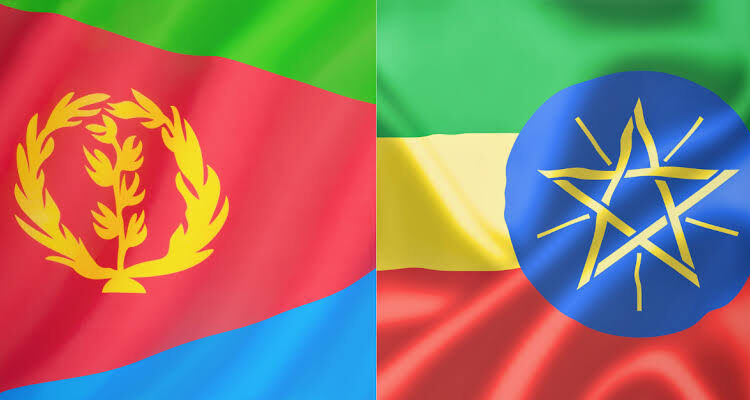
Ethiopia has accused Eritrea of launching an “all-out invasion” of its northern territory, warning that it has no option but to defend itself as military activity near their shared border raises fears of a renewed war between the two Horn of Africa neighbours.
In a letter to the United Nations Security Council, Ethiopian Foreign Minister Gedion Timothewos accused Eritrean forces of advancing as far as 60 kilometres into northern Ethiopia, describing their reported deployment as a blatant act of aggression that justified Ethiopia’s right to self-defence.
The diplomatic intervention marks a significant escalation in the confrontation between the two countries, which have exchanged accusations of military aggression amid reports of Eritrean troops entering Ethiopia, drone strikes near the border and repeated explosions around the northern Tigray region.
“The all-out invasion of parts of northern Ethiopia by Eritrea is a matter of public record. It is a blatant act of aggression that engages Ethiopia’s inherent right to self-defence.”
Gedion Timothewos
Ethiopia’s accusation was met with a counterclaim from Eritrea, whose Information Minister, Yemane Gebremeskel, argued that his country had exercised restraint despite what he described as years of Ethiopian aggression.
He maintained that Addis Ababa’s longstanding ambition to secure access to the Red Sea amounted to a threat to Eritrean sovereignty.
The competing allegations have intensified concerns that the latest confrontation could develop into a wider interstate conflict, particularly as the two governments remain divided over Ethiopia’s access to the sea and the security situation in northern Ethiopia.
Ethiopia lost its coastline when Eritrea gained independence in 1993, leaving Africa’s second-most populous country without direct access to the sea. Prime Minister Abiy Ahmed has repeatedly described maritime access as vital to Ethiopia’s economic interests and national security, although his government has maintained that the objective would be pursued through peaceful negotiations.
Eritrea, however, views Ethiopia’s ambitions with suspicion, particularly because the port of Assab, located on its Red Sea coast, has featured prominently in discussions about Ethiopia’s potential maritime access.
The disagreement has become increasingly entangled with the security crisis in northern Ethiopia, where federal government forces have been fighting a rebel alliance across Tigray, Amhara and Afar since September 23. Addis Ababa accuses Eritrea of supporting the alliance, an allegation Asmara has denied.
The deterioration in relations has also followed the severing of diplomatic ties between the neighbours, further narrowing the channels through which they might manage their differences.
Ethiopia Invokes Right to Self-Defence as Eritrea Rejects Aggression Claims
Ethiopia’s letter to the United Nations represents its clearest official response to reports of Eritrean troop movements inside its territory this week.
Timothewos accused the Eritrean government of deploying troops, including mechanised units, deep into northern Ethiopia, arguing that the reported incursion had left Addis Ababa with no alternative but to defend its sovereignty.
Eritrea has rejected Ethiopia’s account of the confrontation. Gebremeskel accused the Ethiopian government of pursuing an unprovoked war of aggression against Eritrea for more than three years.
“The Ethiopian regime has been pursuing, in effect, an unprovoked war of aggression against Eritrea for more than three years.”
Yemane Gebremeskel
Gebremeskel argued that Ethiopia’s pursuit of sovereign access to the sea had created the underlying threat to Eritrean security. He accused Addis Ababa of using the latest confrontation to justify an attempt to seize Assab, the Eritrean port on the Red Sea.
The Information Minister’s statement did not directly address the reported deployment of Eritrean troops inside Ethiopia. However, he dismissed reports of an incursion as part of what he portrayed as an Ethiopian effort to manufacture justification for military action against Eritrea.
Drone Strikes and Explosions Raise Fears of Wider Conflict
Military activity near the northern Ethiopian town of Adigrat has added to concerns that the diplomatic confrontation is unfolding alongside a potentially dangerous escalation on the ground.
The US-based conflict monitor ACLED reported that drone strikes, believed to have been carried out by Ethiopia’s military, targeted Eritrean forces.
The town lies approximately 30 kilometres from the Eritrean border, placing the reported attacks close to the area at the centre of the latest confrontation.
Meanwhile, Ethiopian government forces have continued to make gains in Tigray in recent days. Ethiopian Airlines has announced that it will resume flights to the regional capital, Mekelle, on October 11, a development that signals the government’s efforts to restore transport links as its forces consolidate their position.
Eritrea has denied supporting the rebel alliance fighting Ethiopian federal troops across Tigray, Amhara and Afar.
READ ALSO: Israel Criticises Navi Pillay’s Nobel Peace Prize