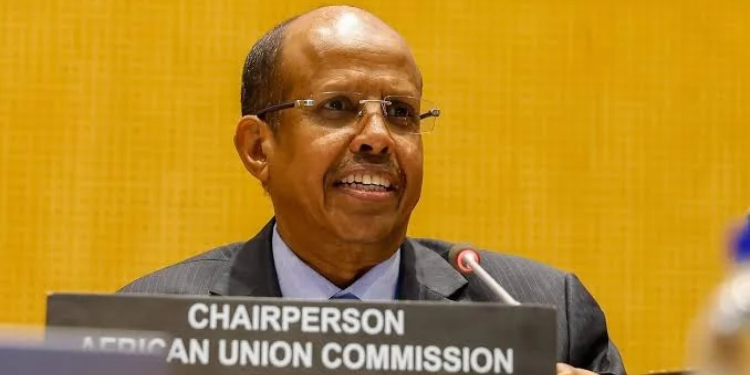
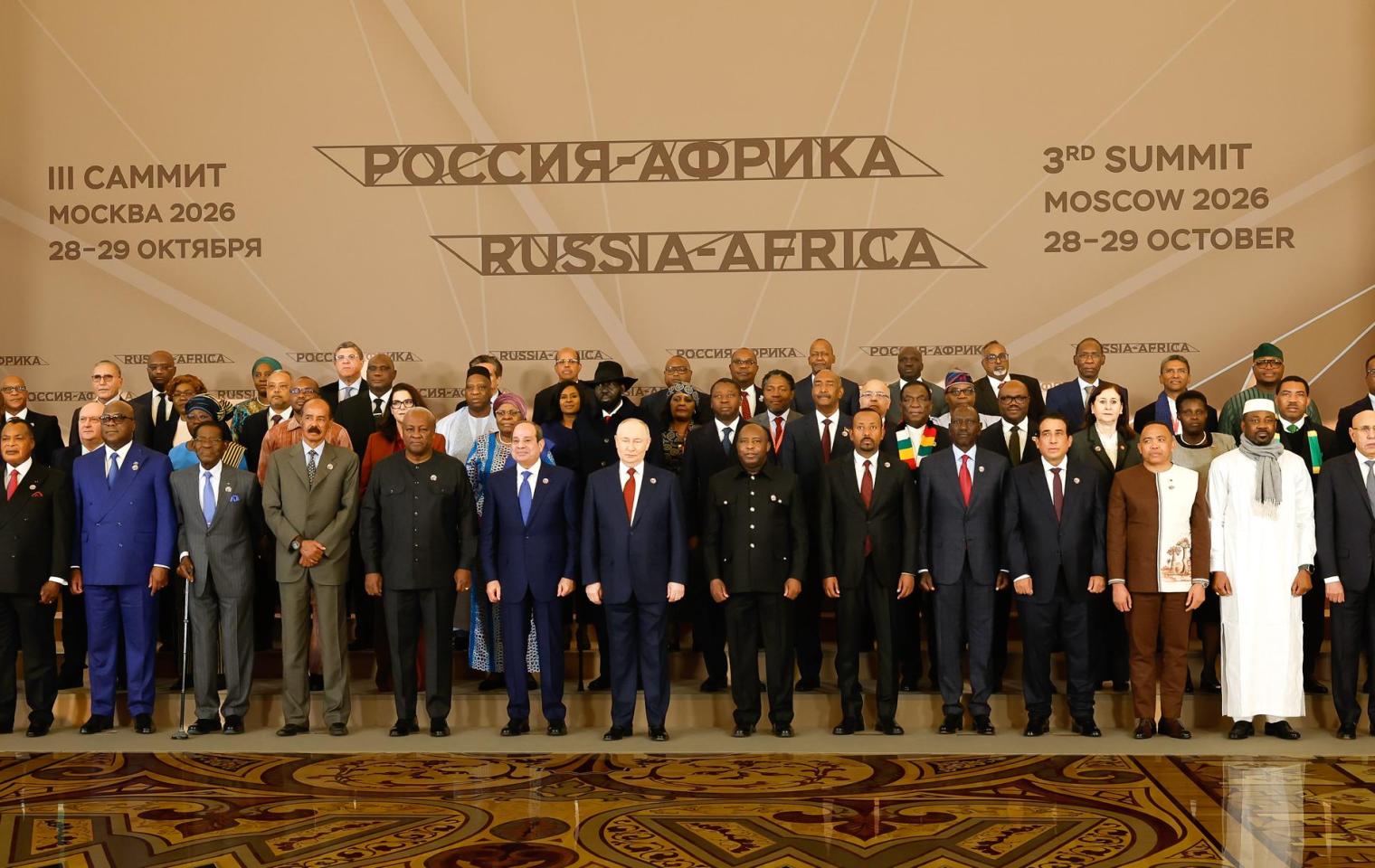
The African Union (AU) has called for greater local processing of Africa’s agricultural and mineral resources, stronger financial sovereignty and reforms to global governance, as leaders gathered in Moscow for the Third Russia–Africa Summit.
AU Commission Chairperson Mahmoud Ali Youssouf made the call during the summit’s plenary session, co-chaired by Russian President Vladimir Putin and Burundi’s President Évariste Ndayishimiye, the current Chairperson of the African Union.
He stressed that cooperation with Russia and other international partners must support Africa’s development priorities and deliver tangible benefits to its people.
Mahmoud Ali Youssouf emphasised the need for African countries to move beyond the extraction and export of raw materials by expanding local processing, value addition and industrialisation.
He maintained that Africa’s substantial agricultural and mineral resources must generate greater economic benefits for its population.
The AU Commission Chairperson also highlighted the difficulties African countries face in accessing international capital markets on equitable and favourable terms. He lauded the establishment of the African Credit Rating Agency, describing it as an important step towards strengthening the continent’s financial sovereignty and addressing persistent challenges associated with credit ratings.
He further called for comprehensive reform of the international financial architecture to make it more equitable, inclusive and responsive to African countries’ development needs.
The reforms, he stressed, should support the continent’s ambitions by improving access to financing and ensuring that African countries can pursue their development priorities without being constrained by persistent inequalities in the global financial system.
Africa Seeks Fairer Representation in Global Governance
In addition to economic cooperation, Mahmoud Ali Youssouf reiterated AU’s longstanding demand for fair and equitable African representation on the United Nations Security Council, in accordance with the Ezulwini Consensus and the Sirte Declaration.
He also called for renewed international attention to the historical injustices of colonialism, including efforts to address its lasting effects and advance recognition of colonialism as a crime against humanity.
On technology, the AU Commission Chairperson stressed the need to bridge the digital divide, expand access to technological resources and strengthen Africa’s digital capabilities. He called for deeper cooperation with Russia and other international partners in technology transfer, innovation, capacity-building and digital transformation.
These priorities, he indicated, form part of the AU’s broader vision of an integrated, prosperous and peaceful continent, guided by Agenda 2063, the African Union’s strategic framework for inclusive and sustainable development.
The AU Chairperson reaffirmed the organisation’s commitment to respecting the sovereign choices of its member states as they pursue their individual development priorities, while working towards the continent’s shared aspirations.
Russia Pushes Trade and Investment Cooperation With Africa
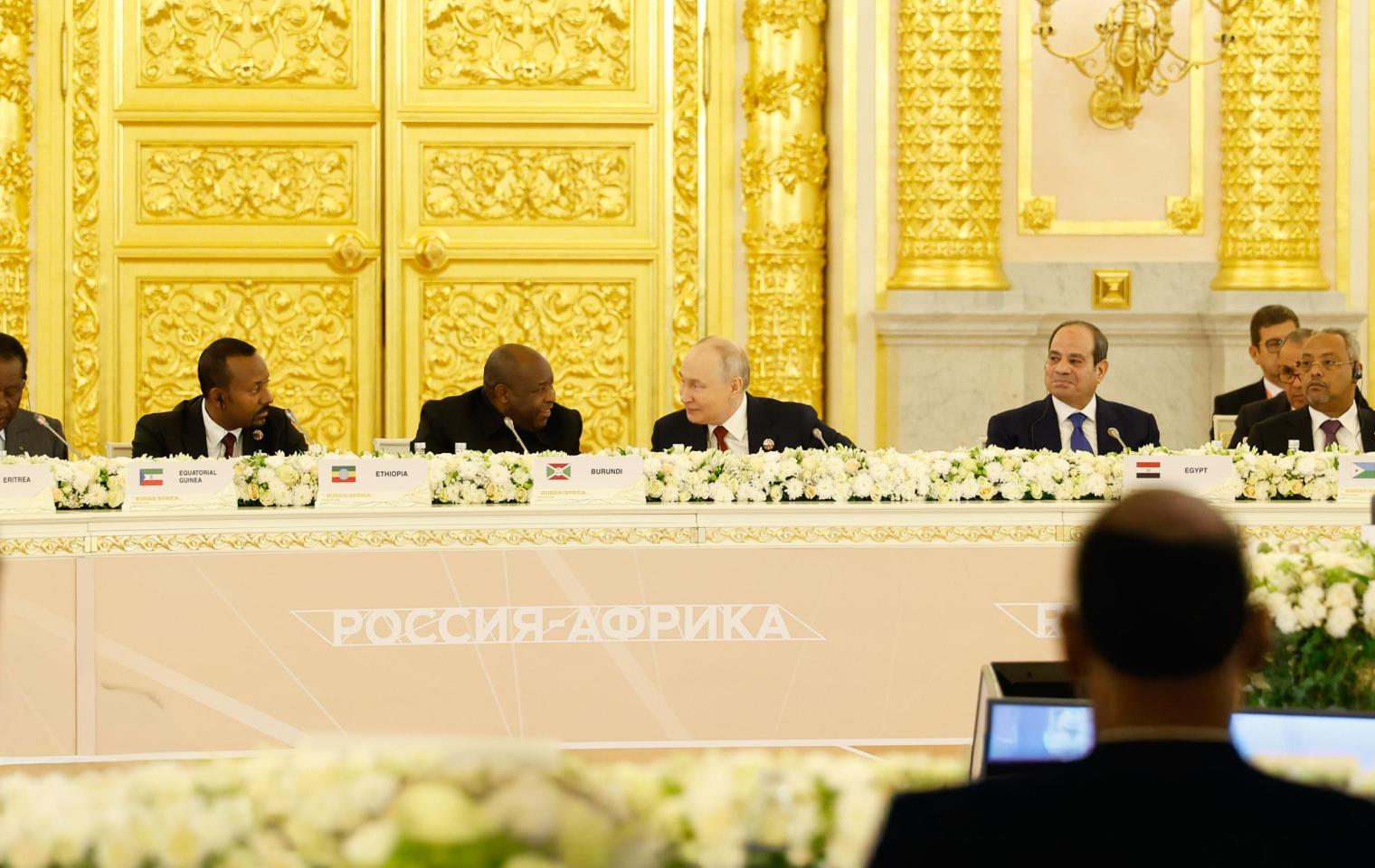
Meanwhile, Russian President, Vladimir Putin has also reaffirmed Russia’s commitment to strengthening its partnership with African countries, describing relations with the AU Commission as strategic and commending the Commission’s role in advancing cooperation.
He reported that Russia’s trade with African countries exceeded US$27 billion in 2025, representing a 50 per cent increase since the previous Russia–Africa summit. He added that Russia is seeking to expand commercial ties through closer integration between the Eurasian Economic Union and the African Continental Free Trade Area.
Putin also highlighted Russian exports of agricultural products, stating that Russia supplied more than 18 million tonnes of grain to Africa in 2025 and a further 13 million tonnes in the first nine months of 2026. He cited fertiliser exports, energy projects, mining, logistics, healthcare and education among the areas of existing and potential cooperation.
On digital development, the Russian President pointed to initiatives involving Russian digital services and the planned adoption of a declaration on cooperation in the civilian application of artificial intelligence technologies.
The summit has brought together representatives of almost 50 African countries, including heads of state and government and leaders of regional integration associations.
Its expected outcomes include a final declaration, the Russia–Africa Partnership Forum Action Plan for 2027–2029 and a declaration on civilian applications of artificial intelligence. Delegations are also expected to sign a package of intergovernmental and interdepartmental agreements covering cooperation across several sectors.
These discussions take place as African countries seek deeper international ties while also demanding greater sovereignty over their resources, better access to finance, and a more active position in global decision-making.
The extent to which summit promises translate into local industry growth, technological capabilities, and actual economic advantages will remain critical in determining the partnership’s contribution to Africa’s development priorities.
READ ALSO: IMF Engagement Shifts as Ghana Battles to Sustain Economic Stability