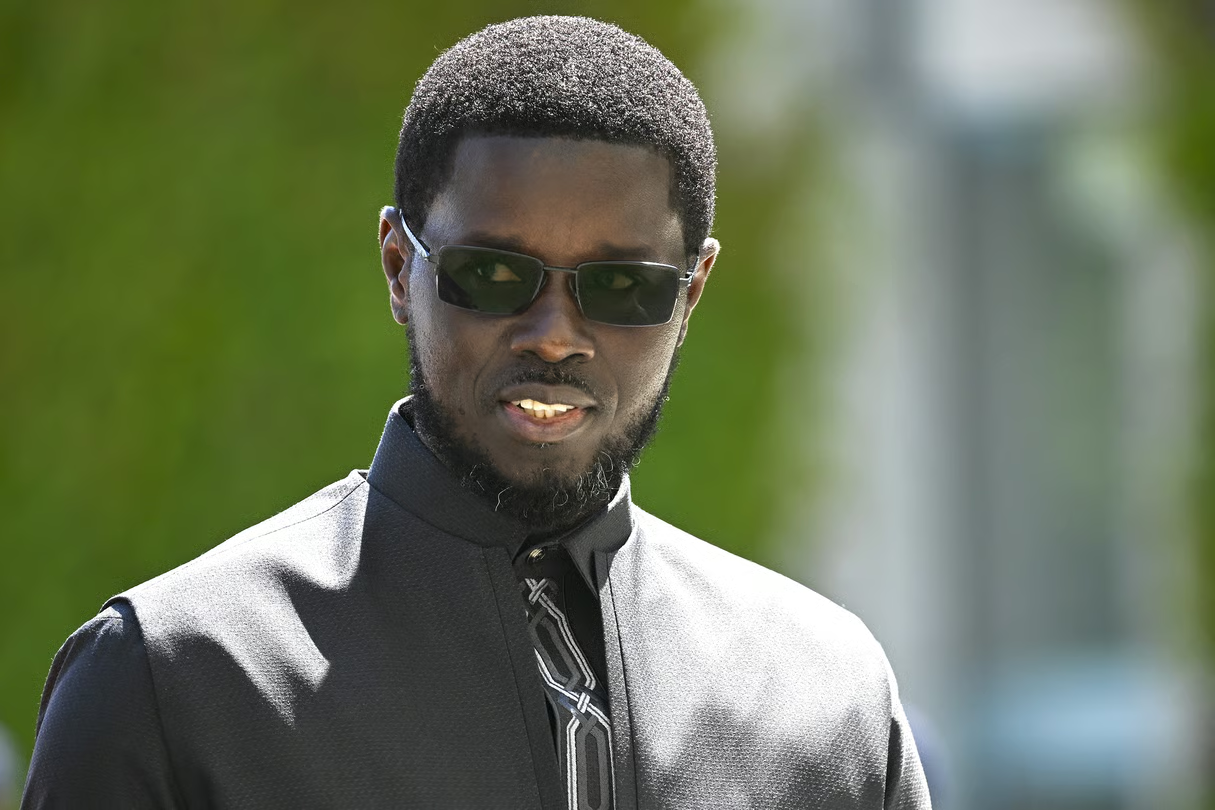
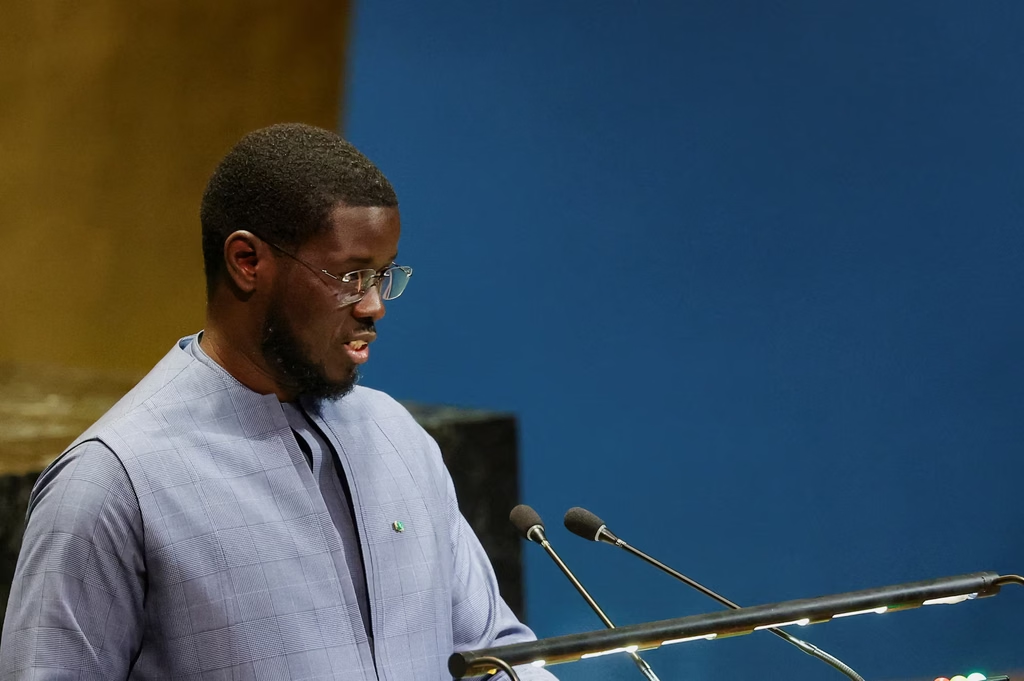
Senegal’s President, Bassirou Diomaye Faye, has decided to implement the country’s revised 2026 budget by decree.
The decision, announced by the president’s office, follows repeated parliamentary defeats of government budget proposals.
“The President of the Republic , guardian of the Constitution and guarantor of the regular functioning of public authorities as well as the continuity of the State, has decided to put into force the draft amending finance law for the year 2026 through decree no. 2026-2416 of November 19, 2026.”
Office of the President
However, the statement provided no further details on the legal or administrative arrangements for implementing the measure.
Budget Rejections Expose Legislative Deadlock
This follows an earlier rejection of the proposal by Senegalese lawmakers, leaving the government without parliamentary approval for its revised fiscal framework and threatening Senegal’s ability to secure a new lending programme from the International Monetary Fund (IMF).
The impasse has since extended to the 2027 budget, with the National Assembly voting against the first part of the finance bill. The rejected section contained the government’s revenue projections, debt estimates and spending limits.
During the parliamentary session, Finance Minister Cheikh Diba defended the proposed budget, warning that failure to secure its approval could affect the implementation of some social protection programmes and investment projects.
Despite the government’s appeal, lawmakers voted against the bill, with members of the ruling Pastef party questioning the credibility of its economic projections because they were based on the revised 2026 budget that parliament had already rejected.
Following the vote, former Prime Minister, Ousmane Sonko, who now leads the National Assembly, stated that the Assembly is not opposed to an agreement with the IMF but insisted that the government must present a credible and transparent financial framework.
“The Fund met everyone except the National Assembly,” he stated, criticising the IMF’s consultations with the President, Prime Minister, Ministers, Central Bank, Development Partners, Businesses and Civil Society Representatives during its mission to Dakar.
Ousmane Sonko described the Fund’s approach as political interference and accused it of showing clear bias towards the executive.
Faye-Sonko Rift Complicates Government Business

The budget dispute points to a wider breakdown in relations between President Bassirou Diomaye Faye and Ousmane Sonko, whose political partnership was instrumental in their victory in Senegal’s 2024 presidential election.
Ousmane Sonko, a popular opposition figure who was barred from contesting the election following a defamation conviction, backed President Faye’s presidential campaign under the slogan “Diomaye is Sonko, Sonko is Diomaye.“
After President Faye assumed office in April 2024, he appointed Ousmane Sonko Prime Minister. However, tensions between the two men gradually intensified, particularly over the government’s handling of the country’s economic difficulties and the management of the ruling party.
President Faye dismissed Sonko in May 2026, alongside the rest of his government, following months of disagreements. Ousmane Sonko subsequently secured the speakership of the National Assembly, where his Pastef party controls a substantial majority.
The political separation has since become more pronounced, with Pastef formally recording Faye’s departure from its ranks and taking action against members who joined his government.
Ousmane Sonko, on the other hand, has described the break with the President as definitive, while the party’s parliamentary majority has opposed the government’s budget proposals in their current form.
IMF Programme Faces Uncertainty Amid Debt Crisis

The continuing budget impasse presents a significant challenge to Senegal’s efforts to secure a new financing arrangement with the IMF as the country attempts to manage a substantial public debt burden.
The Fund reached a staff-level agreement with Senegal in September 2026 on a proposed $2.2 billion lending programme, following the discovery of previously undisclosed debts inherited from the administration of former President Macky Sall.
The debt revelations, which analysts estimate at approximately $13 billion, have placed considerable pressure on public finances and complicated the government’s efforts to restore fiscal credibility.
The IMF has emphasised that Senegal must implement the policies agreed under the staff-level arrangement, including establishing a credible budget framework, before the programme can proceed to approval by its executive board.
Without the necessary fiscal framework, the country faces tighter financing conditions as it seeks to refinance its debt obligations and sustain public investment.
READ ALSO: ISSER Exposes Capital Spending Failures, Pushes for Urgent Reforms