Ghana’s ambitious 2027 Budget is facing fresh scrutiny, with the Institute of Statistical, Social and Economic Research (ISSER) warning that increased government spending on infrastructure will achieve little if public funds continue to be wasted through poor project selection, weak oversight and inefficient implementation.
The institute is demanding urgent reforms in public expenditure management, arguing that the government must move beyond announcing bigger capital expenditure allocations and demonstrate that every cedi committed to development delivers measurable economic benefits.
At the centre of the concerns is Ghana’s persistent difficulty in translating budgeted capital expenditure into completed projects and tangible improvements in living conditions.
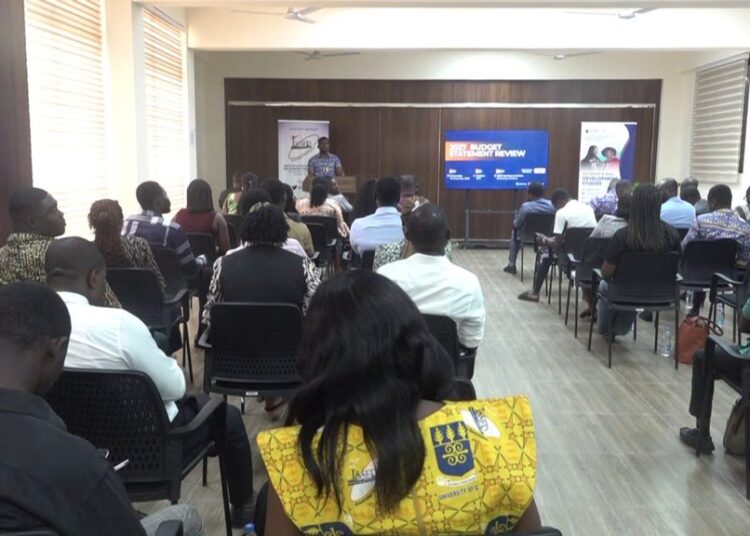
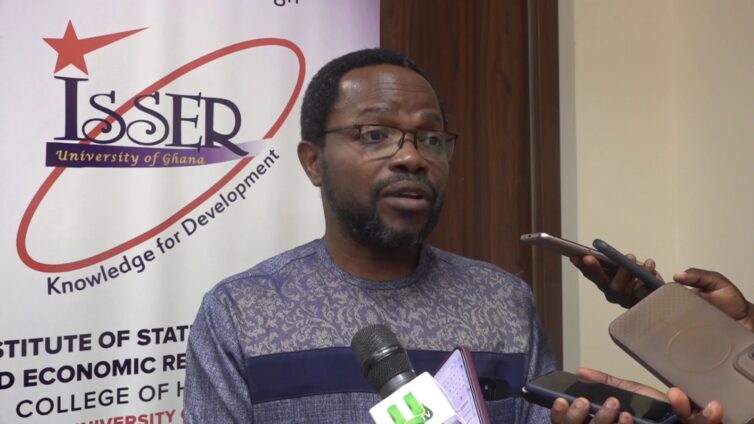
Speaking at a review of the 2027 Budget Statement organised by ISSER, Head of its Economics Division, Professor Fred Dzanku, welcomed the increased allocation to capital expenditure but questioned whether the government had established the right priorities to ensure maximum returns on public investments.
His concerns come at a critical moment as the government seeks to address infrastructure gaps, unemployment and broader economic development challenges through its latest fiscal programme.
Government Faces Questions Over Capital Spending Failures
Although the government has signalled its intention to increase capital expenditure, ISSER believes the effectiveness of such investments will ultimately depend on how projects are selected, monitored and executed.
Professor Dzanku expressed concern that the criteria guiding the selection of government projects were not always sufficiently transparent, raising questions about whether limited public resources were being directed towards the country’s most pressing development needs.
“It’s not too clear sometimes what informs the selection of the projects. The government has limited resources. It needs to invest in certain areas. There must be a clear prioritisation of what the needs are.”
Professor Fred Dzanku
His concerns are reinforced by Ghana’s record in implementing capital expenditure budgets.
According to the professor, the government has failed to meet its capital expenditure targets in seven of the past 14 years, highlighting a recurring weakness in the country’s public financial management system.
The situation was particularly concerning in 2025, when the government spent only about 62 percent of its budgeted capital expenditure.
Although implementation improved to approximately 91 percent as of October 2026, the figures suggest that announcing ambitious spending programmes does not automatically translate into effective delivery.
ISSER is therefore pushing the government to strengthen implementation capacity and ensure that allocations are supported by realistic execution plans.
Road Projects Highlight the Cost of Inefficiency
One of Professor Dzanku’s strongest arguments centred on the financial consequences of inefficient public spending.
He warned that poor cost management can significantly reduce the number of development projects the government can deliver with available resources.
Using road construction as an example, he explained how inflated project costs could deprive the country of additional infrastructure that could otherwise have been financed within the same budget.
“If one kilometre of road can cost, one dollar, and it costs two dollars, it means that you could have built twice the length of road that that money went into building. So we need more efficiency of spending.”
Professor Fred Dzanku
The argument raises important questions about procurement practices, contract pricing and the mechanisms used to monitor public infrastructure projects.
ISSER believes greater transparency must become a central feature of government expenditure management.
Professor Dzanku called for citizens and relevant institutions to have access to information about government contracts, including their values and associated expenditure.
He argued that public accountability should not depend exclusively on investigative journalism to expose possible irregularities.
Such transparency, he believes, would strengthen institutional oversight and make it easier to identify excessive costs, questionable procurement decisions and potential financial leakages.
Manufacturing and Agriculture Must Drive Job Creation
Beyond expenditure management, ISSER is challenging the government to reconsider the sectors receiving priority in its employment strategy.
The institute believes Ghana cannot adequately address unemployment by relying heavily on services-led economic expansion.
While services remain an important contributor to economic growth, Professor Dzanku argued that manufacturing, agriculture and agribusiness offer stronger opportunities to absorb the country’s expanding labour force. “We need to grow more manufacturing, agriculture, and agribusiness. These are key if we want to create more jobs,” he stated.
The call places renewed attention on the productive sectors, particularly their ability to generate employment opportunities beyond major urban centres.
Manufacturing can support industrial expansion, strengthen domestic production and create jobs across supply chains. Agriculture and agribusiness also offer opportunities in processing, storage, distribution and other commercial activities that can increase the value of Ghana’s agricultural output.
ISSER wants the government to ensure that its flagship employment programmes deliver measurable and sustainable opportunities rather than focusing exclusively on headline employment figures.
Professor Dzanku said independent systems must be established to track the number of jobs created and assess the quality of employment provided.
He stressed that wages, pension contributions and job sustainability should form part of the assessment.
This would help distinguish between temporary engagements and decent employment capable of improving household incomes and long-term economic security.
Heavy Reliance on Minerals Raises Economic Risks
ISSER has also raised concerns about the government’s reliance on the extractive sector to finance its development agenda.
Professor Dzanku warned that depending on minerals and oil for about 63 percent of expected revenue exposes Ghana to fluctuations in international commodity markets.
Changes in global gold and oil prices could affect government revenue projections, potentially complicating budget implementation and development financing.
The institute is therefore advocating greater economic diversification alongside stronger efforts to address illicit financial flows and revenue leakages.
It believes Ghana must expand its domestic resource mobilisation capacity rather than allowing weaknesses in revenue collection and expenditure management to deepen fiscal pressures.
ISSER Challenges Government’s Approach to Borrowing
Perhaps one of the most significant aspects of ISSER’s intervention is its position on government borrowing.
While acknowledging that borrowing can support development when properly utilised, Professor Dzanku argued that the government must first examine whether existing public resources are being deployed efficiently. “Before we think about borrowing, which is not bad if it’s efficient, let’s think about the efficiency of what we’re already spending,” he said.
The position does not amount to an outright rejection of borrowing. Instead, it calls for greater discipline in determining when additional financing is necessary and whether the expected economic returns justify the cost.
As Ghana prepares to implement its 2027 Budget, ISSER’s concerns present the government with a broader challenge: ensuring that public expenditure translates into infrastructure, productive capacity and sustainable employment.
The success of the budget will not be measured by the size of its allocations alone, but by the value created from the resources committed.
READ ALSO: Korle Bu Board Chairman Explains Delay in 5-Year-Old’s Brain Surgery