Ghana’s currency recovery is facing another difficult test as fresh projections from Fitch Solutions point to further depreciation of the cedi in 2027, raising concerns about the cost of imports, domestic inflation and the country’s broader economic stability.
The warning comes as the latest data from the Bank of Ghana (BoG) show that the cedi’s depreciation against the US dollar has widened to 10.6 per cent in November 2026, from 9.5 per cent in September.
The figures suggest that the local currency is struggling to maintain its strength despite interventions by the central bank and efforts by government to improve foreign exchange availability.
The cedi was trading at GH¢11.69 to the US dollar on the interbank market in November, compared with GH¢11.66 in September. Although the difference in the exchange rate appears relatively modest, the increase in the depreciation rate highlights the underlying pressures confronting the currency.
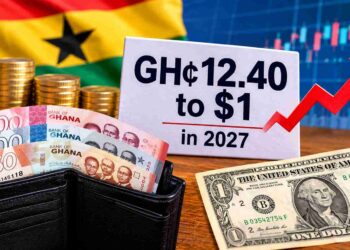
With Fitch Solutions projecting an average exchange rate of GH¢12.40 to the dollar in 2027, Ghana could be heading into another period of currency instability at a time when households and businesses are still dealing with the effects of previous exchange rate movements.
Cedi Loses Ground Against Major International Currencies
The pressure on the cedi is not limited to the US dollar.
Bank of Ghana data indicate that the local currency also depreciated by 9.2 per cent against the British pound and 5 per cent against the euro on the interbank market in November.
The cedi traded at GH¢15.47 to the pound and GH¢12.92 to the euro during the period.
These developments expose the broader foreign exchange challenges facing Ghana, particularly its dependence on imported goods, machinery, industrial inputs and essential commodities.
A weaker cedi makes foreign purchases more expensive, potentially increasing the operating costs of businesses that rely on imported raw materials and equipment.
Importers may eventually transfer these additional costs to consumers through higher prices, creating another source of inflationary pressure.
The currency’s performance also reflects a challenging year characterised by periods of depreciation and intermittent recoveries, with some support coming from the Bank of Ghana’s foreign exchange interventions.
However, sustaining currency stability remains a significant challenge as demand for foreign exchange continues to compete with available dollar inflows.
Fitch Sees Cedi Averaging GH¢12.40 in 2027
The outlook for 2027 is becoming increasingly concerning, with Fitch Solutions projecting that the cedi will average GH¢12.40 to the US dollar next year.
The research firm attributes its forecast partly to an expected moderation in international gold prices and government efforts to rebuild foreign exchange reserves.
Both developments could have important implications for the domestic foreign exchange market.
Gold remains a major source of Ghana’s export earnings and foreign currency inflows. Any sustained decline in international gold prices could reduce the value of the country’s gold exports, limiting the dollars available to support the cedi.
At the same time, government efforts to accumulate foreign exchange reserves could influence the amount of dollars circulating within the domestic market.
These competing demands could make it more difficult to maintain exchange rate stability, particularly if export earnings weaken while demand for foreign currency remains elevated.

Gold Strategy Could Tighten Dollar Supply
Associate Director at Fitch Solutions, Mike Kruiniger, has warned that changes in Ghana’s foreign exchange management framework could introduce additional pressure on the local currency.
He pointed to the shift in foreign exchange intermediation from the Bank of Ghana to the Ghana Gold Board, alongside lower gold prices and reserve accumulation under the Ghana Reserve Accumulation Programme.
According to him, these developments could constrain the supply of foreign currency available on the domestic market.
“We expect to see the currency to weaken a little bit, and that is going to bring back some important price pressures next year,” he said.
The assessment raises an important question about the balance between rebuilding Ghana’s external buffers and ensuring that businesses have sufficient access to foreign exchange to support their operations.
Reserve accumulation is important for strengthening the country’s ability to withstand external shocks and meet international payment obligations. However, the process could create short-term liquidity challenges if a significant share of available foreign exchange is directed towards reserve building.
The impact could become more pronounced if gold export earnings decline at the same time.
Stronger Dollar Could Deepen Ghana’s Currency Problems
Another risk identified by Fitch Solutions is the possibility of a stronger US dollar in international markets.
A stronger dollar could place additional pressure on emerging market currencies, including the cedi, while potentially pushing international gold prices lower.
Such a development would create a difficult combination for Ghana.
Lower gold prices could reduce export receipts, while increased demand for the US dollar could make foreign exchange more expensive in the domestic market.
The consequences could extend beyond the exchange rate.
Businesses importing machinery, fuel, pharmaceuticals, food products and industrial raw materials could face higher operating expenses. Manufacturers may also struggle with rising production costs, particularly where imported inputs account for a significant portion of their expenditure.
These pressures could eventually find their way into consumer prices, complicating efforts to sustain the country’s recent inflation improvements.
2027 Could Test Ghana’s Economic Stability
Fitch’s projection comes at a critical period for Ghana’s economic recovery. Although the country has made progress in restoring macroeconomic stability, exchange rate pressures remain an important risk.
A weaker cedi could complicate inflation management, affect business confidence and increase the cost of servicing foreign currency obligations.
The Bank of Ghana will therefore face the challenge of managing currency pressures while supporting broader economic recovery and rebuilding external reserves.
The government’s gold export strategy and foreign exchange accumulation efforts could strengthen Ghana’s financial position over the longer term. However, their effectiveness will also depend on the availability of sufficient foreign currency to meet domestic market demand.
With the cedi’s depreciation reaching 10.6 per cent in November and Fitch Solutions forecasting an average exchange rate of GH¢12.40 in 2027, the coming year could become another significant test of Ghana’s currency resilience.
Much will depend on international gold prices, movements in the US dollar, foreign exchange supply and the ability of policymakers to balance reserve accumulation with domestic market liquidity.
READ ALSO: GOIL Leads Market Winners as GSE Composite Index Falls