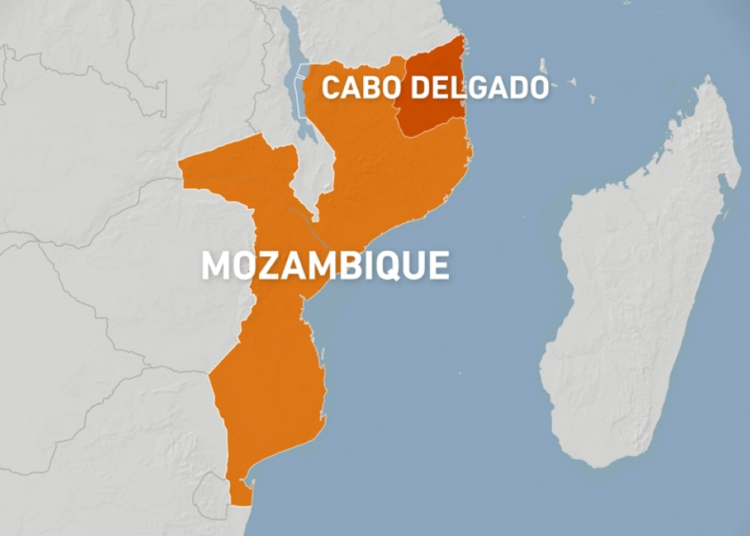
The International Organization for Migration (IOM) has reported that more than 7,000 people have fled their homes in Mozambique’s northern Cabo Delgado province in just over five weeks, as violence and fears of attacks by non-state armed groups worsen an already severe humanitarian crisis.
Displacement in the province reached approximately 7,029 people between 21 September and 27 October 2026, comprising 5,794 people displaced in the first reporting period and another 1,235 in the subsequent two weeks.
According to Dana Graber Ladek, IOM Chief of Mission in Mozambique, “more families are seeking safety in communities that are already hosting people displaced by violence.”
“These communities need help with food, shelter and healthcare. Without timely support, life could get much harder for displaced families and the people hosting them.”
Dana Graber Ladek
Women and Children Bear the Brunt
The latest displacement figures reveal the disproportionate impact of the violence on women and children, who account for nearly 80% of those recently forced from their homes. During the 14–27 October reporting period, 584 children and 386 women were displaced, representing 78% of the total arrivals.
The affected population also included 87 pregnant women, 58 older people, 18 people with disabilities and four unaccompanied or separated children.
Many men have remained behind to protect livelihoods and maintain sources of income, exposing themselves to continuing security threats while women and children seek safety elsewhere.
Repeated displacement further compounds the vulnerability of affected households. Some families have been forced to abandon their homes more than once, losing access to possessions, livelihoods and the support networks that help them recover from earlier emergencies.
Host Communities Face Growing Humanitarian Pressure
As of October 2026, Cabo Delgado was hosting more than 205,000 internally displaced people across 84 sites, with children accounting for more than half of the displaced population.
The continuing influx of families therefore places additional pressure on communities that have already absorbed large numbers of people fleeing violence. Many newly displaced households are relying on host families for accommodation, increasing demand for food, water, healthcare and other essential services.
The arrival of more than 7,000 displaced people in a relatively short period is stretching the resources of host communities, many of which are already struggling to meet their own needs.
Food has emerged as the most urgent requirement, with 88% of assessed displaced households identifying it as a priority. Shelter follows at 71%, while 44% reported needing healthcare. Families also identified protection concerns, reflecting the wider risks associated with prolonged displacement and insecurity.
The figures point to a humanitarian emergency in which basic needs are competing with limited resources.
IOM Expands Aid Amid Funding Constraints
Meanwhile, IOM is supporting displaced families and host communities through a range of emergency and longer-term interventions in Cabo Delgado. Its activities include providing emergency shelter and essential household items, coordinating and managing displacement sites, and delivering water, sanitation and hygiene services.
The organisation also provides protection assistance and mental health and psychosocial support to people affected by conflict and displacement. These interventions are intended to address immediate humanitarian needs while helping vulnerable households manage the emotional and social consequences of repeated displacement.
Also, IOM works with conflict-affected communities to address factors contributing to instability and support efforts towards long-term peace and stability. The approach recognises that responding to displacement requires more than providing temporary accommodation and basic supplies; it also involves strengthening community resilience and addressing the conditions that sustain insecurity.
Through its Displacement Tracking Matrix (DTM), IOM collects and analyses information on population movements and humanitarian needs. The data helps guide humanitarian planning and coordination by identifying where people are moving, the scale of displacement and the assistance required.
However, continued population movements and declining humanitarian funding are placing additional pressure on the response at a time when demand for emergency support is increasing.
Funding constraints threaten the ability of humanitarian organisations to maintain assistance and respond adequately to the needs of newly displaced families and overstretched host communities.
READ ALSO: 2027 Budget Promises New Economic Era as Ghana Targets Jobs