By Eric Nana Kyei
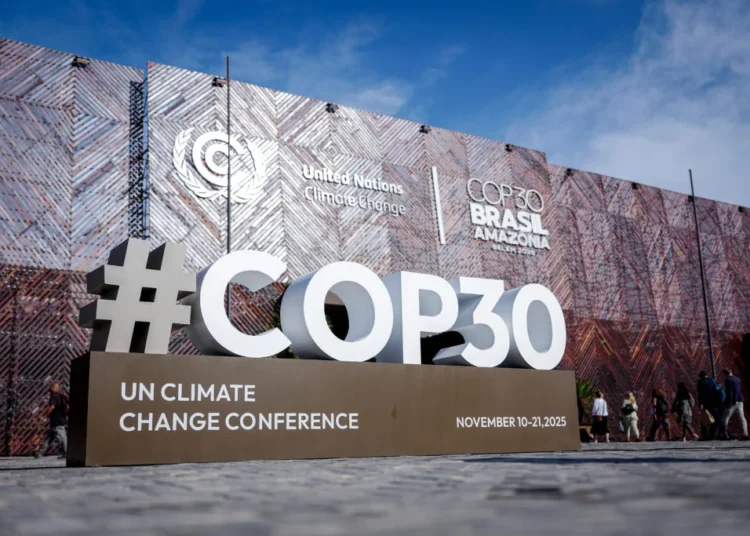
The climate conversation is changing. It has moved from commitments and promises to action. For many years, global climate conferences were dominated by negotiations over targets, commitments, and promises. But the outcome of COP30 in Belém, Brazil, has made one thing increasingly clear: the world is entering the implementation era of climate action.
COP31, scheduled for 9–20 November 2026 in Antalya, Türkiye, therefore comes at a critical moment. The question will no longer be simply what countries are willing to promise. The more difficult question will be: What have countries actually done, what are they doing, who has financed it, who is financing it, and who has benefitted and who is benefiting?
For Ghana and the rest of Africa, this distinction is particularly important, because we have heard of the commitments and the promises all this while. Africa contributes relatively little to historical global greenhouse-gas emissions, yet the continent remains highly exposed to droughts, floods, rising temperatures, food insecurity, water stress and other climate-related risks.
Just to mention a few of the various natural disasters Africa has experienced in recent years, Sudan was affected by flooding and landslides in July-October 2025, which led to about 1000 people losing their lives.
Mozambique and Malawi experienced cyclone in December 2024 led to almost 200 people losing their lives and economic lost estimated at about US$ 3.9 billion, 2024 Zambia, Zimbabwe and Malawi experienced drought, Morocco in September 2023 experienced Haouz Earthquake killing almost 3000 and causing over US$ 7 billion economically.
Ghana has also had its fair share of climate-related disasters. On 29 June 2026, parts of Accra and the Greater Accra Region experienced severe flooding following an intense downpour.
Ghana recorded 169.2 millimetres of rainfall within 24 hours, while June 2026 recorded 593.2 millimetres, the highest monthly rainfall since records began in 1995. Homes, roads, businesses and transport networks were severely affected, highlighting the growing economic consequences of extreme rainfall and urban flooding.
Consequently, Africa’s message going into COP31 must be clear: climate finance must translate into climate resilience, economic opportunity and protection of livelihoods.
The US$1.3 Trillion Question: From Promise to Accessible Finance
One of the most important developments carried forward into COP30 was the Baku-to-Belém Roadmap toward mobilizing at least US$1.3 trillion annually in climate finance for developing countries by 2035.
The target emerged from the COP29 climate-finance agreement and was further advanced through the Baku-to-Belém process at COP30. The emphasis is now increasingly shifting from establishing financial targets to ensuring that the money is mobilized, accessible and translated into measurable climate action.
For Africa, the headline figure is encouraging. But the real question is not simply how much money will be announced. The question is: How much will actually reach African countries, in what form, at what cost, and how quickly?
African governments need financing that is accessible, predictable and affordable. Grants and highly concessional finance are particularly important for adaptation projects because many adaptation investments—such as drainage systems, coastal protection, climate-resilient roads and early-warning systems—may not generate conventional financial returns.
Ghana should therefore enter COP31 with a strong financing agenda. The country already has a dedicated Climate Financing Division within the Ministry of Finance whose mandate includes mobilizing and managing resources for Ghana’s climate-resilient development agenda.
Also, the Ministry for Climate Change and Sustainability, with its main goals including linking climate policies with national development plans across all governmental sectors, push for climate rules in all public building and development projects to stop flooding and damage, as well as help with clean energy plans to lower carbon.
The opportunity now is to move beyond discussing climate finance and build a pipeline of bankable Ghanaian climate projects that international and domestic investors can finance.
Adaptation Must Become a Development Priority
Perhaps the most important lesson for Ghana and Africa is the growing recognition that adaptation is not optional. COP30 called for adaptation finance to be tripled by 2035. This matters enormously for Africa.
Climate change is already affecting agriculture, water resources, infrastructure, health, energy systems and livelihoods. In Ghana, farmers are increasingly exposed to changing rainfall patterns, while urban communities face flooding and other climate-related risks. The challenge is therefore to stop treating adaptation as an environmental issue alone.
Adaptation is an economic issue: A climate-resilient road is an economic investment; A flood-control system is an economic investment; Climate-smart agriculture is an economic investment; An effective early-warning system is an economic investment; and Resilient water infrastructure is an economic investment.
For Ghana, COP31 should be an opportunity to present adaptation projects not as requests for charity, but as investable development opportunities.
Loss and Damage: Africa Must Demand Delivery
The establishment of the Loss and Damage Fund was an important achievement of the international climate process. COP30 continued efforts to move the mechanism from institutional design toward implementation.
For vulnerable African countries, this is critical. There are climate impacts that cannot simply be prevented through adaptation. Communities can lose homes, farmland, infrastructure, cultural heritage and livelihoods.
Ghana has already experienced the practical reality of climate-related losses. At COP30, Ghana highlighted the Akosombo Loss and Damage Funding Programme, through which US$1 million from the V20 Loss and Damage Fund was identified for impacts associated with the Akosombo dam spillage disaster.
This provides an important lesson. Ghana and other African countries need stronger systems for:
- documenting climate-related losses;
- quantifying economic and non-economic damage;
- preparing credible claims;
- accessing international funds;
- ensuring funds reach affected communities; and
- monitoring how climate finance is used.
COP31 should therefore focus on accessibility and delivery, not merely the existence of funds.
The Global Implementation Accelerator: Africa Must Move From Plans to Projects
COP30 introduced the Global Implementation Accelerator, alongside the Belém Mission for 1.5°C, with the objective of helping countries accelerate implementation of their climate commitments.
This may ultimately be more important than another declaration. Africa does not suffer from a shortage of strategies, plans and policy documents. The bigger challenge is implementation.
Ghana’s climate commitments already contain significant ambitions. The country’s updated NDC (Nationally Determined Contributions) includes actions intended to reduce greenhouse-gas emissions while supporting climate-resilient development.
The question before COP31 is therefore: How do we turn Ghana’s NDCs (Nationally Determined Contributions) into roads, farms, renewable-energy projects, resilient cities, efficient industries, green businesses and jobs?
That requires coordination between government, financial institutions, insurance companies, businesses, academia, development partners and local communities. Implementation must become a national economic programme—not simply an environmental programme.
Climate Change Is Now a Financial Risk
There is another lesson that Ghana’s financial sector cannot ignore. Climate change is increasingly becoming a financial risk. Flooding can damage homes, vehicles, factories and businesses.
Drought can affect agricultural production and loan repayment. Extreme weather can disrupt supply chains. Rising temperatures can affect productivity. Coastal erosion can destroy property and infrastructure.
These consequences ultimately affect banks, insurers, pension funds, investors and government finances. This is why climate risk must become part of mainstream financial decision-making. Banks should increasingly consider climate risks when assessing loans.
Insurance companies should strengthen climate-risk underwriting and catastrophe modelling as well as the rates for the premium. Pension funds and institutional investors should consider climate risks in their investment portfolios.
Companies should assess the climate vulnerability of their assets and supply chains. And governments should strengthen climate-related financial disclosure and risk management. For the insurance industry, COP31 presents a major opportunity. Insurance cannot stop climate change, but it can help society absorb shocks, recover faster and build resilience.
The Opportunity for Green Investment in Africa
Africa should not approach COP31 only as a continent seeking climate assistance. Africa should also present itself as a continent of investment opportunities. The continent has enormous renewable-energy potential, critical minerals, agricultural opportunities, forests, young entrepreneurs and rapidly growing markets.
The transition to a low-carbon economy could create new industries around:
- solar and other renewable energy;
- battery storage;
- electric mobility;
- sustainable agriculture;
- climate-smart irrigation;
- green construction;
- waste management;
- sustainable transport;
- carbon markets;
- nature-based solutions; and
- climate technology.
The challenge is creating the financial and regulatory environment that makes these investments commercially viable. This is where African financial institutions, pension funds, sovereign wealth funds, and private investors must become more active. The conversation should increasingly shift from: “How much climate aid can Africa receive?” to: “How much climate investment can Africa mobilize?”
Climate Disinformation: A New Battlefront
Another significant development surrounding COP30 was the increased international attention given to climate disinformation and information integrity. The UNFCCC reported that COP30 saw commitments aimed at addressing climate disinformation and promoting accurate, evidence-based information on climate issues.
This is particularly important in Africa, where social media has become one of the major sources of information for millions of people; the majority of the population in Africa has stopped listening or watching the news and has moved to what social media is saying.
False information can undermine public confidence in climate science, renewable energy, climate policies and even disaster warnings. For Ghana, climate communication must therefore become more deliberate.
Scientists, journalists, universities, government agencies, businesses and civil society organisations have a responsibility to communicate climate risks in language that ordinary citizens can understand. Climate action cannot succeed if the public does not understand the problem—or does not trust the information being provided.
Ghana Must Strengthen Its Voice Before COP31
COP31 should not begin for Ghana when delegates arrive in Antalya, Turkey. The preparation should begin now. Ghana should identify its priority projects, quantify its financing needs, strengthen its negotiating position and build alliances with other African countries.
The country should particularly focus on: First, climate finance. Ghana needs to identify projects that can attract international climate finance and private capital. Second, adaptation. Agriculture, water, infrastructure, coastal areas and cities should remain major priorities.
Third, loss and damage. Ghana needs stronger mechanisms for documenting and responding to climate-related losses. Fourth, renewable energy. The country must accelerate the transition toward a more diversified and resilient energy system. Fifth, climate-smart agriculture. Farmers need access to technology, finance, insurance, irrigation, climate information and resilient seeds.
Sixth, insurance. Climate-risk insurance, agricultural insurance, catastrophe-risk financing and innovative insurance solutions should become an important part of Ghana’s resilience strategy. Seventh, private-sector participation. Climate action cannot be financed by government and donors alone the private sector must participate.
Africa Must Speak with One Voice
Perhaps the greatest lesson from COP30 is that individual African countries may struggle to influence the global climate-finance architecture on their own. Africa needs a stronger collective negotiating position.
The African Union, African Development Bank, regional economic communities and national governments need to coordinate their priorities around finance, adaptation, loss and damage, energy transition, agriculture, technology and trade. The continent should also insist that climate finance does not worsen Africa’s debt burden.
Africa needs affordable capital, technology transfer, capacity building and partnerships, not simply additional loans that increase already difficult debt positions. The African Development Bank and other African financial institutions have an important role to play in building a stronger African climate-finance architecture.
COP31 Must Be the COP of Delivery
COP30 was important because it reinforced the transition from climate ambition toward implementation. But implementation must now be measured. By the time delegates arrive in Antalya, Turkey the world should be asking:
- How much of the promised climate finance has actually been mobilized?
- How much adaptation finance has reached vulnerable countries?
- Is the Loss and Damage Fund reaching affected communities?
- Are countries implementing their NDCs?
- Are renewable-energy investments accelerating?
- Are climate risks being incorporated into financial systems?
- Are farmers and vulnerable communities becoming more resilient?
- Are businesses investing in climate solutions?
- Are climate policies creating jobs and economic opportunities?
These are the questions that matter. Ghana’s Opportunity: For Ghana, the period between COP30 and COP31 should be treated as an opportunity—not simply another year of climate negotiations. The country should use this period to transform its climate ambitions into projects, financing structures, partnerships, and measurable results.
COP31 should be the point at which Ghana can say: Here is what we promised. Here is what we implemented. Here is what it cost. Here is what we achieved. And here is what we need to do next.
Africa cannot afford another cycle where ambitious declarations are followed by inadequate implementation. The continent needs to move from climate vulnerability to climate resilience; from climate aid to climate investment; and from promises to delivery.
COP30 gave the world a roadmap. COP31 must test whether that roadmap is actually taking us somewhere. And for Ghana and Africa, the journey should not wait until November. The time to prepare for COP31 is now.
More on Author: Eric Nana Kyei is a Chartered Insurer (ACII, UK) and ACIIG, MBA Finance & Accounting with extensive experience in underwriting, insurance training and professional development in Ghana’s insurance industry. His professional interests include insurance education, climate risk, resilience and the role of insurance in sustainable economic development
READ ALSO: Mahama’s New Economy Seeks to Turn Stability Into Jobs for Ghanaians