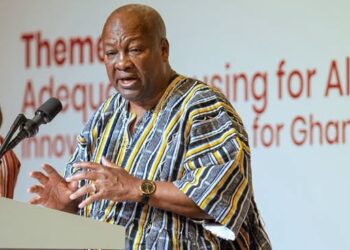
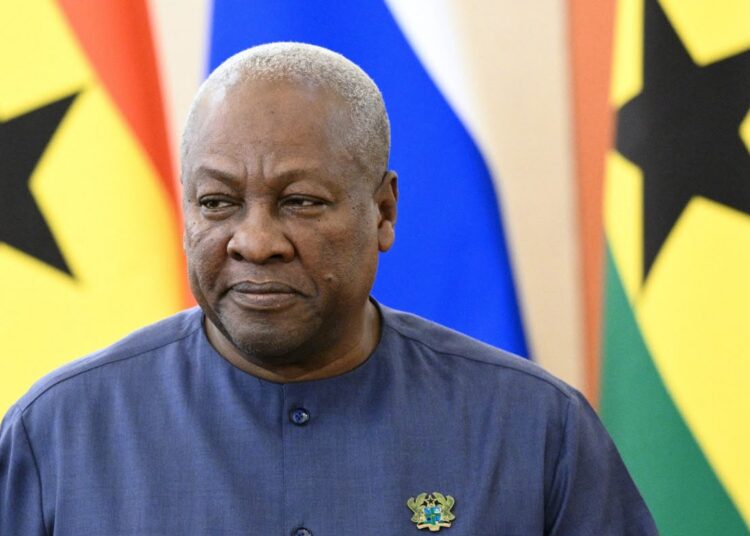
President John Dramani Mahama has announced a new economy plan to create jobs and widen opportunities for Ghanaians, which Finance Minister Ato Forson will outline in the 2027 Budget. He made the announcement on Saturday, November 7, 2026, at the grand durbar of the 64th Hogbetsotso Za festival in Anloga.
The plan, which earlier statements from President Mahama and Dr Ato Forson put at $10 billion, will channel investment into job-rich sectors between 2027 and 2030. The Volta Region is set to benefit in textiles, garments, commercial agriculture, hospitality and tourism.
“And so our next task is to invest in creating opportunities for our people in order that they can realise a decent and dignified life.”
President John Dramani Mahama
Mahama Declares Economic Stabilisation Largely Achieved
President Mahama grounded the announcement in the government’s record. “In the 22 months since we took office, we have focused on stabilising the national economy and restoring it to a path of growth,” he stated. He then reported to the chief of the Anlo traditional area that the objective “has largely been achieved.”
That claim frames the new economy as the second phase of the government’s programme. Stabilisation came first, and the President now wants investment to turn the recovery into work and income.
New Economy Plan Seeks Jobs and Dignified Livelihoods
The President acknowledged a point the Anlo leadership made in its address. The success of the economic reset, he agreed, must reach the lives of ordinary Ghanaians.
He described what that should look like in everyday terms, from reliable services and secure livelihoods for families to lower costs for traders.
“A young person should see a credible pathway from education into employment.”
President John Dramani Mahama
He also stressed that “a trader should be able to move goods without excessive cost.” For a coastal household, he added, progress means being able to sleep peacefully without fear of losing a home to the sea. Those examples show the outcomes the President expects from the new economy, with jobs and lower business costs at the centre.
Volta Region Targeted for Textiles, Tourism and Commercial Agriculture
President Mahama told the gathering that the Volta Region stands to gain greatly under the policy. He named four sectors: textiles, garments, commercial agriculture, and hospitality and tourism. Each can employ large numbers of young people, and each fits the region’s coastline, farmland and cultural attractions.
The President linked the policy to a concrete project. He disclosed that the Ghana Exim Bank has begun work on a light industrial area on 200 acres of acquired land, dedicated to textiles and garments. President Mahama expects it to create at least 3,000 jobs at the start and to grow to 10,000 when fully operational.
Fiscal Discipline Underpins the Next Phase
President Mahama paired ambition with restraint. “Fiscal discipline helps us to sustain these responsibilities,” he told the durbar, and he explained that it demands careful choices. Government must “choose our priorities carefully, to finance them responsibly, and complete the work that we undertake.”
The remark speaks to a long-standing complaint in Ghana about projects that start with fanfare and stall for lack of money. By tying the new economy to discipline, the President signalled that he wants fewer projects, fully funded and finished.
The 2027 Budget Will Put the Plan on Paper
The next test arrives within days. President Mahama said the Finance Minister will present the 2027 Budget on his behalf next week, and Dr Ato Forson has set November 12 for the presentation. Coverage of the budget has already described a plan that promises a new economic era as the country targets jobs.
The budget statement will show how the government intends to deliver. Ghanaians will look for the sector allocations, the job targets and the financing arrangements that President Mahama left for the Finance Minister to explain.
What Comes Next for Ghana’s New Economy
The President’s remarks to the Anlo gathering set out the purpose of the plan and its benefits for the Volta Region, but they gave no sector-by-sector breakdown. He also offered no timetable for when the first jobs would appear, beyond the 2027 to 2030 window.
On November 12, the Finance Minister will have to turn the President’s promise into figures. Traders, young jobseekers and coastal families who listened in Anloga will measure the new economy by how quickly it delivers work and lowers the cost of doing business.