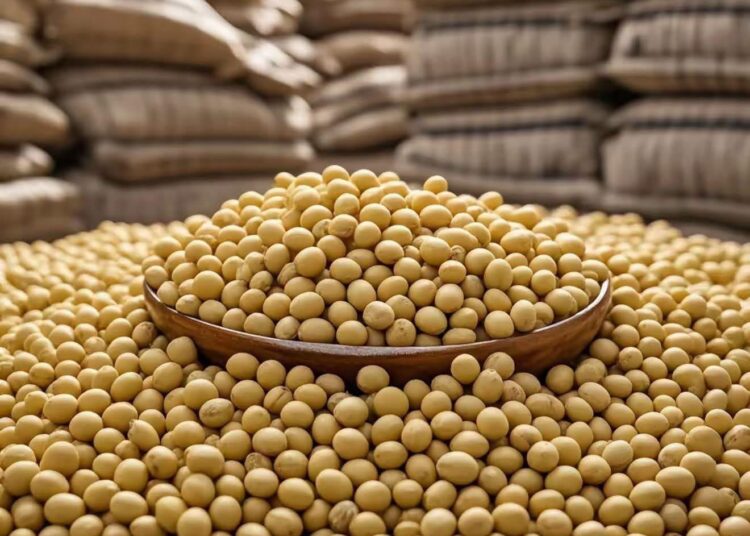
Ghana’s efforts to strengthen domestic soybean production and address persistent supply shortages are receiving renewed attention through capacity building initiatives targeting agricultural extension officers and district level agricultural practitioners.
A two-day Trainer of Trainers (ToT) programme on Climate Smart Soybean Production in Ghana’s Middle (Transition) Belt has been organised to equip Agricultural Extension Officers and District Level Focal Persons with the technical knowledge and practical skills required to improve soybean production, strengthen climate resilience and support smallholder farmers.
The training, held at the Royal Basin Hotel in Kumasi, was facilitated under the Food and Agriculture Organization of the United Nations (FAO) China South-South Cooperation Programme, which supports the One Country One Priority Product (OCOP) Initiative in Ghana through the Directorate of Crop Services of the Ministry of Food and Agriculture (MoFA).
The programme focused on strengthening the capacity of frontline agricultural personnel to translate agricultural research and improved production technologies into practical interventions that can increase farm productivity and improve farmers’ livelihoods.
“The goal is clear: equip frontline agricultural actors with the knowledge and practical skills to translate research into action, promote climate-resilient soybean production, and improve farmers’ productivity and livelihoods.”
Ministry of Food and Agriculture
According to the Ministry of Food and Agriculture’s Feed Ghana Programme, Ghana produced approximately 304,639 metric tonnes of soybeans in 2024, against an estimated national demand of 295,357 metric tonnes.
Closing the National Production Gap
Soybean has become an increasingly important commodity in Ghana’s agricultural economy because of its contribution to food security, livestock production, industrial processing and rural livelihoods.
Its nutritional value, particularly its high protein content, makes it an important ingredient in animal feed formulations and food products.
The crop also contributes to sustainable agricultural practices through biological nitrogen fixation, which helps improve soil fertility and supports crop rotation systems.
Despite the growing importance of the commodity, productivity constraints continue to limit Ghana’s ability to fully exploit its production potential.
The Feed Ghana Programme identifies low adoption of improved agricultural inputs as one of the major challenges affecting soybean productivity. It indicates that only 15 to 20 per cent of soybean farmers use inoculants, while approximately 40 per cent apply the required fertilisers.
The programme further estimates average soybean yields at approximately 1.62 metric tonnes per hectare, compared with a potential yield of about 3 metric tonnes per hectare.
These figures demonstrate that increasing cultivated land alone may not be sufficient to address the production gap. Improving farmers’ access to appropriate technologies, quality inputs and reliable extension services is equally important.
A 2026 study published in Frontiers in Agronomy, titled Bridging Soybean Yield Gaps in Ghana: Opportunities and Challenges for Sustainable Smallholder Production and Livelihood, also identifies climate variability, soil degradation, limited institutional support and inadequate adoption of improved agronomic practices as major constraints.
The study emphasises the importance of climate resilient varieties, integrated pest management, improved soil fertility management and stronger agricultural extension systems in closing the productivity gap.
Strengthening Agricultural Extension Services
The Kumasi training adopted a capacity-building approach that positions agricultural extension officers and district-level focal persons as important links between agricultural research institutions and farming communities.
The emphasis on training trainers is particularly important because participants are expected to extend the knowledge acquired beyond the workshop and support wider adoption of improved agricultural practices at the district and community levels.
“Empowering the trainers, strengthening the extension system, transforming soybean production!”
Ministry of Food and Agriculture
The approach reflects the growing recognition that agricultural transformation requires more than the introduction of improved seeds and technologies.
It also depends on the ability of extension institutions to communicate research findings, provide practical guidance and support farmers in applying appropriate solutions under changing climatic conditions.
Climate smart agriculture is particularly relevant to Ghana’s rain-fed farming systems, where changing rainfall patterns, rising temperatures and other environmental pressures can affect planting schedules, crop development and yields.
Supporting Sustainable Agricultural Growth
The programme also aligns with broader efforts to strengthen Ghana’s agricultural value chains through increased productivity, improved food security and reduced dependence on imported agricultural commodities.
Soybean’s importance extends beyond primary agricultural production. Reliable domestic supplies are essential for supporting local feed manufacturers, poultry businesses, fish farmers and food processing companies that depend on the commodity as a major industrial input.
For the training to achieve its intended impact, the knowledge acquired must translate into sustained district level extension activities, improved farmer adoption and measurable productivity gains.
This will require continued collaboration among the Ministry of Food and Agriculture, development partners, research institutions, agricultural extension personnel and private sector stakeholders.
The programme’s central message is that strengthening the agricultural extension system is an important step towards building a more productive and climate resilient soybean industry.
“Together, we can build a more resilient and productive agricultural sector for Ghana.”
Ministry of Food and Agriculture
The two-day training represents a contribution towards that objective by empowering agricultural practitioners to serve as catalysts for improved soybean production and sustainable agricultural development.
Organisations, institutions and stakeholders interested in strengthening agricultural capacity are encouraged to engage the programme facilitators for upcoming training opportunities in soybean production.
READ ALSO:Asiama Reveals Bold Reforms Transforming Ghana’s Banking Sector