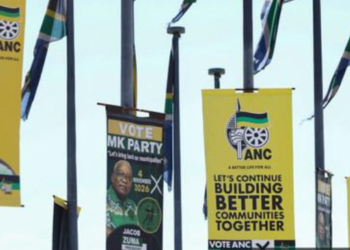
South Africa’s African National Congress (ANC) is facing a significant electoral setback as preliminary municipal election results show its support declining sharply, raising the prospect of coalition negotiations to determine control of several major cities.
Results from 71% of votes counted on Friday placed the ANC at 32% of the vote, compared with 25% for its closest rival, the Democratic Alliance (DA), extending the ruling party’s declining electoral fortunes following its historic loss of a parliamentary majority in the 2024 general elections.
If the figures hold, the ANC’s performance will represent a decline of approximately 14 percentage points from the 2021 municipal elections, when it recorded its worst electoral result since coming to power in 1994.
The outcome is likely to leave several major metropolitan councils without an outright majority, forcing political parties to negotiate governing arrangements to secure control of key municipalities.
Louw Nel, Senior Political Analyst at Oxford Economics Africa, observed that the results suggested some traditional ANC supporters had switched allegiance rather than abstained from voting.
“(The turnout) suggests that ANC voters did not stay away as many expected but rather showed up and voted for alternative parties.”
Louw Nel
He further indicated that a 32% outcome is “the party’s worst nightmare coming true.”
ANC’s Electoral Decline Deepens
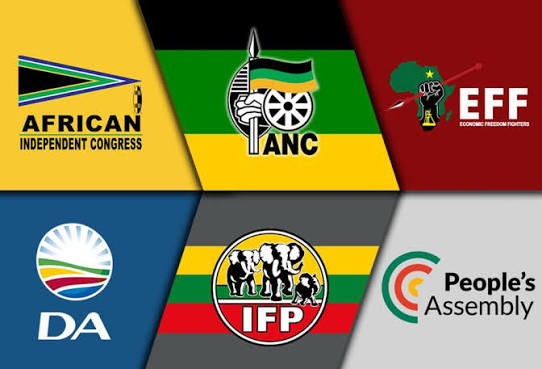
South Africa’s African National Congress (ANC) declining popularity has been attributed to persistent unemployment, high crime rates, corruption scandals and deteriorating public services, including unreliable water supplies and electricity disruptions.
The ANC secured nearly 70% of the national vote in 2004 but fell below the 50% threshold for the first time in the 2021 municipal elections, when it received approximately 46% of the vote.
Its performance deteriorated further during the 2024 general elections, when it secured just over 40% of the national vote, forcing it to form a Government of National Unity with nine other political parties, including the DA.
The latest municipal results provide another indication of the political challenges confronting the party as voters increasingly question its record in local governance.
According to the Electoral Commission, approximately 15.9 million of South Africa’s 29.2 million registered voters participated in the latest elections, representing an estimated turnout of 54.5%, compared with 46% in the pandemic-affected 2021 municipal elections.
Former President Jacob Zuma’s uMkhonto weSizwe (MK) party, which emerged from a breakaway faction of the ANC, secured approximately 8.5% of the national vote, placing it third behind the two leading parties.
Johannesburg and Durban Face Uncertain Political Outcomes
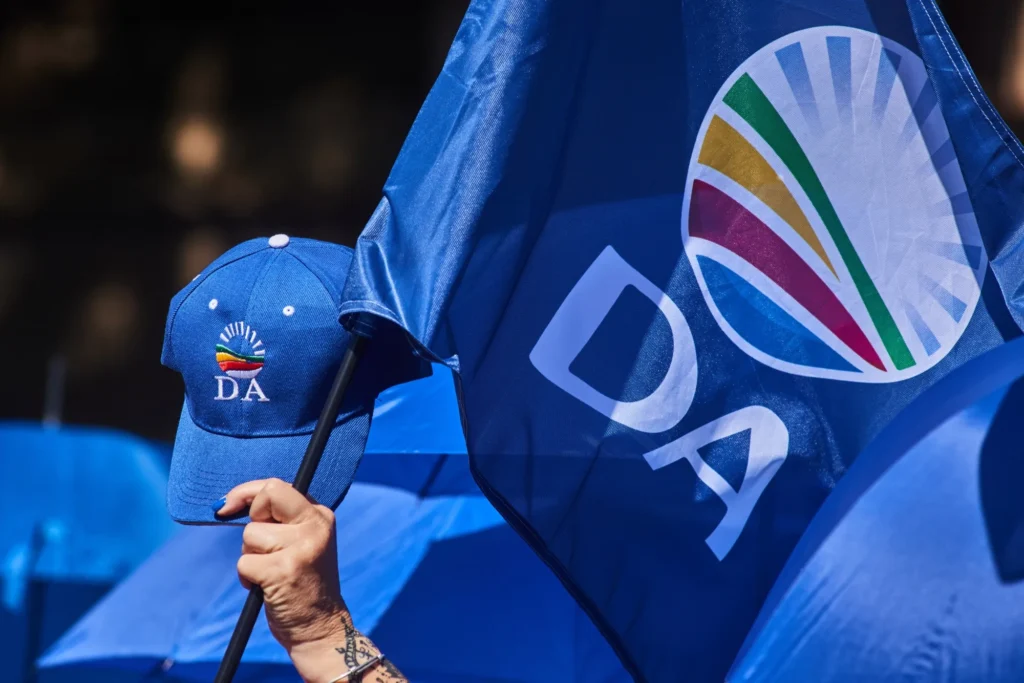
The preliminary results point to a potentially complicated political landscape across South Africa’s major metropolitan municipalities, with coalition negotiations likely to determine control of several councils.
The DA is projected to retain control of Cape Town, where it is forecast to secure approximately 56% of the vote, giving it an outright majority. Its leader, Geordin Hill-Lewis, has already declared victory in the city.
In Johannesburg, South Africa’s financial capital, the DA was leading with approximately 34% in projections by the Council for Scientific and Industrial Research (CSIR), although an outright majority remains uncertain.
Tshwane, which includes the administrative capital Pretoria, is also among the major metropolitan areas where the results point towards a hung council, potentially requiring parties to negotiate governing alliances.
Meanwhile, the outcome in eThekwini, the municipality centred on Durban, remains closely contested, with Zuma’s MK party seeking to strengthen its position in the eastern port city.
Although the party had been tipped as a potential contender for an outright majority, CSIR projections placed its support in the municipality at approximately 32%, suggesting that coalition arrangements could still determine the eventual administration.
Coalition Negotiations Set to Shape South Africa’s Local Government

With outright majorities uncertain across several major municipalities, political parties are expected to face complex negotiations to establish the alliances required to govern.
Political analysts have identified a potential partnership between the ANC and DA as one option for securing greater stability in Johannesburg and other major cities, reflecting their cooperation in the national Government of National Unity.
However, differences between the parties over key policy issues, particularly racial redress, could complicate negotiations and make a governing arrangement difficult to sustain.
The municipal elections represent another important test of the ANC’s political standing under President Cyril Ramaphosa, as the party attempts to rebuild public confidence following years of criticism over corruption, municipal mismanagement and inadequate service delivery.
The results will also provide an important indication of voter sentiment ahead of South Africa’s 2029 general elections, as opposition parties seek to consolidate their gains and challenge the ANC’s longstanding political dominance.
READ ALSO: Mahama Wants AU and G20 Debt Relief to Deliver for Africa