
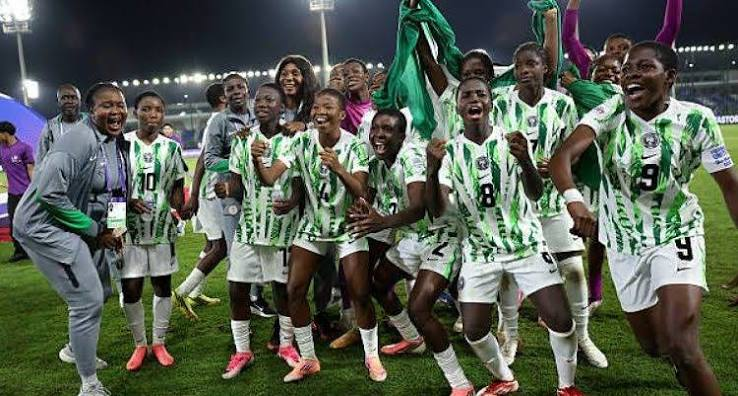
Nigeria has become the first African nation to win the FIFA U-17 Women’s World Cup after defeating Japan 2-1 in the final of the 2026 edition in Morocco on Saturday.
The Flamingos produced a resilient performance at the Mohammed VI Football Complex in Rabat to overcome one of the competition’s most successful nations and claim their maiden world title.
Awawu Bashiru opened the scoring five minutes before half-time, giving Nigeria a deserved advantage after an encouraging first-half display.
The midfielder registered her third goal of the tournament, having scored twice in Nigeria’s 3-1 semi-final victory over Brazil, to put the West Africans in control of the final.
Nigeria carried their momentum into the second half and doubled their advantage just two minutes after the restart.

Oluebube Umejiaku found the back of the net in the 47th minute to put the Flamingos 2-0 ahead and leave Japan facing an uphill task against an increasingly confident Nigerian side.
Japan, however, refused to surrender and threatened a comeback when Fuki Ito reduced the deficit in the 80th minute.
The goal set up a tense final 10 minutes, with Japan pushing for an equaliser, but Nigeria remained organised defensively and held on to their advantage to secure a historic victory.
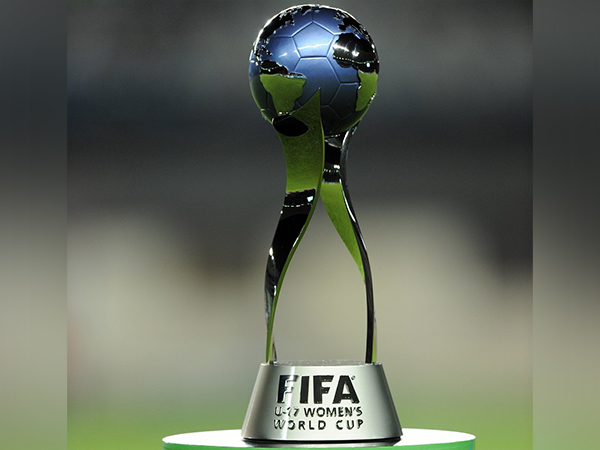
The triumph marks Nigeria’s first appearance in a FIFA U-17 Women’s World Cup final and makes them the first African country to lift the trophy since the competition was introduced in 2008.
Flamingos Overcome Opening-Day Setback
Nigeria’s journey to the title was particularly impressive given their disappointing start to the tournament.
The Flamingos opened their Group B campaign with a 2-1 defeat to Poland, leaving themselves with little room for further setbacks in their pursuit of qualification for the knockout stages.
However, Akeem Busari’s side responded positively, recording a 2-0 victory over Puerto Rico before defeating the then defending champions North Korea 3-1 to secure progression from the group.
Their resurgence continued in the knockout stages, where they overcame Mexico 2-1 in the round of 16 to book a quarter-final meeting with Venezuela.
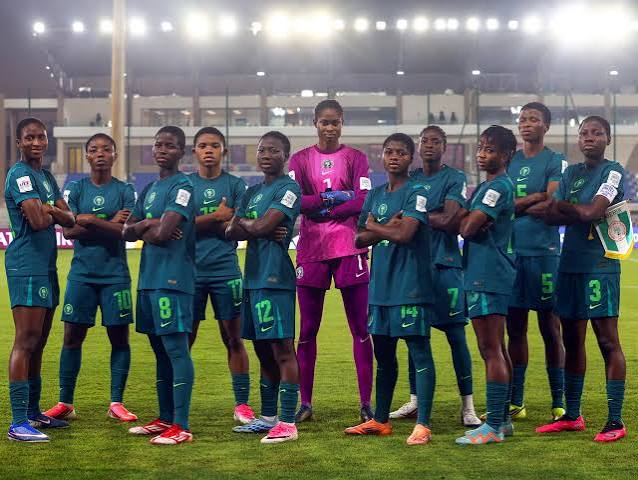
Azeezat Oduntan converted a late penalty in the 89th minute to secure a narrow 1-0 victory over Venezuela and send Nigeria into the semi-finals.
The Flamingos then produced one of their most impressive performances of the competition, defeating Brazil 3-1 to reach the final for the first time.
Queen Joseph opened the scoring before Bashiru struck twice to put Nigeria firmly in control. Brazil managed a late consolation, but it was insufficient to prevent the West Africans from reaching the championship deciding encounter.
Their victory over Japan completed a remarkable recovery from their opening-day disappointment, with Nigeria recording six consecutive victories after losing their first match.
Nigeria Surpass Previous Best as Africa Celebrates
The 2026 triumph represents another significant milestone in Nigeria’s history at the FIFA U-17 Women’s World Cup.
The Flamingos made their debut at the inaugural edition in 2008 but were eliminated at the group stage. They subsequently reached the quarter-finals in 2010, 2012 and 2014 before suffering another group-stage exit in 2016.
Nigeria missed the 2018 tournament after failing to qualify but returned in 2022 to record their previous best performance.
At the tournament in India, they finished third after defeating Germany 3-2 on penalties following a 3-3 draw in the bronze-medal match.
That achievement made Nigeria the second African country to secure a podium finish at the competition after Ghana finished third in the 2012 edition in Azerbaijan.
Ghana had previously reached the quarter-finals in 2014, 2016 and 2018, while Cameroon, South Africa, Gambia and Zambia have also represented Africa at the tournament.
Nigeria’s 2026 triumph therefore surpasses both their previous third-place finish and Ghana’s historic bronze-medal achievement, establishing the Flamingos as the first African champions of the competition.
The victory also provides another landmark moment for Nigerian women’s football, which has enjoyed considerable success at senior level through the Super Falcons.
Nigeria Break New Ground for African Women’s Football
Beyond Nigeria’s achievement at the U-17 level, the victory represents an unprecedented moment for African women’s football, as the Flamingos have become the first African women’s national team to win a FIFA World Cup trophy at either senior or youth level.
Despite the continent’s long-standing presence in international women’s football, no African side had previously conquered a FIFA global championship, with Ghana’s third-place finish at the 2012 U-17 Women’s World Cup and Nigeria’s bronze medal in 2022 representing previous podium achievements.
The Super Falcons, Africa’s most successful senior women’s national team, have also yet to progress beyond the quarter-finals of the FIFA Women’s World Cup.
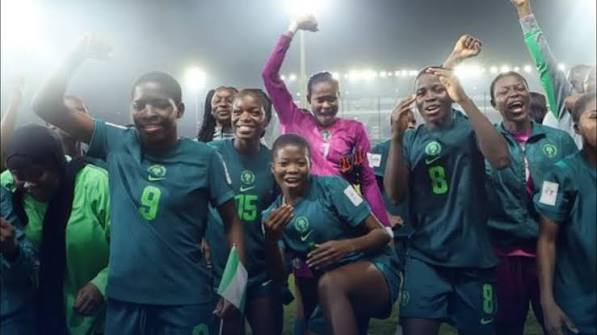
Nigeria’s historic triumph in Morocco therefore marks a breakthrough for the continent and sets a new benchmark for African women’s football on the global stage. For the Flamingos, however, the achievement belongs to a new generation that has taken Nigerian football to the summit of the global U-17 women’s game.
READ ALSO: DHIMS2 Restored After Ministry Resolves Hosting Payment Delay