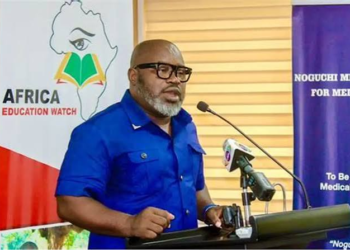
Nurses and midwives across Ghana have been called upon to combine clinical excellence with genuine compassion, as health leaders stress that patients remember kindness far more than medical terminology during their most vulnerable moments.
The appeal was made by Mad. Adjoa Obuobia Darko-Opoku, Administrator of the Ghana Medical Trust Fund, at the Senior Nursing and Midwifery Managers Conference 2026, where she urged senior practitioners to recognize the weight of their leadership roles in shaping both patient outcomes and the next generation of health professionals.
Addressing the conference, Darko-Opoku painted a vivid picture of the emotional state many patients find themselves in upon entering healthcare facilities, describing them as frightened and confused, often having just received life-altering news.
She noted that mothers walking into labour wards and families waiting anxiously outside hospital rooms rarely recall the names or titles of those who attended to them, but they never forget how they were made to feel.
“They remember the nurse who came back to check on them, and the midwife who told them she was there for them.”
Mad. Adjoa Obuobia Darko-Opoku, Administrator of the Ghana Medical Trust Fund
Darko-Opoku argued that healthcare stands apart as one of the few professions where technical competence and basic humanity must operate together at all times.
She cautioned that clinical knowledge alone cannot guarantee good patient experiences, just as compassion without professional excellence cannot save lives, insisting that patients deserve both in equal measure.

Patients Remember Kindness, Not Clinical Terms
Turning to the conference theme, “From Strategy to Impact,” Darko-Opoku reflected on what she described as one of the most persistent challenges in public service, translating well-crafted policies into outcomes patients can genuinely feel.
She observed that strategies are easy to announce, policies can be elegantly written, and budgets can be approved, yet none of these matters unless it reaches the patient at the point of care.
She proposed a simple test for leadership: measuring whether improvements to healthcare systems are actually felt by the people receiving care, and whether changes in leadership are experienced by those working beneath it. According to her, this question should guide every decision made by health administrators and ward leaders alike.
The Weight of Leadership
Darko-Opoku reminded senior nurses and midwives in attendance that their responsibilities extend far beyond direct patient care, as they are also responsible for guiding and shaping other health professionals under their supervision.
She stressed that the tone set by a single leader can influence an entire ward, and that decisions to mentor junior colleagues can shape careers spanning decades.
She warned that the working environment created by senior practitioners can either nurture confident, inquisitive professionals or produce fearful ones who remain silent to avoid embarrassment, and can determine whether teams collaborate around patient care or retreat into isolated silos of responsibility.

“Sometimes the greatest lesson a young practitioner receives is not from the classroom. It is from watching a senior person work.”
Mad. Adjoa Obuobia Darko-Opoku, Administrator of the Ghana Medical Trust Fund
She explained that this includes how senior staff speak to patients, respond under pressure, treat support staff, and conduct themselves when no one of authority is present, all of which shape the professional standards absorbed by younger colleagues.
Family Affair
Drawing on her experience administering the Ghana Medical Trust Fund, Darko-Opoku spoke about the deeply human dimension of serious illness, noting that when a chronic condition enters a household, it affects the entire family rather than the individual patient alone.
She explained that the Fund was established in line with a vision by President John Mahama to ensure that no Ghanaian facing serious chronic illness should feel that survival depends solely on the financial resources their family can mobilise.
However, she cautioned that financial support alone cannot resolve gaps in healthcare delivery, pointing out that a well-funded patient still faces difficulties if services remain unavailable, and that hospitals equipped with modern equipment still struggle without sufficient trained personnel to operate them effectively.
Guarding Against Normalised Failures
In a pointed caution to healthcare leaders, Darko-Opoku warned against the tendency within long-serving systems to normalise inefficiencies simply because they have become routine.
She listed examples including prolonged delays, poor communication, harsh interactions with patients, and mothers feeling unsupported during labour, arguing that none of these should be accepted as an unavoidable part of the system.
“When we stop noticing, we stop improving.”
Mad. Adjoa Obuobia Darko-Opoku, Administrator of the Ghana Medical Trust Fund
She urged nursing and midwifery leaders to continually interrogate whether patient journeys are being coordinated and led as effectively as possible, describing this ongoing scrutiny as the true essence of leadership within healthcare institutions.

Closing her address, Darko-Opoku commended nurses and midwives for their daily commitment to holding healthcare systems together, often under significant resource constraints.
She called for a continued push toward a health system defined not only by strength but by kindness, where confidence is nurtured, quality is consistently measured, and every patient feels safe, respected and genuinely cared for throughout their treatment journey.
READ MORE: GHS Set to Vaccinate 440,000 Girls Aged 9–15 Against HPV