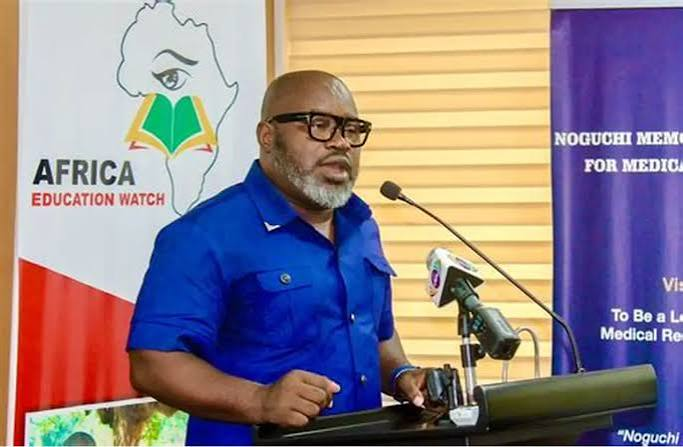
The Executive Director of Africa Education Watch (Eduwatch), Kofi Asare, says only 3.8 per cent of Ghana’s Technical and Vocational Education and Training (TVET) schools have access to the internet, a gap he says is locking learners out of the digital skills the curriculum demands.
Speaking at the National TVET Week 2026 policy dialogue, Mr. Asare called for at least 10 per cent of the education budget to go to TVET and urged government to recost the Free TVET programme, whose current funding model he described as woefully inadequate.
Digital learning has been mainstreamed into the TVET curriculum, Mr. Asare said, but the schools lack the connectivity to teach it. Digital literacy, he said, is an enabler of TVET.
“How are we able to teach our children digital competencies, how to do digital marketing as they leave school, when only 3.8 per cent of our TVET schools have access to internet? It is not possible.”
Executive Director of Africa Education Watch (Eduwatch), Kofi Asare
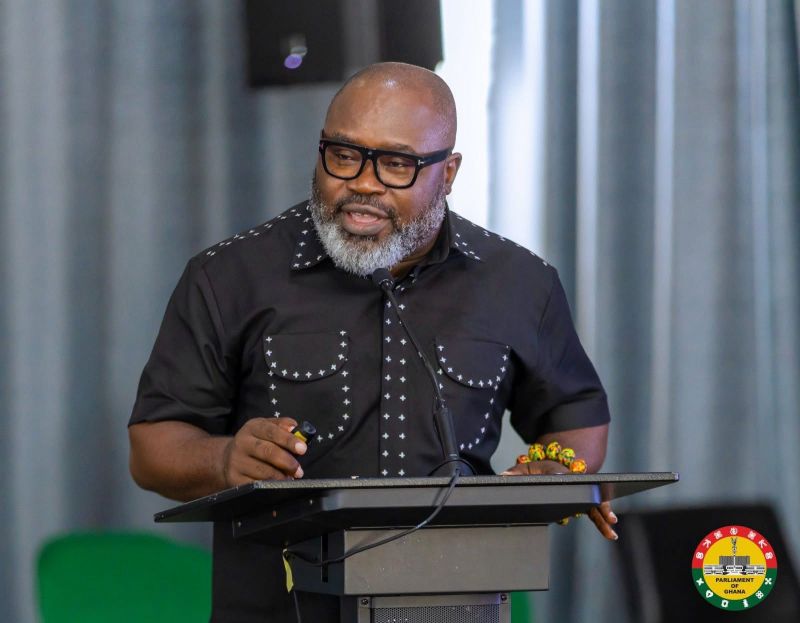
He said a figure that low calls for a full reset so that every school has access to digital learning.
Tablets Not Fit for Purpose
Mr. Asare welcomed government’s plan to increase the digital allowance for teachers, saying they deserve it, but asked what is being done for students, who need internet access to function.
Government has procured tablets for all second-cycle students, but in TVET schools, he said, they are not fit for purpose. Many school prospectuses carry a line asking learners to bring their own laptops.
“Our TVET students do not need tablets. They need laptops, because the applications that are going to be run will not function well on tablets.”
Executive Director of Africa Education Watch (Eduwatch), Kofi Asare
Because parents are buying laptops for their children, he said, the situation is also causing exclusion. He asked government to find money for laptops that meet the schools’ specifications and to treat TVET differently when buying for second-cycle students.
Doing so, he said, would help bridge the practical training gap, the soft skills deficiency and the gaps in green TVET.

Infrastructure Deficits
Mr. Asare presented figures on the physical gaps in TVET schools. About 200,000 student desks are in deficit, about 116,000 dormitory beds are needed and the deficit in dining tables is up to 25,000. Staff bungalows are scarce; few teachers live on campus.
Workshops, he said, are the second most important need after dormitories. Without them there can be no practical learning, and some schools run only two trades, not for lack of staff but because there is no workshop to mount a third. He wants funding directed to dormitories, workshops and classroom blocks.
Regional Disparities
The deficits cut across all regions, but the Northern, Savannah, Western North and North East regions show the largest gaps. The longest desk deficit is in the Western North Region, followed by the Eastern Region. There is not a single TVET school with boarding facilities in the North East Region.
Without dining halls and dormitories, he said, TVET schools cannot run as boarding institutions or take in more learners from distant communities.
In Central, Western and even Eastern Europe, Mr. Asare said, free senior high school has run for about three decades, and the standard is that 40 per cent of the second-cycle population is in skills-oriented programmes.
Ghana’s share is around 12 per cent, he said, but real improvement has been below two per cent. About six per cent of learners were already in TVET before free TVET was declared, and the 2021 move largely brought existing institutions and learners from other ministries under the Ministry of Education. That, he said, is not an increase in the share of the second-cycle population.
Budget Share Declining
Mr. Asare said TVET’s share of the education budget has declined from five to three per cent, against the 10 per cent needed to compete towards the fourth Sustainable Development Goal, he said it must rise in next month’s budget and keep rising until 2030.
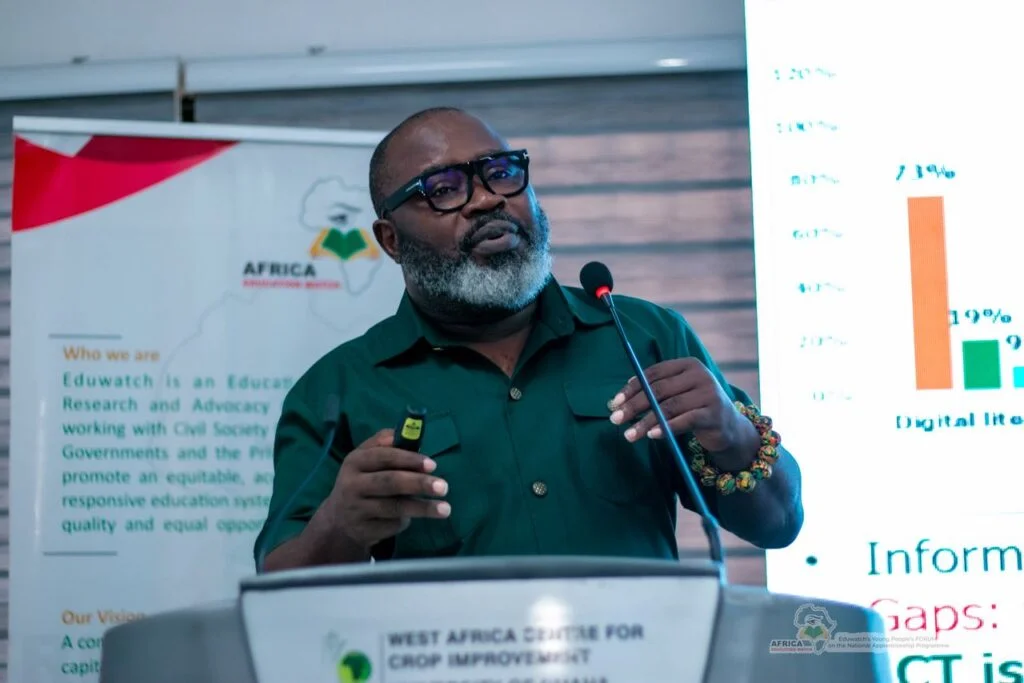
He welcomed the Ministry of Education’s statement that 30 per cent of second-cycle infrastructure investment will go to TVET schools. Meeting that share, he said, would close the gaps much faster, yet the current budget is being reduced.
Attention now turns to next month’s budget, where the TVET share, the funding for connectivity and laptops, and the 30 per cent infrastructure commitment will show whether government is ready to close the gaps Mr. Asare has set out.
READ MORE: Financial Deficits Will Continue Affecting Ghana’s Manpower Production — Asare