Ghana’s share of Burkina Faso’s national petroleum consumption supplied through trade channels involving Ghana has risen from approximately 15% to 40%, according to Tema Oil Refinery (TOR), highlighting the growing importance of cross-border petroleum trade to the country’s regional energy position.
TOR Managing Director Edmond Kombat attributed the increase to stronger institutional collaboration between the refinery and Burkina Faso’s national petroleum company, Sonabhy, since President John Dramani Mahama returned to office in 2024.
The development could create opportunities for Ghana to expand petroleum trading and related commercial services across the sub-region.
However, the scale of the reported increase also raises questions about the capacity of Ghana’s petroleum infrastructure to sustain higher regional volumes, the commercial benefits for domestic operators and how the growing trade can translate into lasting energy-sector gains.
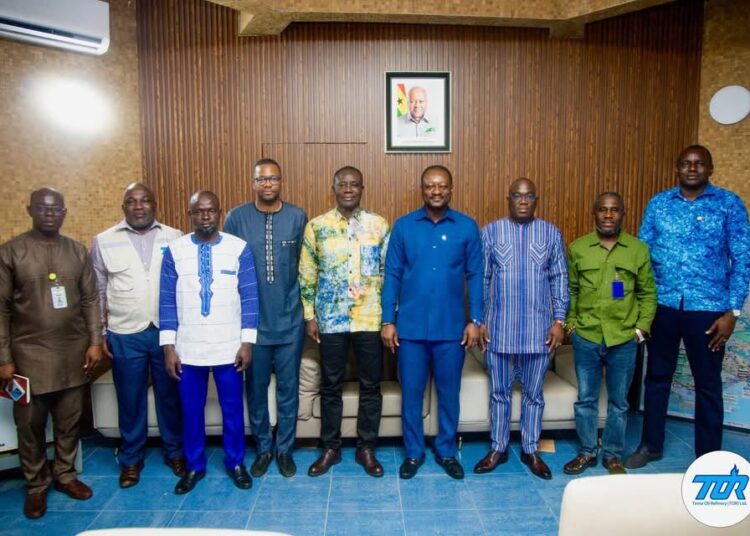
The figures were highlighted during a visit by a Sonabhy delegation to Kombat, followed by a courtesy call on the Minister of Energy and Green Transition, Dr John Abdulai Jinapor.
The delegation expressed appreciation to the government for its support for the movement, trading and supply of petroleum products to Burkina Faso.
Regional Trade Strengthens Ghana’s Petroleum Position
Kombat said the relationship between TOR and Sonabhy had played an important role in facilitating petroleum trade through Ghana to markets served by the Burkinabè company.
He described the growth in Ghana’s contribution to Burkina Faso’s petroleum consumption as evidence of the value of sustained institutional cooperation, with the partnership potentially strengthening Ghana’s position as a petroleum supply and trading hub in West Africa.
The reported rise from 15% to 40% represents a substantial increase in Ghana’s share of the supply channel identified by TOR. Yet, the figures do not by themselves establish how much additional product has moved through Ghana in absolute terms, whether the increase reflects a change in total consumption or how much revenue has accrued to Ghanaian companies.

Those distinctions matter. A higher share of a neighbouring country’s petroleum market can generate opportunities for storage, transportation, trading and other services, but the economic impact depends on the volume of trade, margins earned and the extent to which domestic infrastructure and businesses participate in the transactions.
For Ghana, the strategic opportunity is to convert its geographic position and petroleum infrastructure into a commercially sustainable regional role rather than simply serve as a transit point for products destined for landlocked markets.
Sonabhy Signals Interest in Expanding Commercial Cooperation
Sonabhy Managing Director Dr Patrice Forogo welcomed the relationship between the two institutions and expressed a continuing commitment to strengthening petroleum trade through Ghana.

He also pointed to the potential for the companies to generate additional revenue through mutually agreed petroleum transactions and services, signalling an interest in extending cooperation beyond existing supply arrangements.
“The future cooperation between the two companies” offers opportunities to generate additional revenue through mutually agreed petroleum transactions and services, Forogo indicated during the meeting.
Forogo congratulated Kombat on his appointment as TOR’s managing director and wished him success in carrying out the mandate entrusted to him by the President.
The emphasis on mutually agreed transactions is significant because regional petroleum cooperation must ultimately be commercially viable for both parties.
Greater trade can benefit the participating institutions when supply arrangements are reliable, pricing and contractual terms are competitive, and operational responsibilities are clearly established.
The visit, however, did not announce a specific new supply agreement, investment commitment or trade target. The immediate development is the reaffirmation of the relationship and the stated intention to explore further commercial opportunities.
TOR’s Infrastructure Is Central to the Opportunity
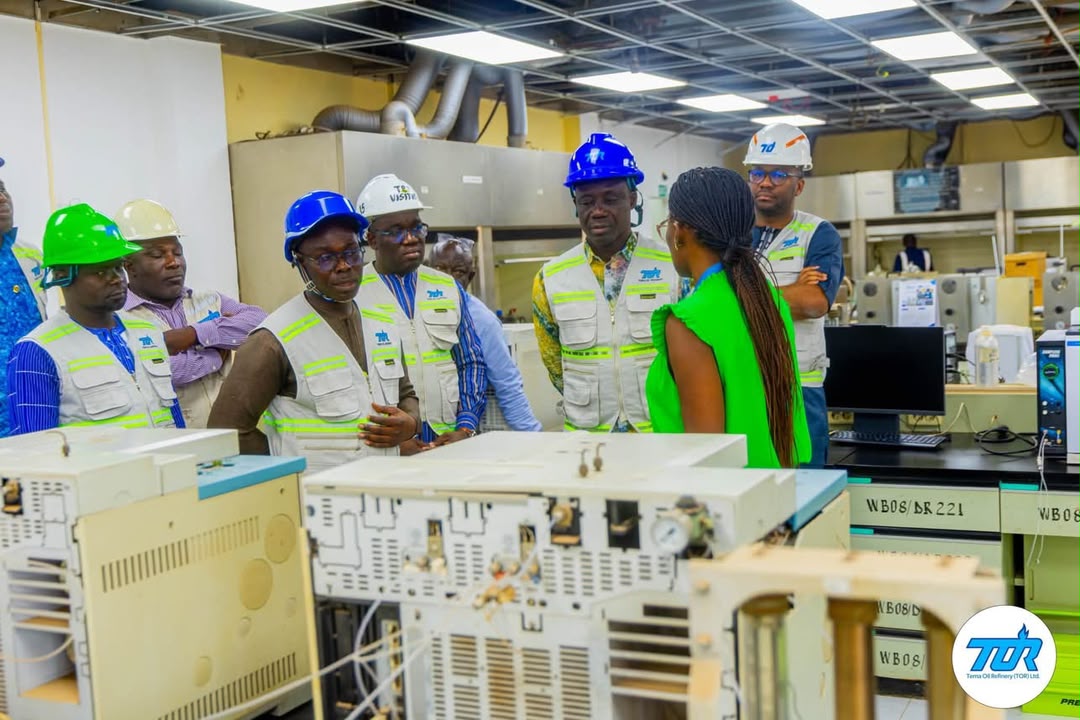
The Sonabhy delegation toured several sections of TOR’s refinery, including the utilities, tank farm, new safety block, quality control facilities and the F-61 furnace at the crude distillation unit.
The tour provided an opportunity for the delegation to observe the refinery’s infrastructure and operations as the two institutions consider the potential for deeper collaboration.
For TOR, stronger regional trading relationships could support business development and widen its commercial reach. But the extent to which the refinery benefits will depend on its ability to support the relevant transactions and services while maintaining reliable operations and meeting applicable quality and safety requirements.
The visit also brings into focus the difference between expanding petroleum trade and expanding domestic refining. Products moving through Ghana may originate from different supply sources, and the reported consumption share does not establish that all the petroleum supplied to Burkina Faso was refined at TOR.
That distinction is important for assessing the impact on the refinery itself. Increased regional trade could create opportunities for TOR, but the benefits to its processing operations would depend on the specific products supplied and the arrangements underpinning each transaction.
Regional Energy Security Requires Commercial Delivery
The growing trade relationship comes as regional markets continue to depend on reliable arrangements for petroleum supply, particularly for landlocked countries that require access to external supply routes.
Closer cooperation between TOR and Sonabhy could strengthen commercial links and provide a basis for further collaboration in product supply, logistics and related services.
For Ghana, the broader benefit would be a stronger role in regional petroleum trade and greater utilisation of its energy infrastructure.
The next test is whether the reported expansion can be sustained and translated into measurable commercial gains.

Clearer information on volumes, product categories, transaction values and the respective roles of Ghanaian suppliers and infrastructure operators would help establish the scale of the opportunity.
For now, TOR and Sonabhy have signalled a shared interest in deepening their relationship. Whether that partnership delivers a lasting boost to Ghana’s petroleum industry will depend on the commercial agreements, operational capacity and investment decisions that follow.