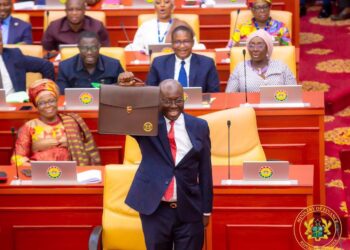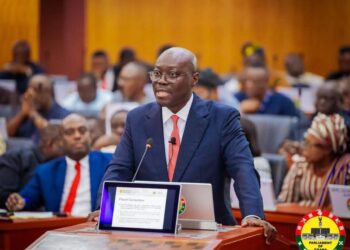
Finance Minister, Dr. Cassiel Ato Forson has called on the Ghana National Association of Small-Scale Miners (GNASSM) and licensed gold buyers to throw their weight behind a proposed three percent discount on small-scale gold purchases scheduled for rollout in 2027.
The Minister in the 2027 Budget Statement and Economic Policy emphasized that stakeholder cooperation is essential to lowering the operational costs of Ghana’s domestic gold purchasing programme while safeguarding foreign exchange inflows.
“I urge the Ghana National Association of Small-Scale Miners and the Licensed Gold Buyers Associations to support the implementation of these reforms. Together, we can build stronger reserves at a lower cost and ensure that Ghana’s gold delivers lasting benefits to our people.”
Finance Minister, Dr. Cassiel Ato Forson
The upcoming pricing adjustment targets artisanal and small-scale mining (ASM) gold bought by the Ghana Gold Board (GoldBod), the state agency mandated as the sole authority to buy, assay, value, and export precious minerals in the country.
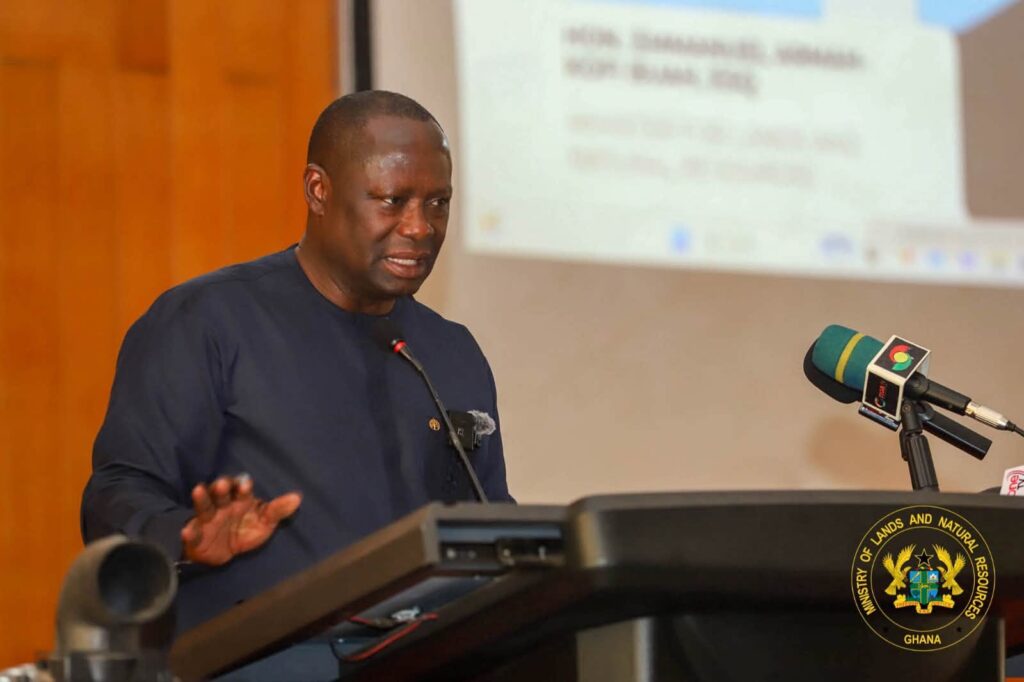
Through this mechanism, the government aims to trim the baseline cost of generating foreign exchange and accumulating international reserves from five percent in 2026 down to a lean two percent.
The reform builds on earlier structural adjustments under the Ghana Accelerated National Reserve Accumulation Policy (GANRAP), which already slashed reserve accumulation costs from 16 percent in 2025.
Small-Scale Output Outpaces Large-Scale Sector
Data presented to Parliament underscores the transformative role small-scale miners now play in anchoring Ghana’s macroeconomic stability.
Since January 2026, GoldBod has exported 88 tonnes of small-scale gold valued at US$12 billion, outperforming the large-scale mining sector, which recorded 80.64 tonnes worth US$10.23 billion over the same period.
These inflows have significantly bolstered foreign exchange supply on the domestic market, shored up the Bank of Ghana’s gross international reserves, and provided critical support for the stability of the Ghanaian cedi.

By formalizing gold trade and curbing smuggling, GoldBod’s operations have shifted the ASM sub-sector from a regulatory blind spot into the primary engine of non-debt reserve accumulation.
“The GoldBod’s reforms are strengthening the contribution of our gold to economic stability,” Dr. Forson told lawmakers, noting that the state’s ability to capture value from artisanal production is directly insulating the economy against external shocks.
Addressing Fiscal Risks and Program Costs
Despite the impressive export volumes, the financial sustainability of the domestic gold purchasing programme has come under intense scrutiny from both domestic policymakers and international partners.
In its 2026 assessment of Ghana’s economic programme, the International Monetary Fund (IMF) flagged the high operational costs associated with domestic gold procurement as a potential fiscal risk.
According to the Fund, service fees, assay charges, trading margins, off-taking expenses, and foreign exchange pricing differentials pushed programme costs to 11.7 percent in the first quarter of 2026 well above the five percent ceiling outlined in government targets.

Following the formal transfer of the gold purchase programme from the Bank of Ghana to GoldBod earlier in 2026, the Ministry of Finance moved to tighten trading margins and eliminate intermediary inefficiencies.
Introducing a three percent purchase discount in 2027 directly addresses these cost drivers. Industry observers note that GNASSM had previously submitted recommendations to GoldBod in January 2026 proposing a two percent discount alongside licensing reforms to curb gold hoarding.
The government’s three percent proposal expands on that dialogue, seeking an equilibrium that lowers state acquisition costs without driving miners back into illicit channels.
Securing Long-Term Reserve Sustainability
The 2027 discount is a cornerstone of the broader 2026–2028 GANRAP framework, which targets building Ghana’s international reserves to the equivalent of 15 months of import cover by the end of 2028.
Achieving this milestone without resorting to expensive commercial Eurobond borrowing requires maximizing net foreign exchange retention from every ounce of gold mined locally.

“To reduce this cost further to 2 percent, Government will, in consultation with industry stakeholders, introduce a 3 percent discount on small-scale gold purchases in 2027,” the finance minister stated, adding that “these reforms will help secure greater national value from our gold while strengthening the sustainability of reserve accumulation“.
For miners and licensed buyers, the coming months will involve technical consultations with GoldBod and the Ministry of Lands and Natural Resources to finalize the pricing formula and implementation timeline.
As Ghana pushes to refine at least 70 percent of its small-scale gold locally by December 2027, consensus between state regulators and grassroots operators will determine whether the country can sustainably convert its mineral wealth into lasting fiscal resilience.
READ ALSO: Premature Babies Need More Than Survival – Deputy Health Minister