
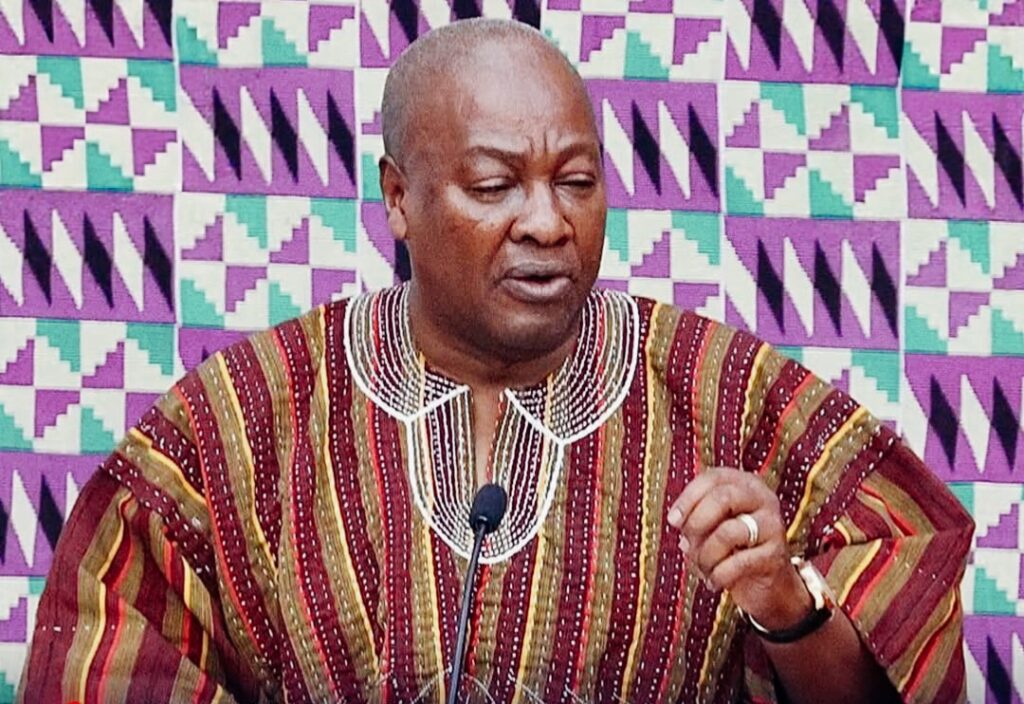
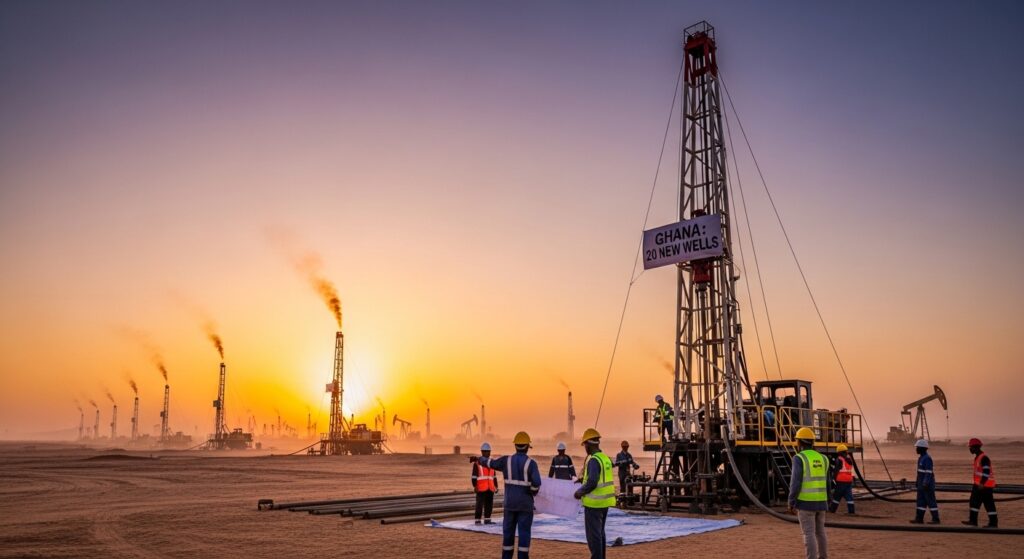
Ghana is set to drill 20 new wells following major investment commitments secured by President John Dramani Mahama aimed at reviving the country’s petroleum sector and reversing years of production decline.
Announcing the development during his address to Parliament, the President revealed that two major agreements have been reached with key upstream partners, unlocking a combined $3.5 billion in fresh capital for oil and gas development.
“I am pleased to announce that we have signed a Memorandum of Understanding with the Jubilee and TEN Field partners to commit $2 billion to additional investment in the Jubilee field. This will include drilling up to 20 new wells.”
President John Dramani Mahama
The announcement signals renewed momentum in Ghana’s upstream petroleum industry after years of reduced output and investor uncertainty.
The investment in the Jubilee Field and TEN Field is expected to significantly expand production capacity and extend the life of the fields, which have been central to Ghana’s oil story since commercial production began in 2010.
Drilling up to 20 new wells will enhance reservoir recovery and improve operational efficiency. Industry experts say such large-scale drilling programmes are critical for maintaining output levels in mature offshore fields.
The President emphasised that the new commitment reflects restored investor confidence and a shared vision for revitalising the sector. Increased activity in the Jubilee and TEN fields is also expected to stimulate job creation, local content participation and service industry growth.
$1.5 Billion for OCTP and Cape Three Points
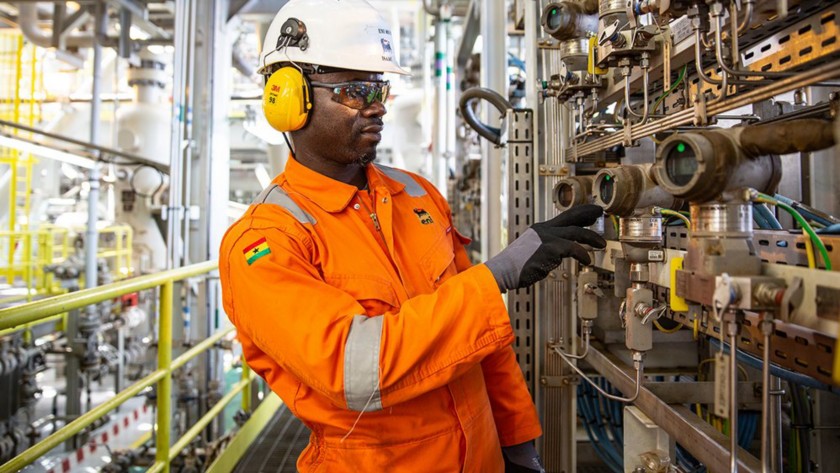
In addition to the Jubilee and TEN agreement, the government has secured another major investment pledge linked to the Offshore Cape Three Points project.
“There’s a second Memorandum of Intent with the OCTP Partners to commit $1.5 billion to additional investment in the OCTP field, the Cape Three Points Block 4 Contract Area, among others.”
President John Dramani Mahama
The Offshore Cape Three Points project plays a strategic role in both oil and gas production, particularly in supplying gas for domestic power generation. Additional investment in the block is expected to expand output and strengthen feedstock availability for thermal plants.
According to the President, the agreement “will significantly increase Ghana’s oil and gas production, thereby enhancing energy security, domestic demand, and infrastructure development.”
Expanded gas production from OCTP is likely to support electricity generation, reduce reliance on imported fuels and stabilise power supply nationwide.
Addressing Past Investment Challenges
President Mahama acknowledged that the petroleum sector had faced significant headwinds in recent years, which contributed to declining production and weakened investor sentiment.
“Challenges in investment throughout the previous administration affected the petroleum sector,” he noted, attributing the downturn to “years of policy inconsistency, regulatory inefficiencies, a lack of transparency, prolonged licensing processes, and unresolved legal disputes over field unitisation.”
These structural and regulatory challenges, he said, eroded investor confidence and slowed capital inflows into upstream exploration and production.
The result was a steady decline in crude output over a five-year period.
“Consequently, crude oil production declined by approximately 32% between 2019 and 2024, falling from 71.4 million barrels to 48.2 million barrels.”
President John Dramani Mahama
The drop in production not only reduced export earnings but also affected government revenue, given the importance of petroleum receipts to the national budget.
By securing fresh investment commitments and accelerating drilling activity, the government aims to reverse this downward trend and restore Ghana’s position as a competitive oil producer in West Africa.
Energy analysts believe that consistent regulatory reforms, improved contract enforcement and transparent licensing processes will be essential to sustaining the renewed investor interest signalled by the latest agreements.
Strengthening Energy Security and Growth
Beyond boosting crude output, the investments are expected to reinforce Ghana’s broader energy security framework. Increased gas supply from OCTP and other offshore fields will support thermal power generation, reducing the risk of supply disruptions and curbing expenditure on liquid fuels.
Infrastructure development linked to upstream expansion, including subsea systems, processing facilities and logistics support, is also expected to create multiplier effects across the economy.
President Mahama framed the agreements as a turning point for the petroleum industry, signalling a shift toward stability, predictability and partnership with investors.
With up to 20 new wells planned and billions of dollars in capital commitments secured, Ghana’s upstream sector appears poised for renewed growth.
READ ALSO: MoMo’s Paapa Osei Bags Top Legal Honour