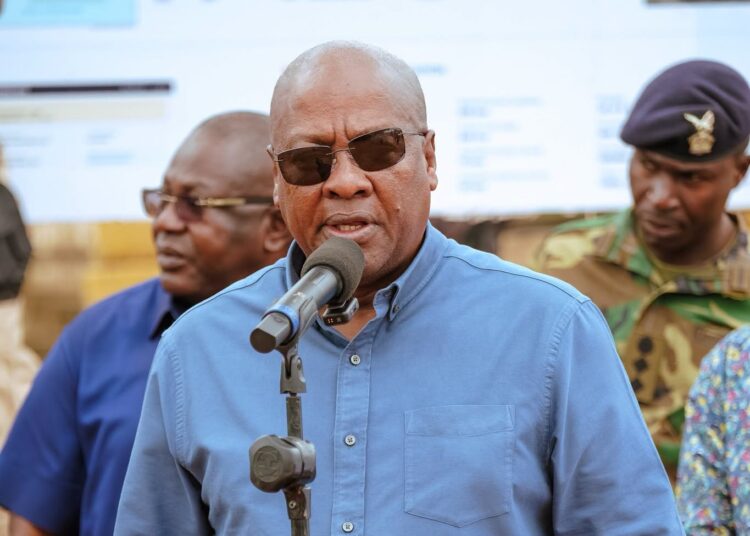
President John Dramani Mahama has said his administration has resolved the feeding difficulties that troubled senior high schools under the Free SHS programme and created dedicated funding the policy previously lacked.
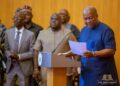
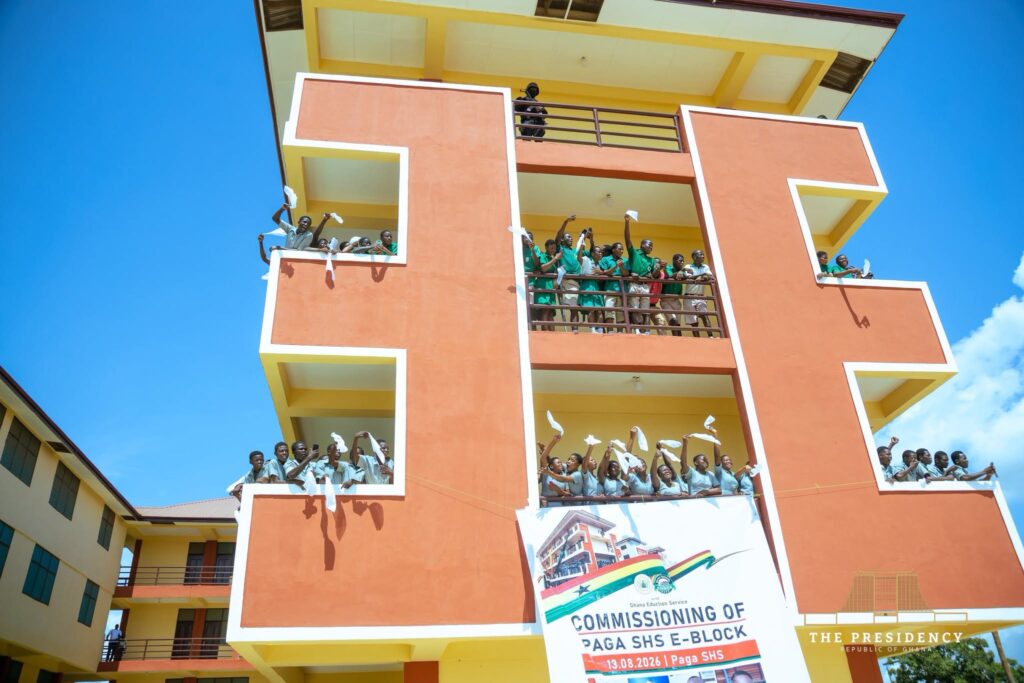
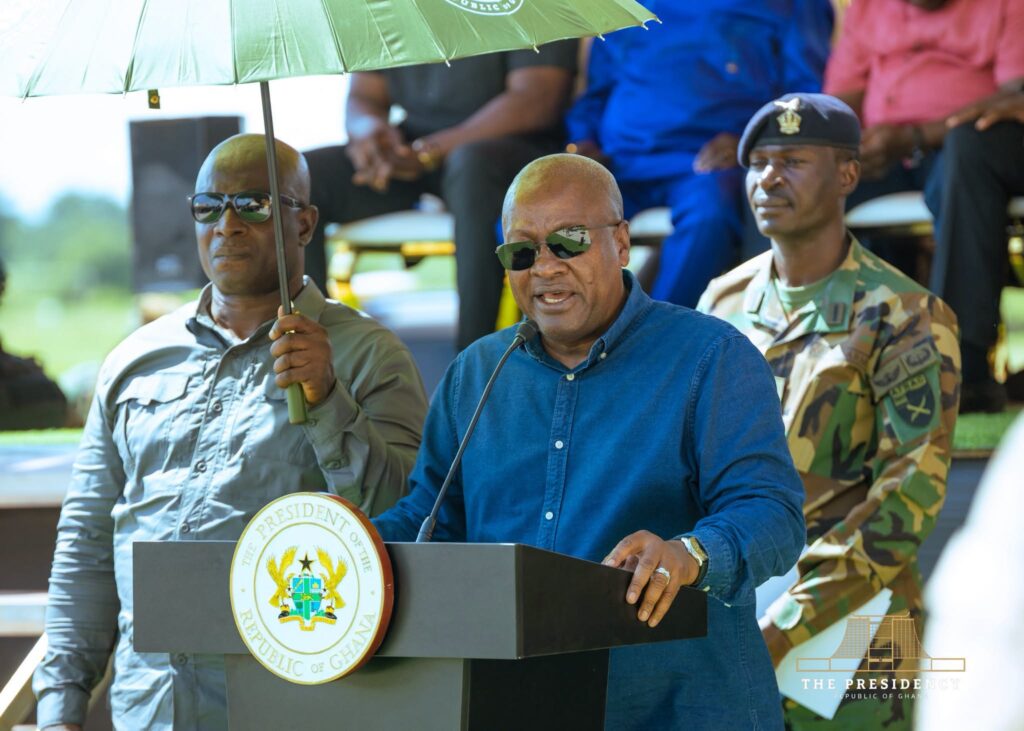
He made the remarks at the inspection of the completed E-Block at Paga during his Resetting Ghana Tour of the Upper East Region. Speaking directly to students at the school, the President said improving the quality and access of education at all levels sits among the major policies of the Resetting Ghana Agenda.
He also dismissed campaign claims that he intended to scrap Free SHS, describing them as propaganda, and argued that his government is strengthening the programme rather than dismantling it.
“Today is your day and I can assure you we’re going to do everything so that you have a very good learning experience in this senior high school. One of our major policies in the Resetting Ghana Agenda is that we will improve the quality and access of education at all levels, including secondary”.
President John Dramani Mahama
Fixing what the programme inherited
The President described his approach as remedial, aimed at difficulties that had accumulated since the policy began. “And so we set out to resolve some of the challenges that had bedevilled especially secondary education since the beginning of the Free SHS,” he said.
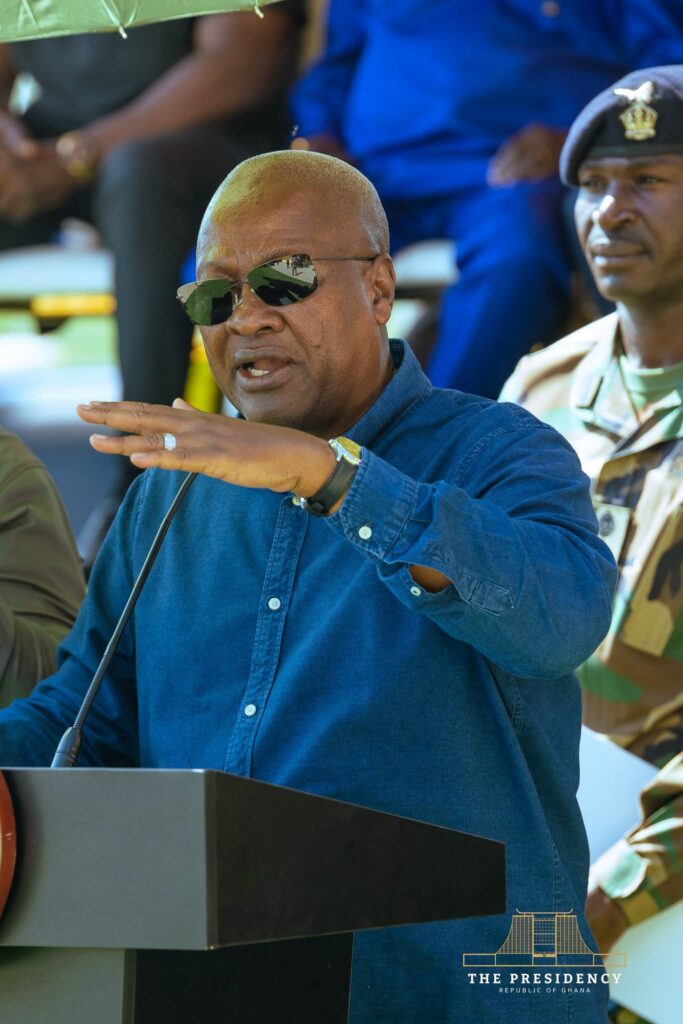
That framing places the administration on the side of continuity rather than reversal, which is the argument he went on to make about the campaign that preceded the election. President Mahama returned to a claim that circulated widely during the campaign, and pointed to the record since as his rebuttal.
“I remember during the campaign there was a devious campaign going around that when Mahama comes, he’s going to cancel Free SHS and all that. I can believe now that you can all see that that was all propaganda. We are rather improving the Free SHS so that the learning outcomes and the quality of education are better”.
President John Dramani Mahama
Better quantity and quality of food
The first improvement he claimed concerns the daily experience of students in boarding schools, where feeding disruptions have repeatedly forced early vacations and public complaints.
“Before we came into office, there was a challenge of feeding senior high school students. We have resolved that largely. The quantity and quality of food have improved”.
President John Dramani Mahama
The qualifier in that sentence is worth noting. The President said the difficulty has been resolved largely rather than completely, which leaves room for shortfalls that continue to surface in individual schools.
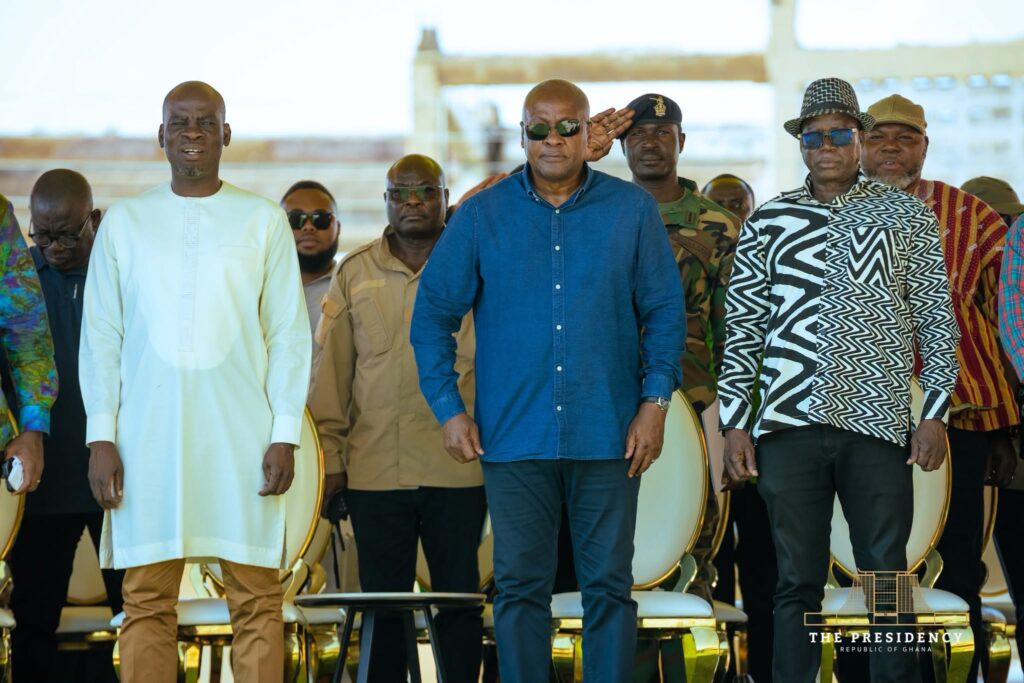
The second claim goes to the structural weakness he identifies at the centre of the programme, namely that it operated without a ring-fenced source of money. “The government had no dedicated funding for free senior high school. We have come and created dedicated, continuous funding for free senior high school. And so the quality of education is getting better,” he said.
A policy financed from general allocations competes each year with every other demand on the budget, and schools feel that competition through delayed releases and suppliers who stop delivering. A dedicated stream is intended to remove that uncertainty.
What the claims will be measured against
The President did not name the mechanism at Paga, but it sits in his government’s first budget.
Presenting the 2025 Budget Statement to Parliament in March 2025, Finance Minister Dr Cassiel Ato Forson announced that the President had resolved the funding problem by uncapping the GETFund, and that the Earmarked Funds Capping and Realignment Act, 2017, and the Ghana Education Trust Fund Act, 2000 would both be amended to provide for full financing of free secondary education.
The numbers he gave that day set the scale. The budget carried GH¢3.5 billion for the free secondary education programme, with a further GH¢4.1 billion released through uncapping, bringing the total allocation for Free SHS and related expenditures to GH¢7.6 billion. The government also absorbed debt service on the Daakye bond contracted by GETFund.
Parliament completed the legislative step on 11 December 2025, passing the Ghana Education Trust Fund (Amendment) Bill, 2025. The amendment uncaps GETFund to finance free secondary education, free education for persons with special needs, and free tertiary education for persons with disabilities, and makes the GETFund levy input tax-deductible
The Paga remarks accompanied larger announcements about school infrastructure. The President has said this year’s budget provides for the completion of 30 abandoned E-Block projects, with a further 30 new schools to be built under a programme carrying an investment of three billion cedis.
He has also committed the government to ending double track in senior high schools by 2027, arguing that the shift system reduced the hours students spend with teachers and weakened performance in the West African Examinations Council examinations.
Taken together, the announcements describe a strategy that treats Free SHS as a policy to be repaired rather than replaced. The school at Paga, completed after years of abandonment and now set to become a boarding institution, serves as the government’s illustration of what that repair looks like.
READ ALSO: Competitive Gold Pricing Stopped Smugglers But Caused Cedi Shortfall – Expert