US authorities have arrested a California woman accused of surveilling the son of Taiwan’s President Lai Ching-te on behalf of Chinese officials, in a case that has heightened concerns over alleged Chinese intelligence activities targeting Taiwanese nationals in the United States.
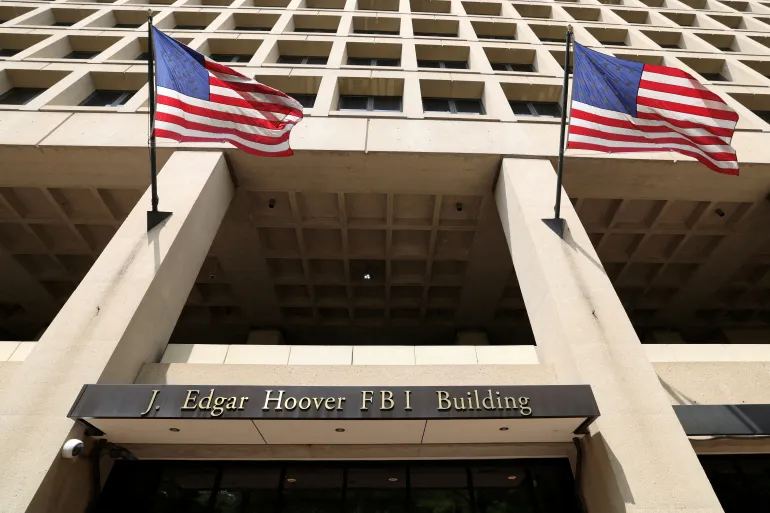
The Federal Bureau of Investigation (FBI) arrested Wanying Zhang, also known as Heather, at Los Angeles International Airport on Sunday as she was preparing to travel to China. The 34-year-old Irvine resident has been charged with acting as an unregistered agent of a foreign government.
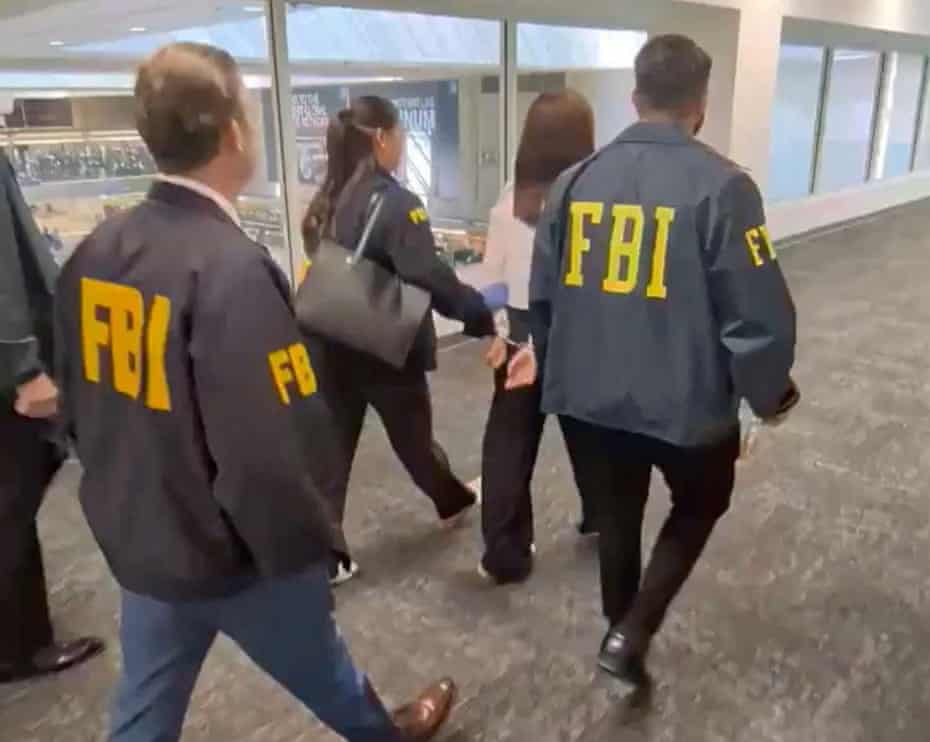
According to US authorities, Zhang was involved in surveillance of a son of President Lai while he was living in the United States. Although the FBI did not initially identify the alleged target, US law enforcement sources and subsequent reports identified him as Lai Ting-yu, a US resident and son of the Taiwanese President.
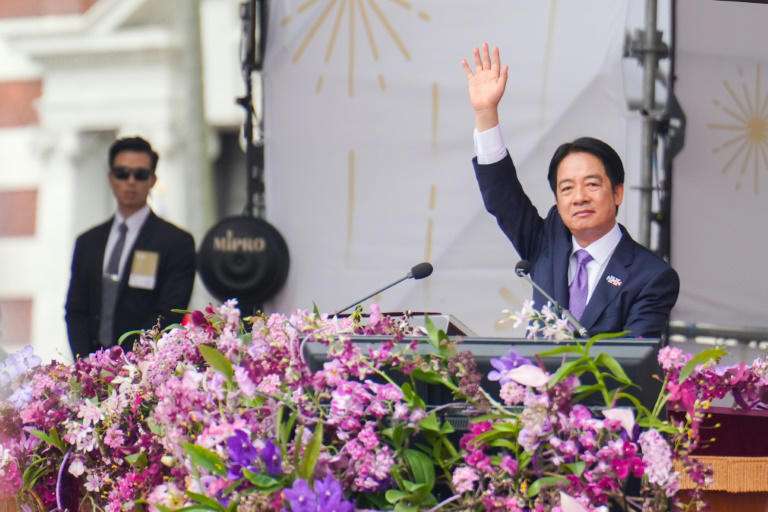
The US Justice Department alleges that Zhang travelled to Seattle in 2025 at the direction of Chinese officials and gathered information about Lai Ting-yu and his family. The information allegedly included photographs, videos and vehicle licence plate details, which were subsequently sent to Chinese officials.
A criminal complaint filed in federal court alleges that Zhang and another individual travelled to Seattle in September 2025 and drove to a suburban residence associated with the family. Images from a neighbouring security camera reportedly showed the pair filming as Lai Ting-yu, his wife and their child returned home.
FBI Special Agent Kevin Holt alleged in the complaint that information about the locations of close relatives of senior Taiwanese officials, including their homes and vehicles, could potentially provide China with leverage over Taiwan’s President in the event of a future conflict.
US authorities also allege that Zhang maintained contact with individuals she understood to be connected to the Chinese government. Investigators reportedly obtained messages from her iCloud account in which she communicated with a Chinese government contact about the surveillance operation.
Bill Essayli, First Assistant US Attorney for the Central District of California, disclosed that Zhang used methods intended to avoid detection and failed to notify US authorities that she was acting on behalf of a foreign government.
The allegations have not been tested in court, and it was not immediately clear whether Zhang had obtained legal representation. She was expected to appear before a federal court in Los Angeles on Monday.
The case comes against the backdrop of increasingly strained relations between Beijing and Taipei. China claims Taiwan as part of its territory and has strongly opposed President Lai and his Democratic Progressive Party, which supports Taiwan’s separate political identity. Lai has maintained that Taiwan’s future can only be determined by its people.
The United States, despite having no formal diplomatic relations with Taiwan, maintains extensive unofficial relations with the island and is its principal international security partner and weapons supplier. The US has continued to support Taiwan’s efforts to strengthen its defence capabilities amid concerns about a potential Chinese military attack.
The latest development also follows the delivery of two F-16V Block 70 fighter jets to Taiwan, part of Taipei’s broader effort to modernise its military and strengthen deterrence.
Taiwan Presidential Office Condemns Alleged Surveillance
Taiwan’s Presidential Office condemned the alleged surveillance, describing it as a “typical case of transnational repression” and thanking the US government for protecting Taiwanese citizens. The office said that the incident represented a serious violation of human rights and national sovereignty.
Presidential Office Spokesperson, Karen Kuo stated that Taiwan expressed its “strongest condemnation” of what she described as conduct that disregards human rights and the sovereignty of nations.
The Presidential Office’s response came after US authorities announced Zhang’s arrest. Taiwan has increasingly raised concerns about what it describes as efforts by Beijing to exert pressure on Taiwanese citizens and institutions beyond the island’s borders.
The alleged targeting of a close relative of Taiwan’s President has added another dimension to those concerns, particularly because the surveillance reportedly took place on US soil. Taiwan welcomed the FBI’s intervention and said the US action demonstrated the importance of protecting Taiwanese citizens from such activities.
Chinese authorities had not publicly commented on the allegations at the time of publication. Zhang’s case is expected to proceed through the US federal court system as prosecutors pursue the charge that she acted as an unregistered foreign agent.
READ ALSO: Sánchez Rules Out Moroccan Role In Ceuta Migrant Surge