Concerned Scientists, Researchers, Academics and Legal Practitioners have cautioned the Government of Ghana against permitting commercial seabed gold extraction along the nation’s continental shelf.
The coalition warns that exploiting deep-sea mineral deposits threatens coastal ecosystems, marine biodiversity, and national food security.
They argue that opening off-shore territorial waters to heavy industrial dredging introduces irreversible ecological risks that far outweigh any potential short-term macroeconomic windfalls.
“Given the economic, livelihood, food-security and ecosystem-service values associated with artisanal fisheries, these potential costs must be carefully weighed against the fiscal and employment benefits expected from seabed gold mining.”
Concerned Scientists, Researchers, Academics and Legal Practitioners

Expanding on their warning, the expert group stressed that seabed mining activities directly imperil the stability of the national economy and the survival of coastal settlements.
The operations threaten to destabilize marine ecological balances, wipe out critical benthic habitats, and endanger livelihoods across coastal regions.
According to their assessments, the government must prioritize long-term ecological resilience and marine conservation over volatile mining revenue projections, warning that unconsidered regulatory approvals could permanently alter Ghana’s marine socio-economic landscape.
Significant Economic Risks and Livelihood Disruption
The coalition highlighted severe economic trade-offs associated with offshore gold extraction, noting that the opportunity costs could be substantial for the country.
Seabed gold mining threatens the destruction of the ocean benthic floor, the permanent disruption of associated ecosystem services, and the heightened risk of heavy-metal pollution across marine habitats.

Furthermore, these environmental stressors put active fishing grounds at risk, threatening to displace over 20% of Ghana’s active labor force currently reliant on artisanal fishing operations.
Such environmental disruptions carry direct consequences for domestic nutrition and public revenue streams.
The destruction of marine habitats could “reduce the availability of fish and consequently animal protein consumption by approximately 60%,” severely compromising national food security.
Additionally, the expert coalition calculates that offshore gold extraction could “result in an estimated US$0.5 billion loss in fisheries-related revenue annually,” creating structural economic deficits across local fishing communities and regional economies.
Governance Imperatives and Marine Protected Area Integrity
Addressing regulatory frameworks, the expert body asserted that Ghana currently lacks the comprehensive oversight required to mitigate the systemic hazards of deep-sea extraction.
The group stated that Ghana would require “robust environmental safeguards, monitoring systems, marine spatial planning, environmental and fisheries impact assessments before permitting any seabed mining activities.”
Key governance needs include precautionary environmental and fisheries impact assessments, current biodiversity status studies, continuous ecological monitoring, stakeholder participation, and strict alignment with international marine governance frameworks administered by the International Seabed Authority.
The experts also cautioned that developing seabed gold mining within or adjacent to Ghana’s continental shelf threatens the ecological integrity of existing and proposed Marine Protected Areas (MPAs).

Although MPAs are specifically designed to safeguard marine habitats, species, and critical recovery zones, sediment plumes, underwater noise, and chemical contamination generated by seabed mining can extend far beyond actual mining concessions.
Drawing parallels to international policy decisions, the group pointed to French policymakers who “concluded that scientific knowledge of deep-ocean ecosystems remains inadequate to support commercial extraction,” demonstrating that nations do not necessarily have to choose mineral extraction over biodiversity conservation.
Precedents of Failure and the Solwara 1 Warning
To reinforce their technical and fiscal warnings, the experts examined global commercial precedents, explicitly citing Papua New Guinea’s Solwara 1 project.
Designed as the world’s first commercial seabed mining operation targeting seafloor massive sulfide deposits, Solwara 1 encountered fierce opposition from global scientists, environmental organizations, and local communities over biodiversity destruction and unverified financial forecasts.
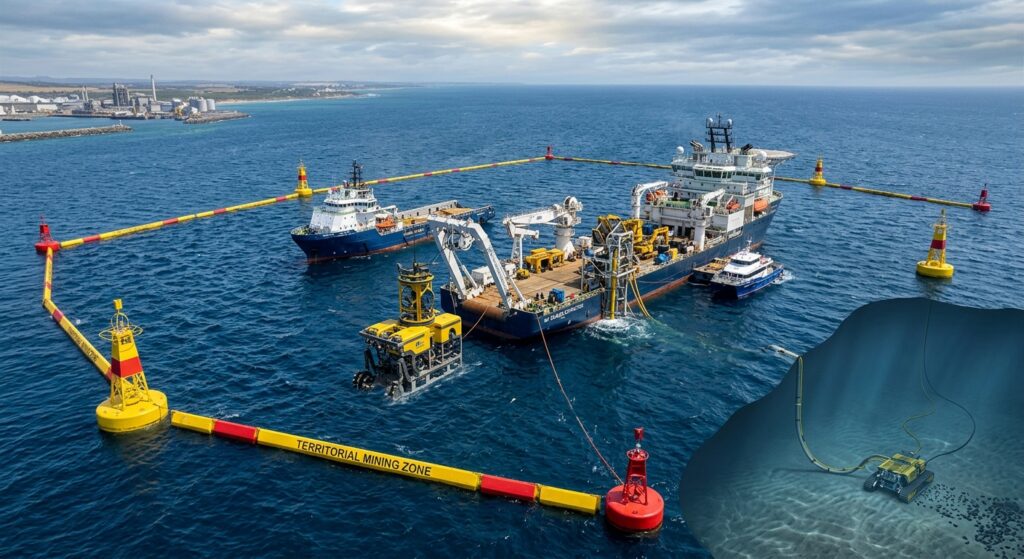
The project ultimately collapsed financially without ever commencing commercial production, offering a critical cautionary lesson for West African policymakers.
The failure of Solwara 1 demonstrates the massive operational, financial, and reputational hazards inherent in offshore seabed extraction.
The case highlighted “major challenges including high operating costs, technical uncertainties, weak social acceptance, environmental concerns and financial risks for governments and investors.”
The coalition urged Ghanaian authorities to recognize that anticipated economic revenues from seabed mining may fail to materialize, stressing that public resources, marine habitats, and national food systems must not be exposed to speculative offshore industrial experiments.
READ ALSO: SEC Bets on Tokenisation to Unlock Africa’s Hidden Capital