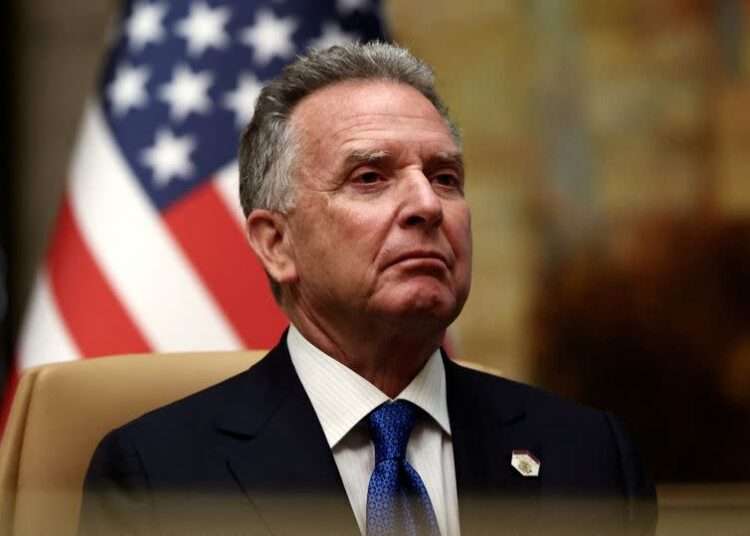
US Special Envoy, Steve Witkoff has arrived in St Petersburg for talks with Russian President Vladimir Putin on the war in Ukraine.
The meeting comes as President Donald Trump’s administration intensifies diplomatic efforts to end Russia’s full-scale invasion of Ukraine, which began more than four and a half years ago.
Putin’s aide, Yuri Ushakov, said that the Russian President would meet Witkoff at the Constantine Palace in St Petersburg during the first half of the day. Russian presidential envoy Kirill Dmitriev is also expected to participate. “Negotiations on a settlement in Ukraine are, naturally, an integral part of today’s agenda,” Ushakov told reporters.
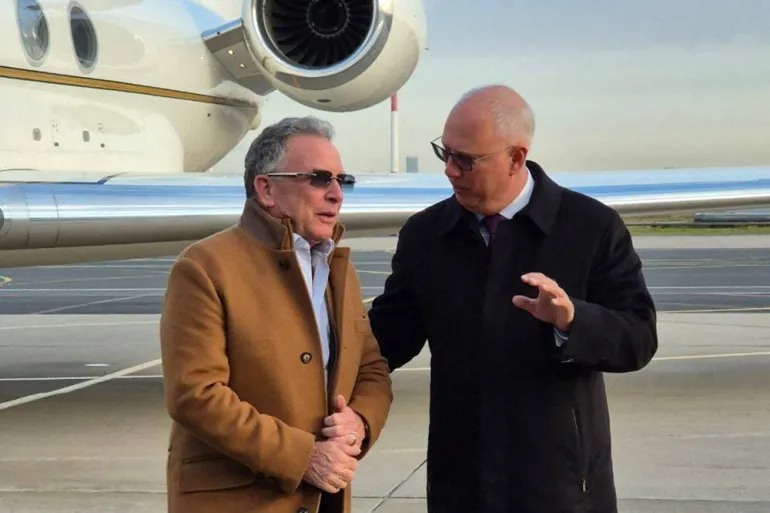
The visit follows Witkoff’s meeting with Zelenskyy and European representatives in Oslo on Tuesday, where discussions focused on efforts to advance a possible settlement.
The Oslo discussions brought together Zelenskyy, Witkoff and European leaders, including the Prime Ministers of Norway and Finland. Representatives from the European Union and NATO also attended. Trump’s son-in-law, Jared Kushner, participated in the talks virtually because of illness and is also expected to join the meeting with Putin remotely.
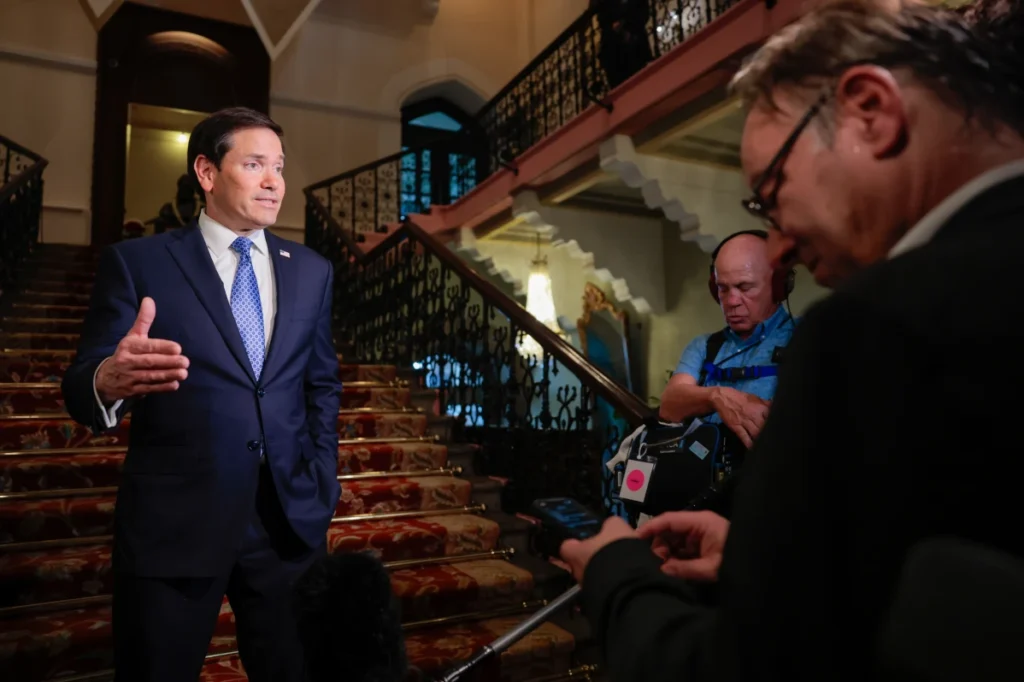
US Secretary of State, Marco Rubio described the talks as “positive,” saying Witkoff would present the ideas discussed in Norway to the Russian side. “He’ll now, armed with those ideas, be able to go to St Petersburg and share them with the Russian side – and let’s see if we can make some progress,” Rubio said.
Moscow Signals Caution Over US Peace Efforts
Witkoff’s visit comes amid uncertainty over whether the latest diplomatic engagement can narrow the differences between Moscow and Kyiv.
Russian Foreign Minister, Sergey Lavrov said on Tuesday that Moscow was prepared to consider new US proposals on Ukraine but cautioned against expecting a major breakthrough.
Lavrov’s comments reflect the challenges facing Washington as it attempts to bring the two sides closer to a settlement, with Russia and Ukraine continuing to hold divergent positions on the terms of a potential agreement.
The diplomatic push is unfolding against a backdrop of strained relations between Trump and Zelenskyy. Trump has expressed growing frustration with the Ukrainian President in recent weeks and suggested that someone else should negotiate on Kyiv’s behalf.
Zelenskyy, meanwhile, has accused Washington of suspending crucial intelligence sharing, raising concerns about the reliability of US support for Ukraine as the war continues.
Following the Oslo discussions, however, Zelenskyy said “very, very important” intelligence from the United States had been restored.
He also said Kyiv was again receiving early warnings from its partners about incoming Russian missiles, following recent strikes that he said occurred without sufficient advance notice from allies. The change came after Zelenskyy spoke with American officials, including Rubio.
Intelligence Dispute Complicates Ukraine’s Security
Beyond the diplomatic negotiations, disagreements over intelligence and military-related technology have added to tensions between Washington and Kyiv.
Zelenskyy has accused Washington of slowing down Ukraine’s access to Starshield, a military-grade satellite communications service developed by Elon Musk’s SpaceX. The system is distinct from Starlink, the company’s broader satellite internet service, although both are associated with SpaceX.
Rubio rejected the suggestion that Trump was responsible for decisions concerning the services, saying the President had “nothing to do with the decisions that are made by Starlink and Starshield.”
Musk has disputed that account, saying such decisions can only be made by the US military and the President.
The dispute has fuelled concerns in Kyiv about the continuity of American support, even as diplomatic efforts to end the war gather pace.
Despite the renewed intelligence warnings and reported restoration of some information-sharing arrangements, the broader question of how much military and technological assistance Ukraine can rely on remains significant to its defence.
Deadly Attacks Continue Amid Diplomatic Efforts
While officials pursue negotiations, Russia and Ukraine continue to exchange long-range attacks, underscoring the difficulty of securing a ceasefire while fighting persists.
In Russia’s western Bryansk region, at least one person was killed and two others wounded in a Ukrainian drone attack on Wednesday, according to regional governor Yegor Kovalchuk, who reported the incident on Telegram.
Meanwhile, Ukraine’s Emergency Service said two people were killed in a Russian attack on a high-rise building in Kyiv’s Sviatoshinsky district.
The continued attacks highlight the gap between diplomatic engagement and conditions on the battlefield, where both sides remain locked in fighting and continue to strike targets far from the front lines.
Witkoff is expected to return to Oslo for further consultations after his visit to Russia, Norwegian Prime Minister Jonas Gahr Støre said. “I think we may have entered a phase now where the Russians are also looking for opportunities for diplomacy,” Støre told a Norwegian broadcaster.
Zelenskyy remained in Oslo, where he was visiting the Norwegian Parliament and meeting lawmakers.
The latest meetings signal renewed activity in US-led efforts to end the war, but there has been no indication of an imminent breakthrough. Previous efforts by the Trump administration have failed to produce significant progress, while Russia and Ukraine remain far apart on the terms of a settlement.
READ ALSO: Italy Approves Tougher Measures To Contain Violent Protests