Russia has indicated that European countries may not automatically be included in the next round of negotiations on Ukraine, saying Moscow must first establish whether they are genuinely willing and authorised to contribute to the peace process.
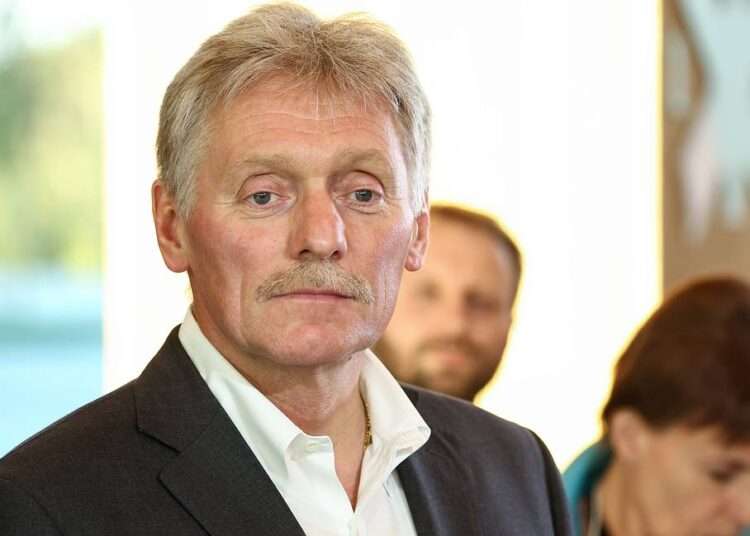
Kremlin Spokesperson Dmitry Peskov made the position clear as he commented on whether peace talks would soon resume with European representatives included, suggesting that Russia had yet to commit to expanding the negotiations, despite US negotiators saying a day earlier that President Vladimir Putin had agreed to European participation.
“Once we understand their genuine intention and readiness to contribute to the peace process, then it will be possible to make a decision on holding dialogue on a Ukrainian settlement in an expanded format.”
Dmitry Peskov
He added that Moscow would be prepared to engage with European representatives if they had the necessary authority and a genuine interest in participating.
“If the Europeans really do have someone who is at least authorised in some way to talk, and if the Europeans really do have the desire to do so, then, of course, we will be ready to talk to them.”
Dmitry Peskov
The remarks suggest that Russia is making European participation conditional on the bloc demonstrating both its willingness to engage and its ability to speak through an authorised representative.
The position also introduces uncertainty over the format of the next round of negotiations, following indications from US officials that European countries would be brought into the discussions.
Earlier today, Irish Prime Minister Micheál Martin, who is hosting European leaders in Dublin, said that European leaders needed to establish what conditions would make any future agreement between Russia and Ukraine a just and sustainable peace.
He argued that the “substance of any peace agreement is as important as who represents Europe.”
He identified security guarantees for Ukraine and the country’s reconstruction as central considerations in determining the future of the continent.
Martin said that outstanding questions concerning Europe’s priorities and representation need to be decided “in the next week or two.”
Merz Urges Trump To Avoid Surprises in Putin Talks
Meanwhile, German Chancellor Friedrich Merz called on US President Donald Trump to maintain close coordination with European countries and Ukraine ahead of his expected talks with Putin in China next week.
Speaking on the sidelines of a meeting of European Union leaders in Dublin, Merz expressed concern that the discussions could produce an outcome that catches European governments off guard. “Some here in Dublin fear this could turn into a ‘second Anchorage moment’,” he said.
Merz was referring to concerns that the United States and Russia could reach understandings over Ukraine without adequately involving European governments or addressing their security concerns.
“I therefore want to state our message to the United States very clearly: please, no surprises. Continue to play as part of ‘Team Europe’ and ‘Team Ukraine’.”
Friedrich Merz
His remarks reflect European concerns about the direction of US-led diplomatic efforts and the possibility that decisions concerning Ukraine could be reached without sufficient consultation with countries that would be directly affected by the outcome.
Merz also rejected Russia’s demand to discuss the broader European security architecture as part of a potential peace process, arguing that the existing arrangements did not require renegotiation with Moscow.
“Russia wants to talk about questions of a European security architecture. We do not need to discuss that, it already exists.”
Friedrich Merz
The German Chancellor further maintained that his country would have a place in any European delegation participating in negotiations. “It is a given that we will be part of a European delegation,” Merz said.
Europe Seeks Influence Over Ukraine Settlement
The statements from Moscow and Berlin highlight the diplomatic challenges facing European governments as efforts continue to establish a broader negotiating framework for ending the war.
While US negotiators have indicated that Russia and Ukraine agreed to include European countries in the next round of discussions, Peskov’s comments suggest that Moscow has not yet formally settled the question.
The disagreement also underscores the importance of determining who will represent Europe and what authority that representative will have.
European leaders have been seeking a meaningful role in negotiations because any settlement could have significant implications for the continent’s security, Ukraine’s future and relations between Russia and Western countries.
Merz’s warning to Trump also reflects the desire among European governments to ensure that Washington’s engagement with Moscow does not sideline their interests or those of Kyiv.
With discussions involving Trump and Putin expected in China next week, the question of European participation remains unresolved. Whether Moscow accepts an expanded negotiating format will depend, at least in part, on the conditions Peskov outlined and the ability of European governments to establish a common position.
READ ALSO: ICE Reports Record Deportations And Arrests In 2026