Ghana’s reported US$2.62 billion in foreign direct investment (FDI) in 2025 has attracted praise as a sign of sustained investor confidence, but the Institute of Economic Research and Public Policy (IERPP) is asking whether the country is paying enough attention to the financial losses associated with its Domestic Gold Purchase Programme (DGPP).
The Institute has warned that celebrating foreign capital inflows without thoroughly examining the reported losses under the gold programme risks presenting an incomplete picture of Ghana’s economic performance.
According to IERPP, figures emerging from discussions surrounding the programme indicate estimated losses of GH¢22 billion, equivalent to approximately US$1.7 billion. The Institute argues that the scale of the reported losses deserves the same level of public attention as the positive investment figures being celebrated.
The comparison has raised important questions about the management of public resources, the costs of gold purchasing operations and the need for greater transparency in Ghana’s economic decision-making.
Ghana’s FDI Success and a Difficult Question
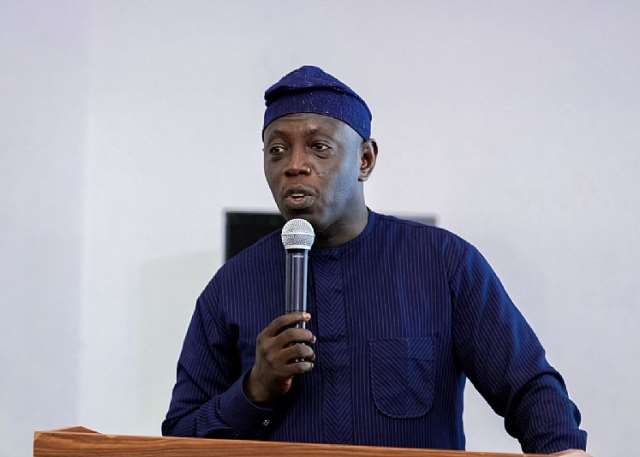
Prof. Isaac Boadi, Executive Director of IERPP, acknowledged that attracting US$2.62 billion in foreign direct investment represents an encouraging development for an economy seeking stronger growth, employment opportunities and improved productive capacity.
“Certainly, we should acknowledge Ghana’s capacity to draw US$2.62 billion in foreign direct investment,” said Prof. Isaac Boadi, Executive Director of IERPP.
“It is a sign that in spite of the economic challenges we are experiencing, international investors still have confidence in the opportunities in Ghana. But we cannot be happy about the money flowing into the economy when we are not looking at the big losses happening in the economy.”
Prof. Isaac Boadi
The Institute is not dismissing the importance of foreign investment. Instead, it wants policymakers and the public to consider whether Ghana is managing its existing resources efficiently while working to attract additional capital.
FDI can support job creation, introduce new technologies, expand infrastructure and strengthen productive industries. It can also generate foreign exchange and create opportunities for local businesses.
However, IERPP believes these benefits should be considered alongside the financial implications of major public programmes.
The $1.7bn Gold Loss Raises Questions
The reported GH¢22 billion loss under the Domestic Gold Purchase Programme has become the centre of the Institute’s concerns.
At approximately US1.7billion, the reported figure represents around 65% of the value of Ghana’s US2.62 billion FDI inflows. The comparison illustrates the magnitude of the reported programme losses relative to the foreign capital attracted into the economy.
“Every US$1 that Ghana attracts in FDI, the reported loss under the Domestic Gold Purchase Program is equivalent to about 65 cents,” Prof. Boadi observed.
The comparison, however, requires careful interpretation. The Institute has stressed that the reported loss does not mean Ghana lost its FDI or that GoldBod was responsible for the entire amount.
“Not that the FDI was lost or that GoldBod was responsible for the entire loss of US$1.7 billion. The point is to show the magnitude of the loss relative to the capital we are celebrating.”
Prof. Isaac Boadi
This distinction is important because the reported losses relate to the programme as a whole. Attributing the entire amount to GoldBod would go beyond the Institute’s stated position.
Nevertheless, IERPP wants the costs and charges associated with GoldBod to be properly examined as part of a broader assessment of the programme’s financial performance.
Why GoldBod’s Costs and Fees Matter
The Institute is calling for a clearer explanation of how the reported losses accumulated, what costs were incurred and how much revenue the programme generated.
It also wants greater scrutiny of GoldBod-related fees and charges and their contribution to the overall financial outcome.
Such information would help Parliament, taxpayers and economic analysts distinguish between operational expenses, revenues, financing costs and other factors that may have influenced the programme’s performance.
Without a detailed breakdown, it becomes difficult for the public to assess the programme’s financial implications or determine whether its economic objectives justify the reported costs.
The demand for transparency does not automatically establish wrongdoing. Rather, it highlights the importance of making sufficient information available to support an informed assessment of a major public economic initiative.
IERPP Uses a Bucket Analogy to Explain the Concern
Prof. Boadi illustrated the Institute’s position with an analogy that highlights the tension between attracting new resources and protecting those already available.
“Imagine filling a bucket with water while leaving a large hole at the bottom,” Prof. Boadi explained. “It would be good news that more water is being poured into the bucket, but the greater responsibility is to ask why we are allowing such a significant amount to escape.”
The analogy captures the central concern behind IERPP’s intervention. Attracting foreign capital is valuable, but the benefits can be undermined if significant financial resources are lost through inefficient operations or poorly understood programme costs.
The challenge for policymakers is to pursue investment while ensuring that public resources are managed prudently and that major initiatives are assessed against their financial and economic objectives.
Parliament and Accountability Institutions Face Calls for Action
IERPP wants Ghana’s accountability institutions, Parliament, civil society organisations, think tanks and the media to examine the reported losses with the same intensity applied to positive economic developments.
The Institute is seeking a comprehensive disclosure of the sources of the losses, the costs incurred, the revenues generated, the role of GoldBod-related fees and charges, and the programme’s ultimate fiscal impact on the state.
“There should be no selective enthusiasm when it comes to Ghana’s economic numbers,” Prof. Boadi said.
“When the figures are positive, we must celebrate them; when the figures reveal significant losses, we must ask difficult questions. Both are necessary for a credible economic conversation.”
The call places accountability at the centre of the debate over Ghana’s economic management. It also raises a broader question about how the country measures progress, particularly when headline investment figures coexist with concerns about the cost of public programmes.
Investor Confidence Requires More Than Capital Inflows
IERPP maintains that genuine investor confidence depends not only on Ghana’s ability to attract foreign capital but also on the strength of its institutions, the transparency of public financial management and the responsible use of national resources.
The reported 2.6 billion in FDI remains a development worth acknowledging. Yet the institute argues that the reported US 1.7 billion in programme losses must also receive serious scrutiny.
The figures alone do not establish the full economic value or final fiscal cost of the Domestic Gold Purchase Programme. A detailed and transparent accounting would help clarify the position.
Ultimately, Ghana’s economic performance should be judged through a broader assessment that considers investment inflows alongside public expenditure, programme costs, financial outcomes and accountability.
The question raised by IERPP is therefore not whether Ghana should celebrate foreign investment. It is whether that celebration can be meaningful without an equally serious examination of how the country manages the resources it already has.
READ ALSO: Ghana’s Digital Finance Boom Facing Growing Cyber Fraud Threat- CSA Warns