President John Dramani Mahama has described Nestlé Ghana’s expansion of its Tema factory as a practical demonstration of the government’s 24-hour economy agenda, saying increased domestic production is central to Ghana’s ambition to reduce dependence on imports and strengthen its position as an export-oriented manufacturing hub.
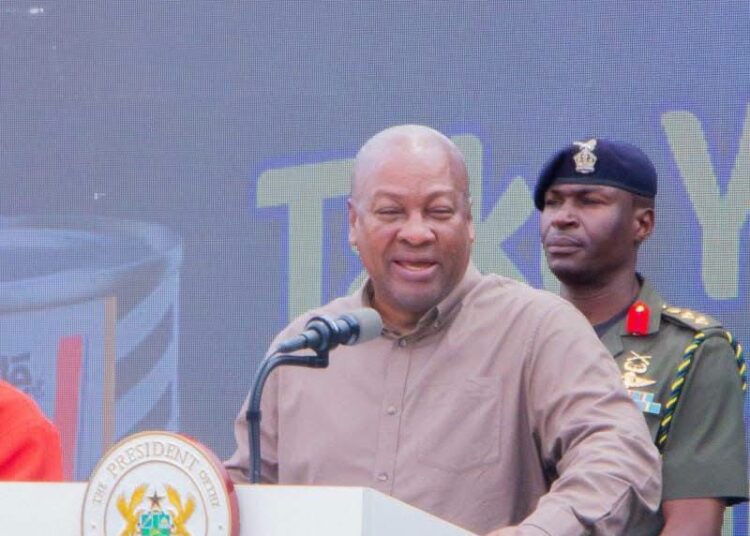
The President made the remarks on Thursday, October 8, 2026, when he commissioned Nestlé Ghana Limited’s expanded evaporated milk production line at its Tema factory, positioning the investment as a significant vote of confidence in Ghana’s manufacturing sector and improving investment climate.
“The line before us is a welcome sign of Nestlé’s confidence in Ghana’s long term prospects, and it aligns with the industrial ambitions of our Reset Agenda.’’
President of Ghana, H.E. John Dramani Mahama
The expansion replaces an evaporated milk production line that had operated for more than three decades and increases the factory’s annual production capacity from approximately 12,960 tonnes to nearly 30,000 tonnes.
That represents an increase of about 131 per cent, effectively more than doubling the factory’s previous capacity and creating additional room for Nestlé to meet growing domestic demand while strengthening its ability to serve markets beyond Ghana.
The new line incorporates key stages of the production process, including filling, homogenisation, sterilisation and packaging, allowing greater value to be retained within Ghana through local manufacturing and employment.
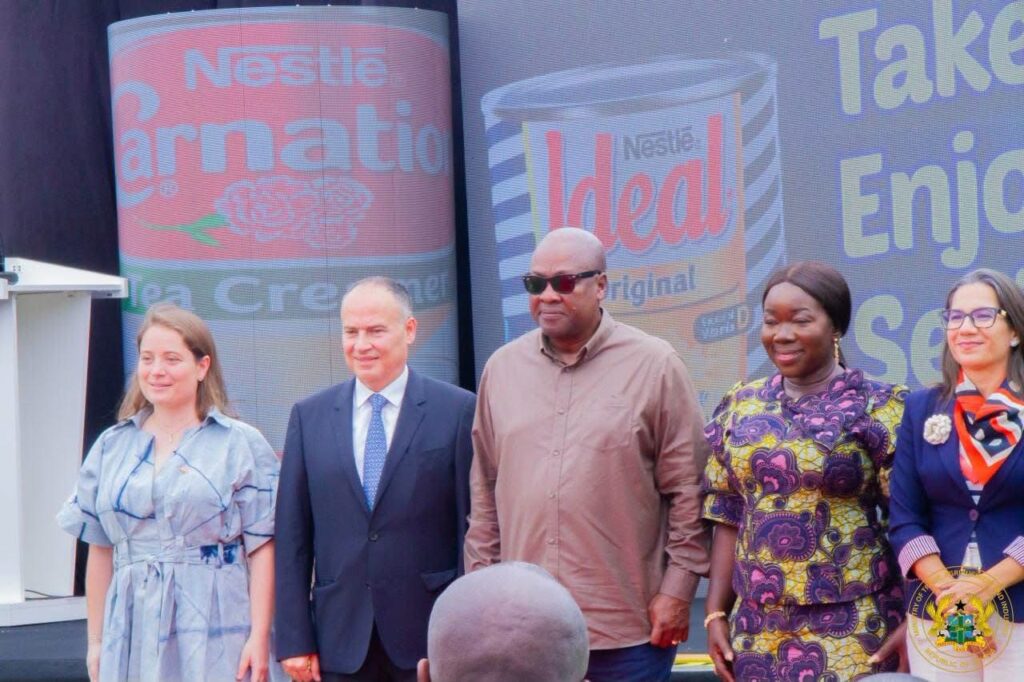
Nestle, a Footprint in Central and West Africa
Nestlé’s Tema facility is an important part of the company’s manufacturing footprint in Central and West Africa. The factory produces products including IDEAL milk, Milo, CERELAC and Nescafé 3-in-1 for the Ghanaian market and export markets in the sub-region.
For the government, the investment illustrates the type of productive activity the 24-hour economy is designed to encourage: factories operating efficiently, creating employment, increasing output and connecting local production to regional markets.
The President said the development was also contributing to the revival of Tema as Ghana’s major industrial centre, alongside developments involving the Tema Port, Tema Oil Refinery and efforts to revive the Volta Aluminium Company (VALCO).
”Kwame Nkrumah planned Tema as Ghana’s industrial city, and I am pleased to say that Tema is regaining its glory days.”
President of Ghana, H.E. John Dramani Mahama
He stressed that sustained industrial expansion would require reliable infrastructure, including electricity, roads and port facilities, to enable manufacturers to operate competitively and access markets across Ghana and the wider African continent.
The President also urged Nestlé to take advantage of Ghana’s position as host of the African Continental Free Trade Area Secretariat to expand its production and export footprint.
”Ghana is the headquarters of the African Continental Free Trade Area, and we must take advantage of this to make Ghana Africa’s production powerhouse.‘‘
President of Ghana, John Dramani Mahama
24-Hour Economy Addressing Bottlenecks in Sectors
The call comes as government increasingly places manufacturing, value addition and export development at the centre of its economic strategy. The 24-Hour Economy and Accelerated Export Development programme is designed to address production bottlenecks in sectors including manufacturing, agriculture, fisheries and the creative industries while promoting job creation and export growth.
Recent investment data also point to a sharp rebound in capital commitments to Ghana. The 2025 Annual Investment Report recorded about US$2.62 billion in foreign direct investment, compared with roughly US$652 million in 2024 according to the consolidated investment data.
Manufacturing emerged as the sector with the highest number of registered investment projects in 2025, recording 99 projects valued at about US$368.71 million.

Mining services attracted the highest investment value at US$506.61 million from three projects, while services recorded US$306.36 million from 43 projects. Trade,
Agribusiness and Industry Minister, Elizabeth Ofosu-Adjare, said the government was increasingly focused on ensuring that investment translates into actual production, jobs, stronger domestic enterprises and deeper local supply chains.
”Investment begins to acquire its economic meaning when it reaches the factory floor, enters the processing factory, creates opportunities for Ghanaian businesses, and puts people to productive work”
MOTAI, Hon. Elizabeth Ofosu-Adjare
Ghana’s Industrial Potential
The Minister said manufacturing’s leading position by project numbers demonstrated growing investor interest in Ghana’s industrial potential, while emphasising that the quality and economic impact of investment remained as important as the headline figures.
The latest Nestlé expansion therefore provides a concrete example of how reinvestment by an established multinational can translate into additional production capacity within Ghana rather than simply relying on imported finished products.
The investment also strengthens the country’s food manufacturing and packaging capabilities while supporting the wider ecosystem of suppliers, distributors, logistics operators and other businesses connected to the factory.
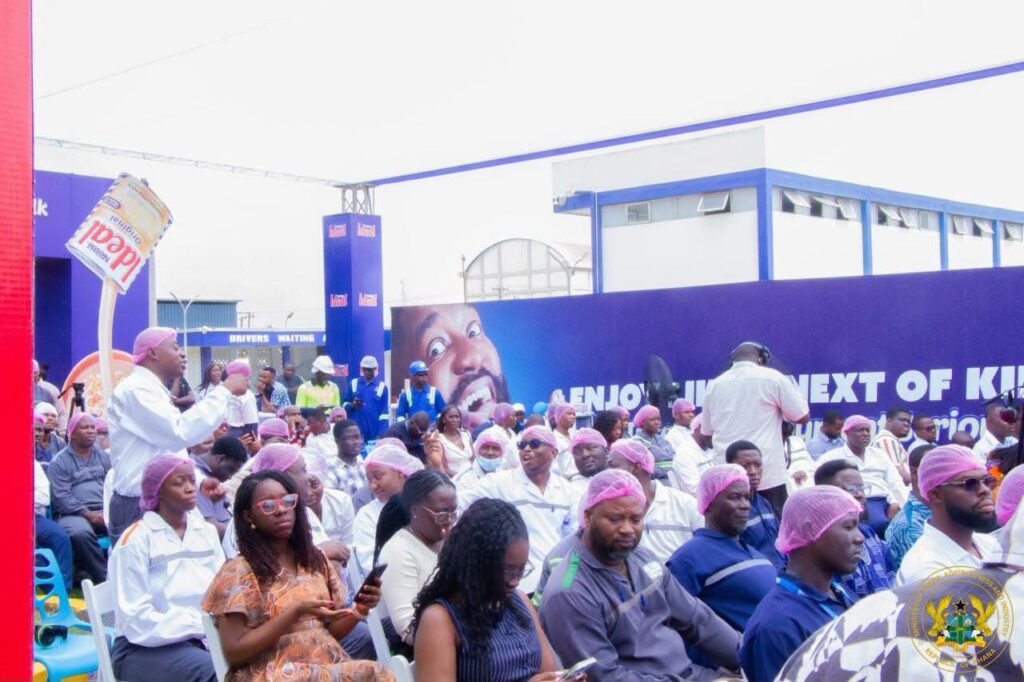
President Mahama further indicated that increased local production would require stronger measures to protect domestic manufacturers from unfair competition, particularly illicit imports and customs evasion.
‘‘Having built the capacity to make these cans ourselves, we will take an equally close interest in illicit imports and customs evasion.”
President of Ghana, H.E.John Dramani Mahama
For Ghana’s industrial policy, the Nestlé expansion represents more than an increase in milk production. It reinforces the argument that attracting investment, retaining existing investors and expanding productive capacity must work together if the country is to transform its manufacturing base.
With Tema regaining momentum as an industrial hub, the government is positioning investments such as Nestlé’s expanded production line as building blocks for a more productive economy.
One that is capable of supplying domestic consumers, creating jobs and increasingly carrying “Made in Ghana” products into African markets.
READ ALSO:World Bank Warns of Ghana’s $6.4bn Eurobond Maturities