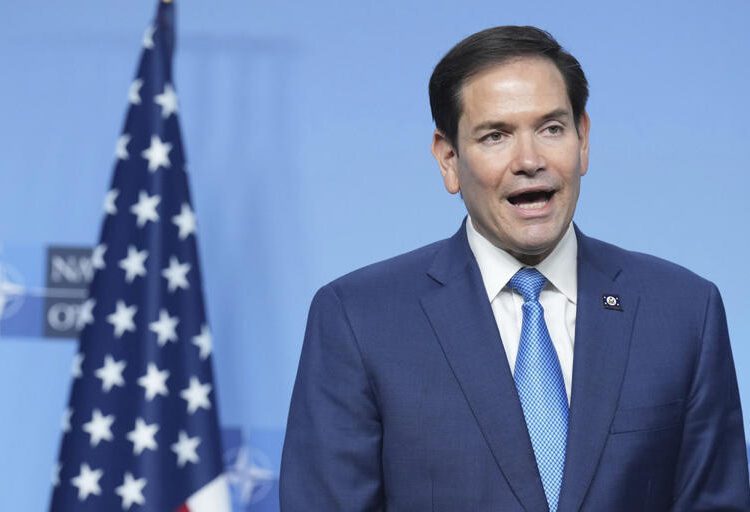
US Secretary of State, Marco Rubio has defended Washington’s use of military installations in Portugal, saying the United States follows established bilateral agreements governing its presence at the bases and would not violate the sovereignty of its NATO ally.
Rubio made the comments during a stop in Lisbon today, the final leg of a three-nation tour of NATO allies. He was speaking to reporters in response to questions about US military flights through Lajes Air Base in Portugal’s Azores islands during the war with Iran, which has drawn scrutiny from Portugal’s public prosecutor and criticism from Amnesty International.
“Suffice it to say that we have existing protocols that govern our presence here and how we use our bases, and we always follow them out of respect and out of compliance with the agreements that we have with our NATO allies.”
Marco Rubio
The Secretary of state declined to discuss internal diplomatic communications but emphasized the strength of the relationship between Washington and Lisbon. He said that the United States maintains a “strong, regulated relationship with Portugal” and would never violate the sovereignty of an allied country.
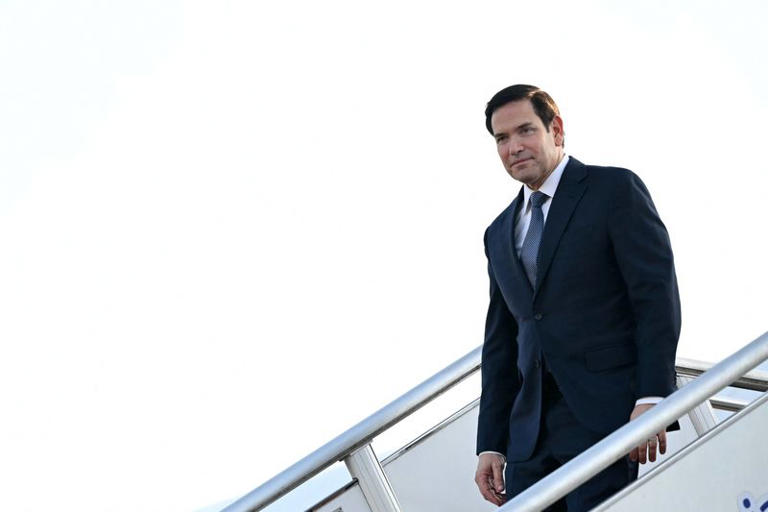
Rubio arrived in Lisbon after visiting Greece, where he delivered a speech in Athens on Wednesday urging European countries to preserve what he described as the values and traditions associated with ancient Greece and Western civilization. In Portugal, he appeared alongside Portuguese Foreign Minister Paulo Rangel.
The questions surrounding Lajes Air Base have added a diplomatic dimension to Rubio’s visit. The facility, located in the Azores, is an important US military installation in the Atlantic and has long been part of American defence cooperation with Portugal.
Rubio did not provide details about the specific operations or diplomatic discussions surrounding the US military flights. Instead, he reiterated that American activities at the base are governed by established protocols and agreements between the two countries.
Beyond the dispute over military operations, Rubio used his visit to discuss broader security and economic issues, including European dependence on China and the vulnerability of critical infrastructure.
He warned against excessive reliance on external partners, referring to supply disruptions experienced during the COVID-19 pandemic as an example of the risks that can emerge when countries depend heavily on other nations for essential goods and services. “No country should depend on another for 95% of anything,” Rubio said, highlighting concerns surrounding critical minerals, important technologies and biotechnology.
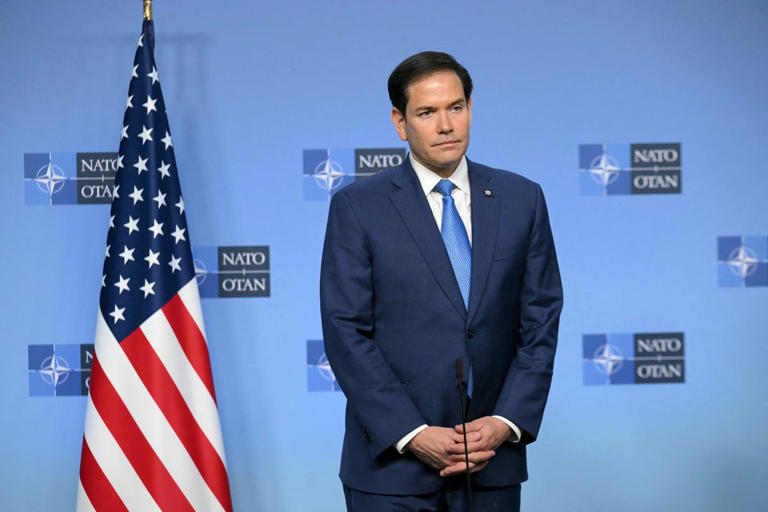
He argued that countries need to strengthen their own capacity in strategically important sectors while maintaining international partnerships. The comments reflected wider US concerns about supply-chain vulnerabilities and dependence on China in areas considered important to national security.
Rubio also identified communications infrastructure as a significant security concern. He argued that foreign investment in telecommunications infrastructure could create vulnerabilities by giving governments the ability to exert pressure through companies or networks operating within other countries.
The Secretary of state also raised concerns about subsea communications infrastructure, particularly the extensive network of undersea cables that carries global internet and communications traffic.
“Undersea cables are increasingly being threatened all over the world by bad actors that are trying to access them and cut them in a time of conflict or even as a point of leverage,” Rubio said.
His comments underscored the growing importance of protecting infrastructure that supports international communications and economic activity. Damage to subsea cables could disrupt connectivity and potentially create strategic vulnerabilities during periods of conflict or heightened geopolitical tension.
Rubio also highlighted Portugal’s potential role in the expansion of US technology investment in Europe. He described the country as an “ideal gateway” for American technology companies seeking to enter the European market.
He pointed to Portugal’s undersea infrastructure, relatively affordable energy, mineral reserves and data centres as factors that could make the country attractive to technology firms.
The emphasis on technology and infrastructure came alongside discussions about the broader US-Portugal relationship, with Rubio seeking to reinforce cooperation between the two NATO allies while addressing questions surrounding American military activities.
During his brief stay in Lisbon, Rubio also held talks with Portuguese Prime Minister Luis Montenegro. The meeting provided an opportunity for the two governments to discuss bilateral relations and broader security and economic concerns.
Rubio’s visit concluded his three-nation tour of NATO allies, with the secretary of state returning to Washington after the short stop in Portugal. His comments in Lisbon sought to reassure the Portuguese government that US military activities remain within the framework of existing agreements while also highlighting areas where Washington sees opportunities for closer cooperation.
The controversy surrounding Lajes Air Base, however, remains under scrutiny in Portugal, as authorities and advocacy groups examine the circumstances surrounding US military flights during the Iran war. Rubio’s defence of the arrangements represents Washington’s position that its activities were conducted in accordance with established protocols and with respect for Portugal’s sovereignty.
READ ALSO: DHS Proposes $70,000 Fee for International Students Work Program