European Central Bank (ECB) President Christine Lagarde will resign on February 7, 2027, nine months before the end of her term, allowing European Union leaders to begin selecting her successor ahead of France’s presidential election next year.
The ECB announced the decision, confirming that Lagarde, 70, would leave the institution before her eight-year mandate expires on October 31, 2027. Her early departure is expected to trigger negotiations among European leaders over the bank’s next President and two other senior positions becoming vacant in 2027.
In a video message published on X, Lagarde confirmed that she had informed her colleagues of her decision.
“It has been a great pride and a huge privilege to serve this institution. I think that I leave this institution with a sense of good work done and an ECB that is fit for the future.”
Christine Lagarde
In the accompanying message, she thanked those who had supported her “on this journey over the past seven years.”
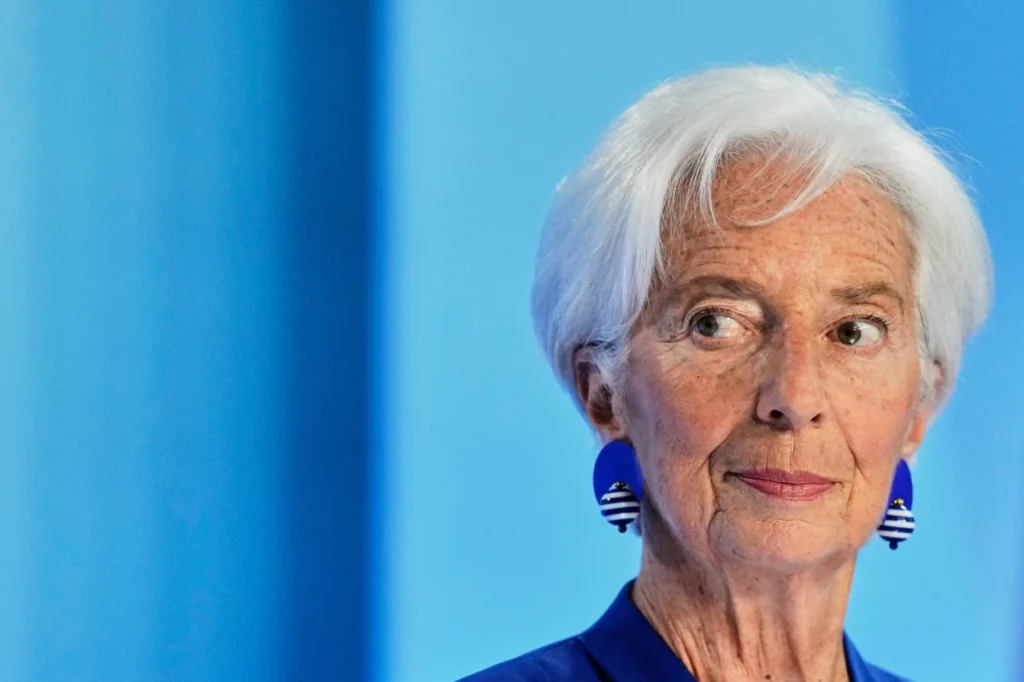
Lagarde’s announcement followed speculation that she would leave early to allow European leaders to appoint her successor while French President Emmanuel Macron remains in office. Macron’s current term ends in 2027, when France is scheduled to hold its next presidential election.
The timing is politically significant because a potential victory by right-wing candidate Marine Le Pen could alter France’s influence over European appointments. An early selection would give EU leaders an opportunity to settle the ECB leadership question before the French election.
Succession Process To Begin Without Delay
European Council President, António Costa stated in a post on X that the appointment process would begin immediately, signalling that European leaders intend to move quickly towards a decision.
“I have been informed by Christine Lagarde, President of the European Central Bank, of her intention to step down from her role on 7 February 2027. I respectfully acknowledge her decision.”
António Costa
He praised Lagarde’s leadership during a period marked by significant economic and geopolitical challenges, including the COVID-19 pandemic, war in Europe, energy crises and inflation. “Europe has been well served by her leadership in uncertain times and her unwavering commitment to the European project,” he said.

Costa added that the selection process would begin without delay to ensure a smooth transition. “To ensure a smooth transition to the next leadership of the ECB, the process for the appointment of her successor will be initiated today and will proceed without delay,” he said.
He noted that the European Council would make the appointment in its euro area composition, following the procedure outlined in Article 283(2) of the Treaty on the Functioning of the European Union.
The selection is expected to involve complex political negotiations because two other senior ECB positions are also due to become vacant.
Chief Economist Philip Lane’s term ends on May 31, 2027, while executive board member Isabel Schnabel is due to leave on January 3 to take up a position at the International Monetary Fund.
European leaders are expected to negotiate a broader package of appointments, balancing the interests of member states as they decide who will occupy the three positions.
The ECB presidency is particularly influential because its holder leads the bank’s Governing Council, which sets interest rates for the 21 countries using the euro. Those decisions affect borrowing costs for households and businesses, influencing everything from home purchases to investment in factories.
The institution also plays a central role in responding to economic and financial crises across the euro area.
Lagarde’s Legacy At The European Central Bank
Lagarde took office as ECB president in November 2019, succeeding Mario Draghi after previously leading the International Monetary Fund.
One of the defining moments of her tenure came in 2020, when the ECB introduced an emergency stimulus programme worth €1.35 trillion through bond purchases to protect the economy from the financial consequences of the COVID-19 pandemic.
The intervention was intended to prevent the crisis from restricting credit availability and worsening economic conditions across the euro area.
The ECB’s capacity to act relatively quickly has helped establish it as a central institution in Europe’s response to economic emergencies, particularly when compared with the often lengthy negotiations required among the European Union’s 27 national governments.
The bank also played a significant role during the eurozone debt crisis of 2010–2012, when financial instability raised concerns about the future of the single currency.
In 2012, Draghi famously pledged to do “whatever it takes to preserve the euro,” helping calm bond markets amid fears that the eurozone could break apart.
Lagarde’s tenure has similarly been shaped by the need to preserve economic stability through extraordinary challenges, including the pandemic, Russia’s war against Ukraine, energy market disruptions and a surge in inflation.
Her departure will therefore come at a consequential time for the institution, with her successor inheriting responsibility for monetary policy across the euro area and the ECB’s role in safeguarding financial stability.
The early resignation also sets the stage for a politically sensitive succession process, with European leaders expected to balance institutional continuity, national interests and the wider direction of the European project as they determine the bank’s next leadership.
READ ALSO: US Sanctions Give ICC Greater Visibility- Dr. Gegout