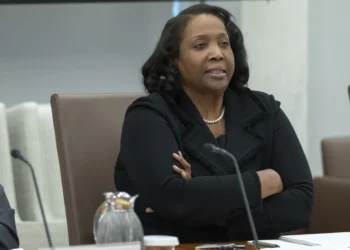
Dr. Catherine Gegout has stated that the Trump administration’s sanctions against senior officials of the International Criminal Court (ICC) may be intended to pressure the court but they also have the unintended effect of increasing its visibility and highlighting the court’s growing role in international criminal justice.
Speaking with The Vaultz News, the Associate Professor of International Relations at the University of Nottingham said that the U.S. measures should be understood within the broader history of Washington’s opposition to the ICC, but argued that the sanctions themselves demonstrate the significance of the court’s work. “US sanctions show the power of the ICC, as they give visibility to the work of the ICC,” she said.
The Trump administration has imposed sanctions on ICC President Tomoko Akane and senior trial lawyer Abdoulaye Seye. Washington has objected particularly to ICC investigations involving Israel, a non-party to the Rome Statute and a close U.S. ally, as well as the court’s attempts to exercise jurisdiction over officials from states that have not accepted its authority.
The ICC has rejected the measures as an attack on its independence and said that the sanctions threaten the international rule of law and efforts to hold individuals accountable for serious crimes.
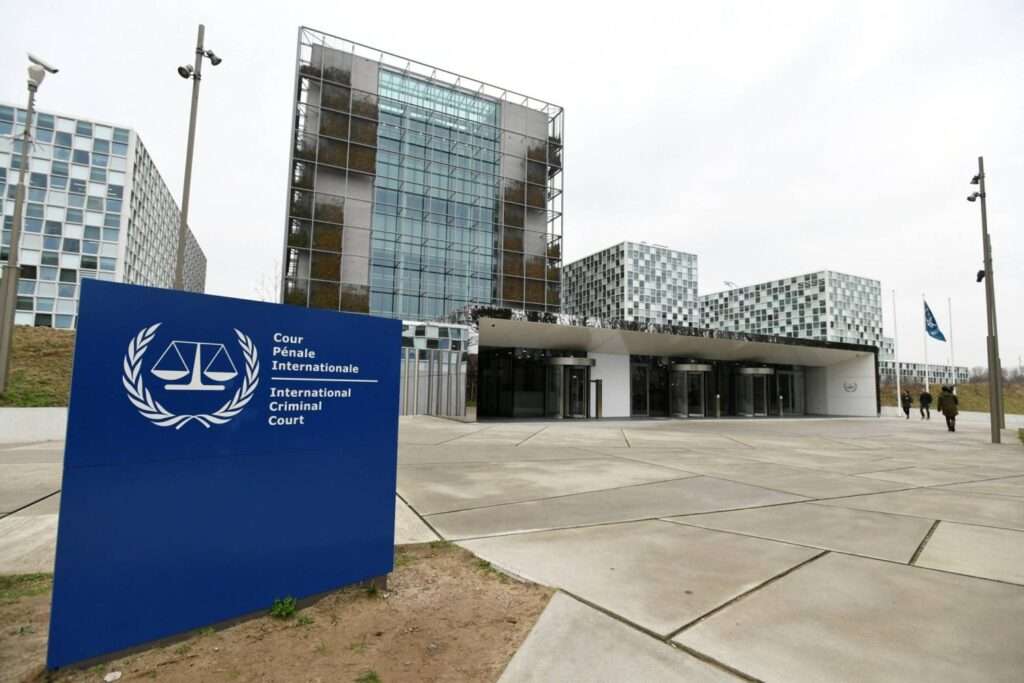
For Gegout, however, the confrontation should not necessarily be viewed as evidence that the ICC is being rendered ineffective. Instead, the high-level political response from Washington has brought additional attention to the institution.
The sanctions are also not unprecedented. Gegout noted that the United States has previously sanctioned ICC officials, including judges and prosecutors, without preventing the court from continuing its work.
Pointing to the changing nature of U.S. policy towards the court, she said, “In general, a long-term perspective is important.” She added that President Bill Clinton signed the ICC Treaty in 2000, while President George W. Bush “unsigned” it in 2002.
Gegout stated that this history means the current U.S. position should not necessarily be regarded as permanent. A future administration could take a different approach to the court, including potentially moving towards U.S. membership.
The current sanctions, she argued, are therefore better understood as part of a political struggle over the limits of international criminal jurisdiction than as a measure capable of fundamentally disabling the ICC.
Additionally, Gegout said that US sanctions “do not protect US sovereignty,” arguing instead that they seek to protect individuals facing scrutiny from the court, particularly Israeli Prime Minister Benjamin Netanyahu.
The latest confrontation has also prompted renewed expressions of support from ICC allies. Japan, the court’s largest financial contributor, and the European Union have backed the institution and its leadership in the face of U.S. pressure.
Gegout nevertheless cautioned that statements alone may not be enough to protect the court from the practical consequences of sanctions. “Allied support through declarations is far from sufficient,” she said.
She noted that the sanctions can create difficulties for targeted individuals when accessing international financial services, particularly because European banks remain connected to the U.S. financial system.
EU Urged To Make Use Of Blocking Statute
Gegout argued that the EU should make greater use of its blocking statute, which is intended to protect European businesses and individuals from complying with certain extraterritorial sanctions imposed by third countries.
The problem, she said, is that European financial institutions may themselves depend on access to U.S. financial infrastructure, making the EU reluctant to deploy the mechanism aggressively.
That financial vulnerability, in Gegout’s assessment, may ultimately be more significant than the direct effect of sanctions on the ICC’s judges and prosecutors.
“Financial and travel sanctions are unlikely to have an impact on the willingness of officials to work at the ICC. But they have an indirect and major impact on the EU’s financial sector.”
Catherine Gegout
She argued that the episode demonstrates the need for Europe to strengthen its financial independence, including by developing alternatives to systems controlled or significantly influenced by U.S. interests.
Russian Pressure Not An Immediate Threat To ICC
At the same time, Gegout does not see U.S. and Russian pressure as an immediate threat to the ICC’s ability to function. Sanctions affect a limited number of officials, while the number of states seeking to withdraw from the court remains relatively small.
Instead, she identified the willingness of European states to implement ICC decisions as a potentially more consequential test of the court’s authority.
The issue is particularly relevant to the ICC arrest warrant for Netanyahu. Gegout pointed to uncertainty over whether countries including France and Germany would enforce the warrant if Netanyahu were to enter their territory.
That question goes to the heart of the ICC’s effectiveness: the court does not have its own police force and depends on member states to execute its warrants and cooperate with its investigations.
Yet the continuing political confrontation may also reinforce the court’s public profile.
By targeting ICC officials, the United States has brought the institution and its investigations further into international political debate. Rather than disappearing under pressure, the court has become a more prominent subject of discussion among governments, financial institutions and the wider public.
For Gegout, that visibility is significant. The sanctions may constrain the lives and financial activities of individual ICC officials, but they are unlikely to persuade the court’s lawyers and judges to abandon their work. Instead, the measures have drawn attention to what the ICC is investigating, why its jurisdiction is contested and how far states are prepared to support international criminal accountability.
In Gegout’s assessment, the very pressure intended to weaken the ICC may be helping more people understand the significance of its work.
READ ALSO: U.S. Imposes 50% Tariffs on $20bn Worth Of Canadian Goods