Ghana’s energy transition will depend on more than new solar installations and battery-storage projects. It will also require the country to strengthen the transmission network, replace ageing distribution equipment, improve maintenance and create financing arrangements capable of supporting infrastructure before reliability deteriorates.
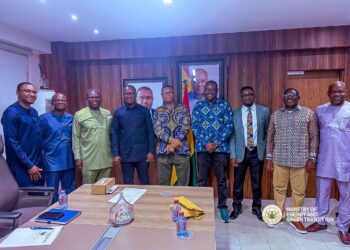
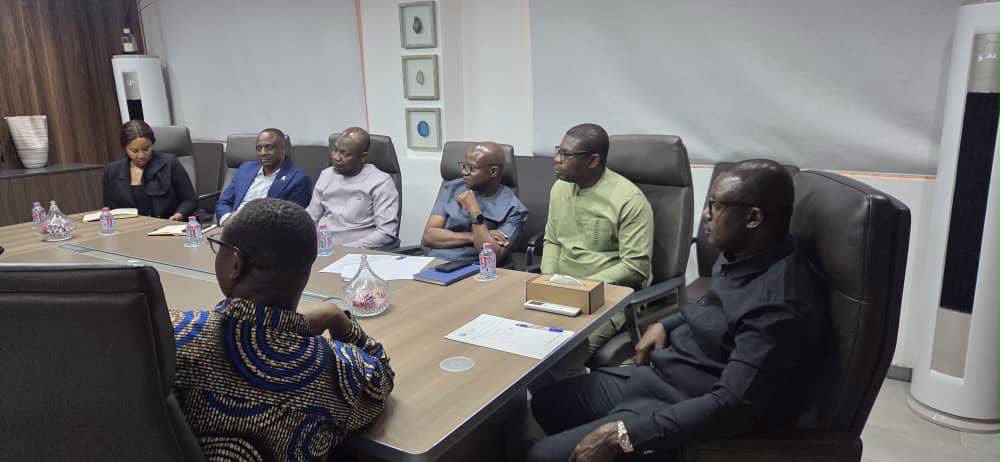
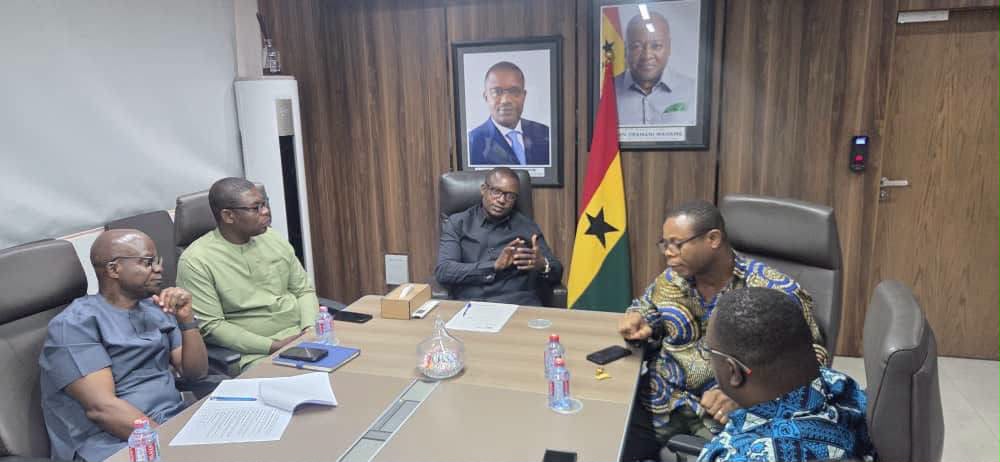
That challenge emerged during an engagement between IMANI Africa’s Centre for Policy and Education (CPE) and the Ministry of Energy and Green Transition.
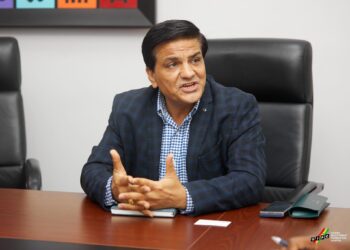
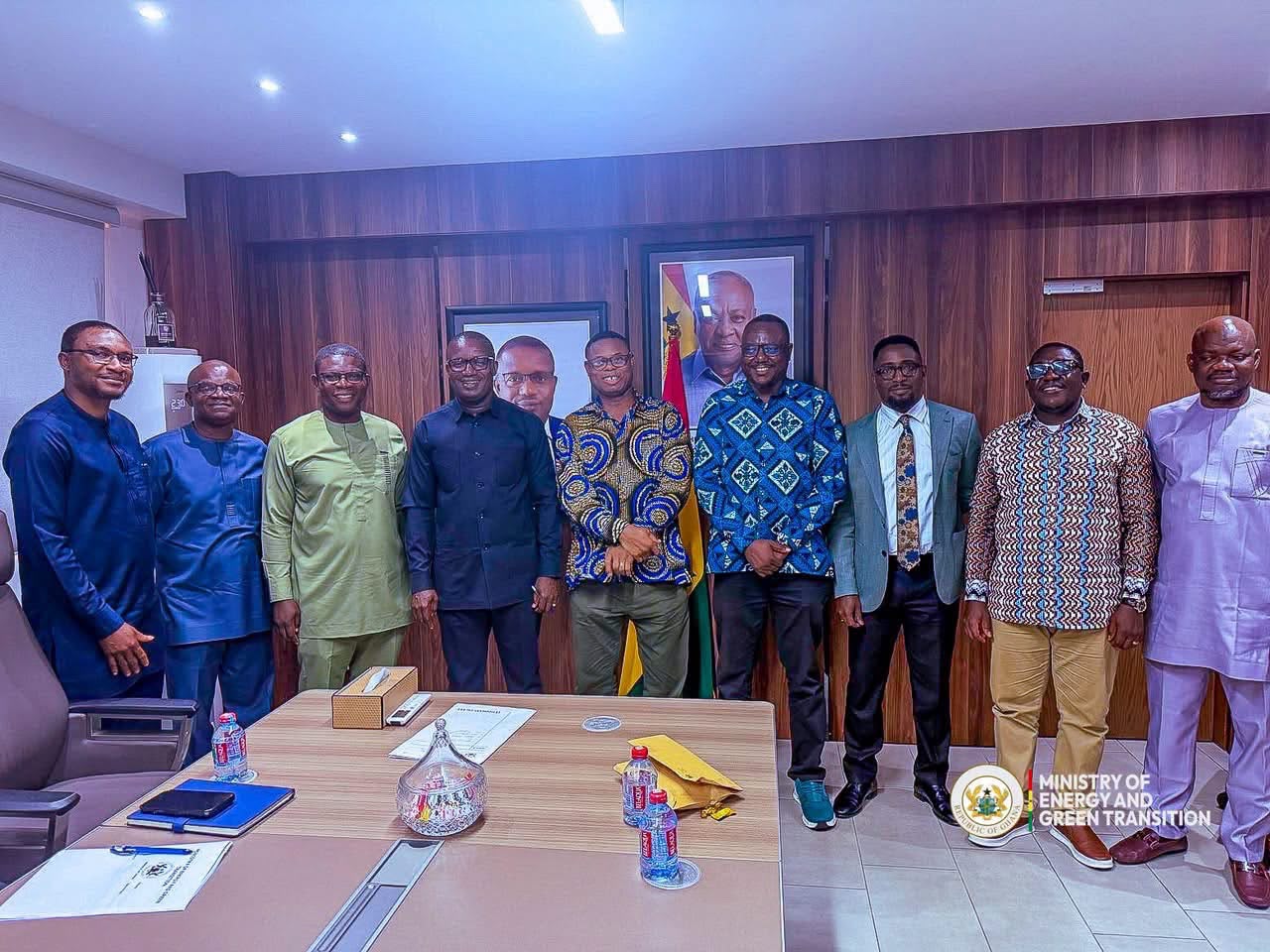
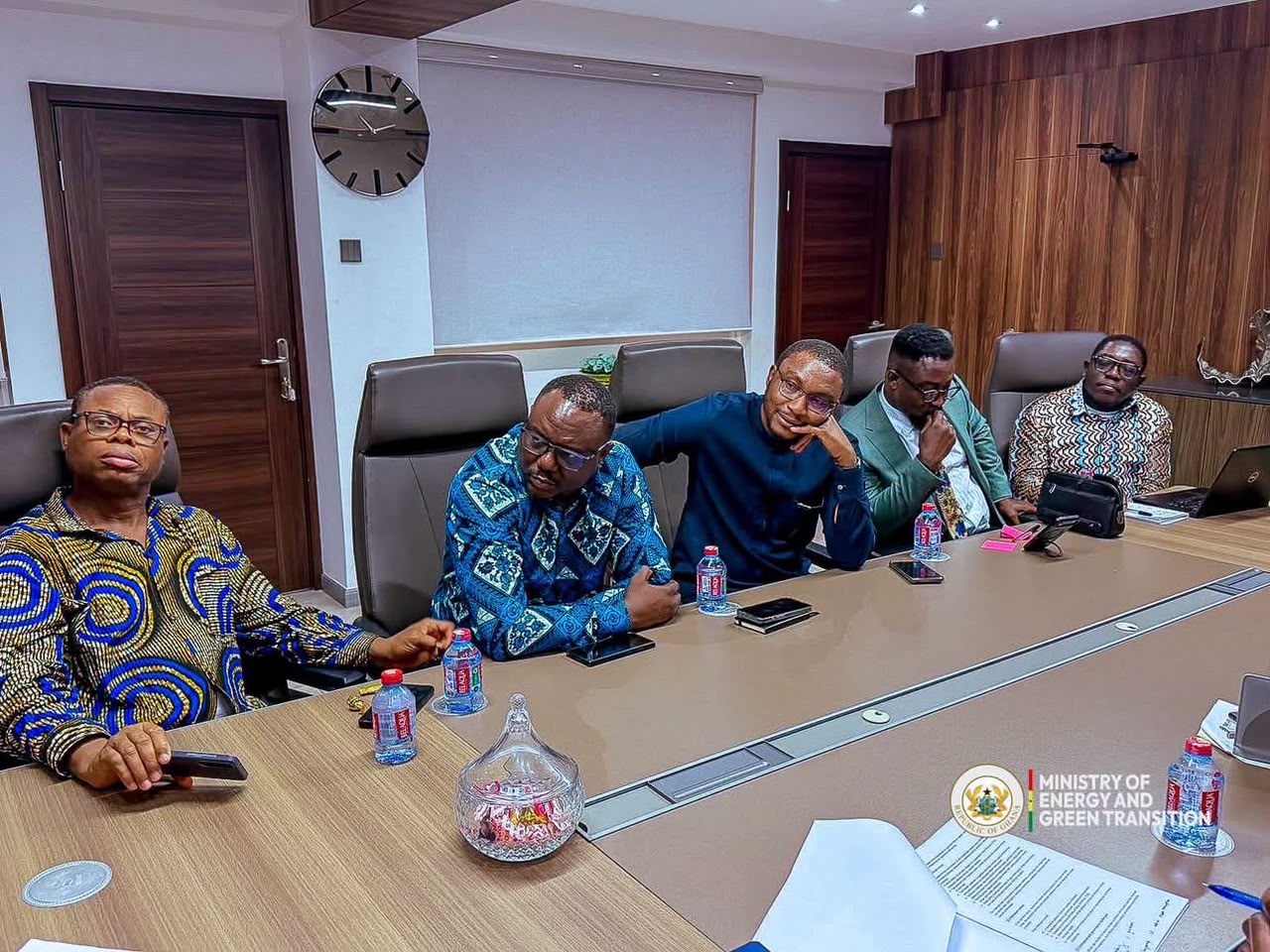
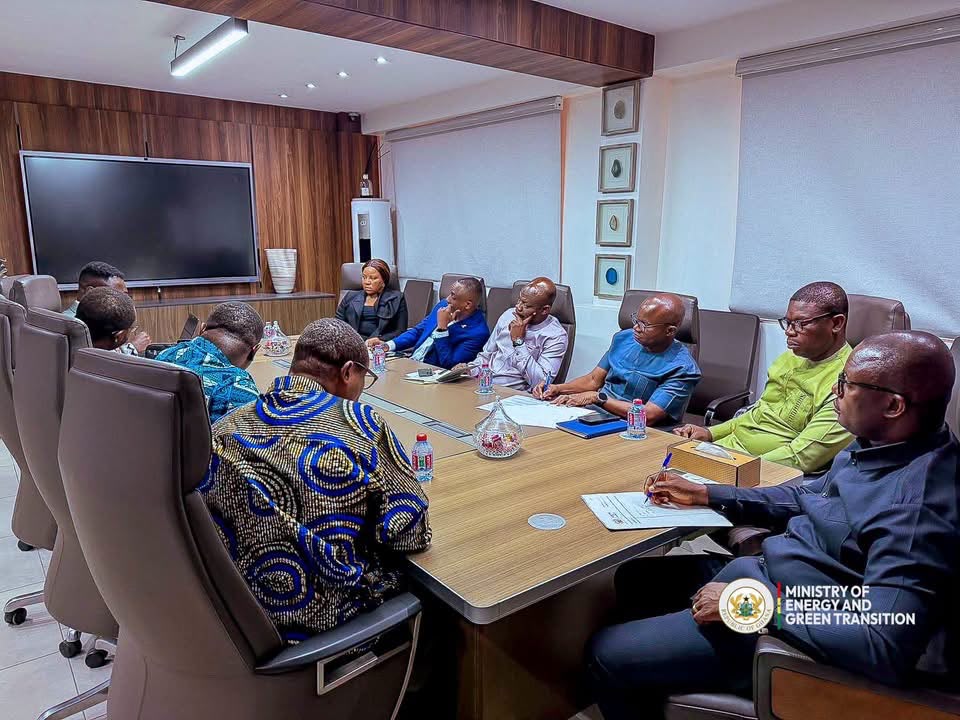
The delegation, led by IMANI Africa President Franklin Cudjoe and Vice President Selorm Branttie, met Energy Minister John Abdulai Jinapor and officials of the Ministry to discuss electricity-sector reform, infrastructure investment and renewable-energy development.
IMANI’s account of the meeting points to a reform agenda spanning transformer replacement, local engineering capacity, transmission investment, battery storage, rooftop solar and solar streetlighting.
The proposals could strengthen the sector, but their significance will depend on whether plans are translated into completed projects, reliable infrastructure and measurable savings.
The warning is particularly important for transmission. According to IMANI’s account, the Minister acknowledged that inadequate investment could threaten electricity reliability within approximately two years.
That is not the same as a confirmed forecast of a nationwide reliability crisis. It is, however, a reported warning about the consequences of postponing investment in infrastructure that must accommodate generation, transmit electricity and support demand across the system.
The Grid Cannot Be Reformed By Generation Alone
Energy policy often places considerable attention on how much electricity a country can generate. But installed generation capacity does not guarantee that power can be transmitted and distributed reliably to consumers.
Transmission infrastructure must be capable of moving electricity across the network, while distribution systems must deliver it safely and efficiently to homes and businesses. Weaknesses at either stage can undermine the value of investment elsewhere in the electricity chain.
The Ministry’s reported concern about transmission investment therefore raises a broader planning question: is infrastructure spending keeping pace with the demands placed on the system?
IMANI’s assessment suggests that acknowledging the risk early could create an opportunity to mobilise financing before deteriorating infrastructure becomes an emergency.
“Acknowledging that risk early creates an opportunity to mobilise financing before infrastructure weaknesses become another national emergency.”
The policy implication is that transmission investment should be treated as a forward-planning requirement, not simply as a response to visible breakdowns or public complaints.
That requires credible assessments of network needs, prioritised projects, realistic financing plans and transparent reporting on implementation.
Without these elements, warnings about future constraints can remain part of the public debate without producing the investment required to address them.
Transformer Renewal Could Support Local Industry
The Ministry also discussed approximately 1,500 transformer interventions, including replacements and refurbishments, according to IMANI’s account.
The scale of the proposed programme makes execution and cost control important. Replacing equipment can improve network performance, but the benefits depend on whether the right assets are identified, the work is completed to appropriate technical standards and maintenance is sustained after installation.
A particularly notable proposal concerns the tracking of decommissioned transformers by serial number and the refurbishment of suitable units locally.
If implemented effectively, the approach could help distinguish equipment that requires replacement from assets that can safely be restored to service.
It could also improve asset records and reduce the risk of usable equipment being discarded without a proper technical assessment.
The potential benefits extend beyond utility operations. Local refurbishment could create opportunities for Ghanaian engineering businesses, technicians and suppliers, provided they meet the required standards for safety, quality and reliability.
That is where infrastructure policy can intersect with industrial development. Public investment in the electricity network can create domestic technical work, but only if local participation is built around capability and accountability rather than treated as an automatic entitlement.
The Ministry would need to disclose the criteria for selecting transformers for refurbishment, the standards applied, the expected costs and the performance of restored equipment.
Reporting how many interventions have been completed—and how they affect outages, maintenance costs and network reliability—would provide a stronger basis for evaluating the programme.
Battery Storage And Solar Need A Reliable Grid
The green-transition proposals discussed during the engagement included utility-scale battery storage, increased rooftop solar adoption and a shift towards solar streetlighting.
Battery storage can help balance electricity supply and demand by storing energy when it is available and releasing it when needed.
Its value, however, depends on the system in which it operates, including the timing of demand, the source of electricity being stored, the cost of storage and the arrangements for connecting and operating the equipment.
Storage should therefore be evaluated as part of an integrated power-system plan rather than as a standalone technology purchase.
The same principle applies to rooftop solar. Distributed generation can provide electricity closer to where it is consumed and may reduce pressure on conventional supply during periods of useful solar output.
But the scale of the benefit depends on installation quality, affordability, technical standards and the way distributed systems interact with the grid.
IMANI’s account also highlights the Minister’s concern about customs treatment of separately imported solar components.
The statement reports a disparity between the treatment of complete solar kits and individual batteries or inverters, but does not provide the relevant tariff classifications, rates or official customs documentation.
That claim therefore requires verification before the scale of the disparity can be established.
If the reported treatment creates an avoidable cost disadvantage for entrepreneurs importing components, the issue merits review.
Solar businesses may depend on sourcing equipment in different combinations to suit customer needs, and administrative rules should not unintentionally undermine otherwise viable installations.
The appropriate response would be a transparent comparison of the applicable duties, taxes and procedures for complete kits and separate components, followed by clarification from the responsible authorities.
Solar Streetlighting Needs More Than New Equipment
The proposed shift towards solar streetlighting and performance-based maintenance contracts offers another route to improving public services.
Solar streetlights could reduce the electricity drawn from the conventional grid and limit exposure to some recurring power costs. They may also reduce dependence on cabling vulnerable to theft.
But the total financial benefit cannot be assumed without comparing installation costs, maintenance requirements, equipment life and replacement needs.
The Ministry’s reported interest in performance-based maintenance is therefore important. Contracts should make clear who is responsible for keeping lights operational, how faults are reported, how quickly repairs must be completed and what payments depend on actual performance.
Without such arrangements, a project can deliver a large number of installations without ensuring that roads remain illuminated over time.
A credible programme would publish the number of lights installed, their operational rate, maintenance expenditure and the costs avoided.
It should also distinguish between savings that have already been realised and savings that are projected.
This would help establish whether solar streetlighting is delivering value for public money rather than merely changing the technology used.
Financing And Procurement Will Determine Delivery
Infrastructure ambitions require financial discipline. IMANI’s account reports that the Ministry discussed procurement controls and prioritisation of essential expenditure, alongside historical ECG procurement commitments said to have reached GH¢9.8 billion against a GH¢1.8 billion budget.
The figures require reconciliation and context before they can be used to establish the extent of any overspending or commitment-control failure.
Nevertheless, the underlying issue is material. Infrastructure programmes cannot be delivered sustainably if procurement obligations are poorly planned or disconnected from available budgets and expected cash flows.
The same discipline should apply to transmission upgrades, transformer interventions, battery storage and solar streetlighting.
Each programme needs a clear budget, a defined scope, transparent procurement, implementation milestones and a means of assessing whether the intended benefits have been achieved.
A consolidated performance report could help provide that visibility. IMANI has proposed that the Ministry publish information on transformer interventions, transmission investment, renewable-energy projects and procurement reforms, alongside revenue recovery and distribution-loss indicators.
The organisation has also proposed a 90-day accountability framework. Such a process could help the Ministry establish baselines, publish deadlines and report on progress without treating an announcement as a completed result.
Recognition Must Be Matched By Results
The proposals described by IMANI suggest that the Ministry is considering reform across several connected parts of the energy system. The agenda includes the physical condition of electricity infrastructure, the use of new technologies, local engineering opportunities and the management of public expenditure.
But these areas cannot be evaluated in isolation. Battery storage will not compensate for every weakness in transmission.
Transformer replacement will not, on its own, resolve poor revenue collection. Solar streetlights will not produce lasting savings if maintenance contracts are ineffective.
The value lies in whether the reforms are coordinated and whether the Ministry can demonstrate measurable outcomes.
IMANI’s statement captures the distinction between policy intention and public benefit:
“Ghanaians do not need another catalogue of attractive energy policies. They need reliable electricity, a financially sustainable sector, opportunities for local enterprise and public expenditure that produces visible results.”
That is the standard against which the infrastructure agenda should be assessed. Published targets should be followed by evidence of completed work, costs incurred, reliability improvements and savings achieved.

Ghana’s energy transition is not simply a question of choosing cleaner technologies. It is also a test of the country’s ability to plan infrastructure, mobilise finance, enforce contracts and maintain the assets on which electricity supply depends.
The Ministry’s proposals deserve scrutiny on those terms. The decisive question is whether the next 90 days and the period beyond them produce verifiable progress on the grid, equipment renewal and renewable-energy deployment.
The objective should be not only to announce a more modern energy system, but to build one that is dependable, affordable and financially sustainable.
READ ALSO: Spain Mourns 69 Train Crash Victims As Probe Continues