A rare localised ceasefire between Russia and Ukraine has enabled a humanitarian mission to reach the Russian-occupied town of Oleshky, delivering essential supplies and preparing to evacuate civilians who have remained trapped there since the early stages of the war.
The truce entered its fourth day today, with officials from both countries coordinating aid deliveries and evacuation arrangements under a temporary truce in Ukraine’s southern Kherson region.
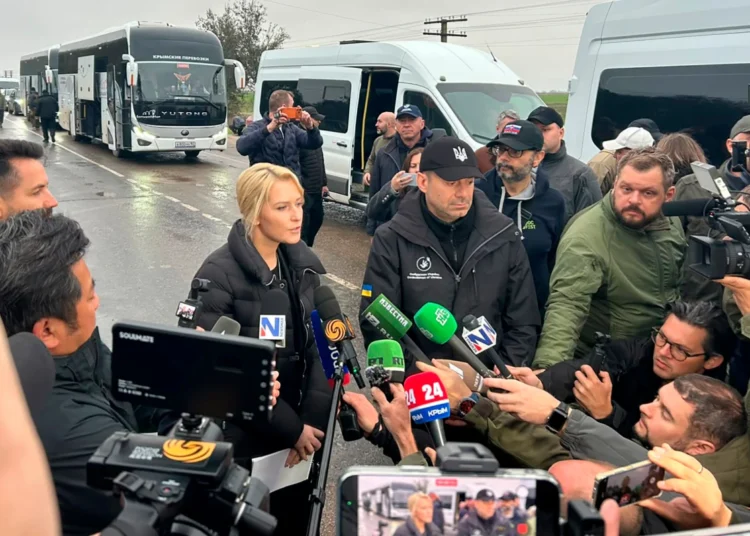
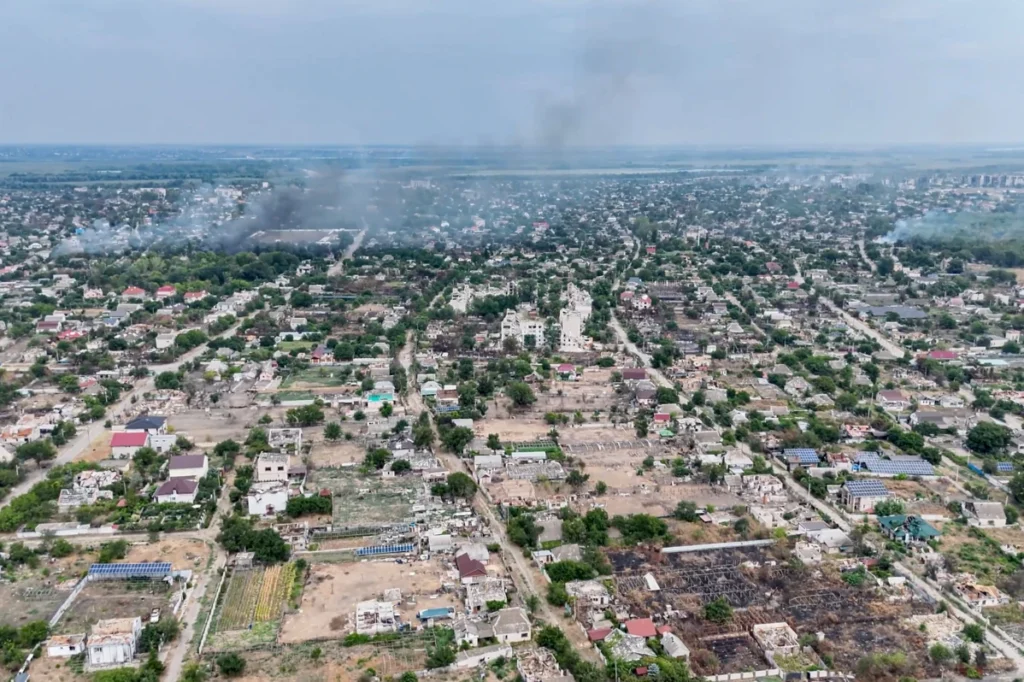
A convoy involving 25 buses, ambulances and humanitarian supplies was organised to transport food and medicine into the devastated town and assist residents wishing to leave for Russia or Ukrainian government-controlled territory. Authorities and volunteers estimate that approximately 2,000 people remain in Oleshky.
The localised ceasefire is expected to remain in effect until Sunday evening, allowing the humanitarian operation to continue. The effort represents a rare instance of direct cooperation between the two sides during the war, which began with Russia’s full-scale invasion of Ukraine in February 2022.
The White House said that the United States played a central role in facilitating the mission, which it said was brokered by US First Lady Melania Trump.
Ukraine’s Human Rights Ombudsman, Dmytro Lubinets, confirmed that the Ukrainian delegation had safely arrived in Oleshky, located in the southern Kherson region.
Earlier, Lubinets stated that the delegation had reached Armiansk in Russian-occupied Crimea, where it coordinated the next stages of the mission with Russia’s Human Rights Commissioner, Yana Lantratova.
Journalists from three countries also joined the operation, according to Lubinets, who said preparations had been completed to deliver assistance to residents, particularly older people, people with disabilities and those unable to care for themselves. “Our main task is to ensure that this assistance reaches every person in need,” Lubinets said.
David Arakhamia, Head of Ukrainian President Volodymyr Zelenskyy’s parliamentary faction, later confirmed that humanitarian aid had reached Oleshky and that technical assistance was being provided to residents seeking evacuation.
Lubinets said that arrangements were being made to accommodate both those wishing to leave and those choosing to remain in the town.
“Everyone who wishes to leave Oleshky will be given the opportunity to leave safely. At the same time, those who have decided to stay can stay and will receive all the necessary humanitarian support.”
Dmytro Lubinets
Under the announced schedule, evacuations were due to continue until 2 p.m. local time, with aid distribution beginning 30 minutes later.
The operation is intended to address the immediate needs of civilians who have endured prolonged hardship in an area under Russian occupation.
Evacuation Routes Raise Concerns
Despite the progress of the humanitarian mission, uncertainty remains over the evacuation arrangements and the destinations available to civilians leaving Oleshky.
Claims that Russian forces began evacuating residents before the agreed date have raised questions about whether the operation will proceed according to the arrangements reached by both sides.
The evacuation route has not been disclosed, adding to concerns about the fate of those leaving the town.
Ukrainian officials and residents face particular uncertainty over whether civilians will be transported through Russian-controlled territory or be able to reach areas under Kyiv’s control.
Ukrainian-held territory lies only a few kilometres across the Dnipro River from Oleshky. However, Ukrainian public television reported that people seeking to reach Ukraine would have to travel hundreds of kilometres and enter the country through its northern border with Belarus.
The reported route shows the difficulties civilians may face in reaching safety despite the temporary ceasefire.
The assurances provided by Lubinets that residents would be allowed to leave safely are central to the operation, although the available information does not establish how many people have been evacuated or where those who leave will ultimately be taken.
The ceasefire has therefore created an opportunity for assistance and civilian movement, but the practical implementation of evacuation arrangements remains a key concern.
Fighting Continues Beyond Ceasefire
While the localised truce has enabled humanitarian activity in Oleshky, hostilities have continued elsewhere in the war.
Russia’s Defence Ministry said its air defences had intercepted more than 1,000 Ukrainian drones overnight. Ukraine’s air force, meanwhile, reported that Russia had launched ballistic and other missiles, alongside scores of drones.
The competing military claims underscore the limited geographical scope of the ceasefire. The humanitarian pause in the Kherson region has not brought a wider halt to the fighting between the two countries.
For civilians remaining in Oleshky, the temporary truce offers an opportunity to receive food, medicine and other essential assistance, as well as a possible route out of the occupied town.
The operation also demonstrates that limited cooperation remains possible despite the broader conflict. However, its success will depend on continued observance of the ceasefire, the delivery of aid to those most in need and the safe movement of civilians who wish to leave.
With approximately 2,000 people still believed to be in Oleshky, the coming days will be crucial in determining how much assistance reaches residents and whether evacuation arrangements provide a safe and practical way out.
READ ALSO: Sánchez Rules Out Moroccan Role In Ceuta Migrant Surge