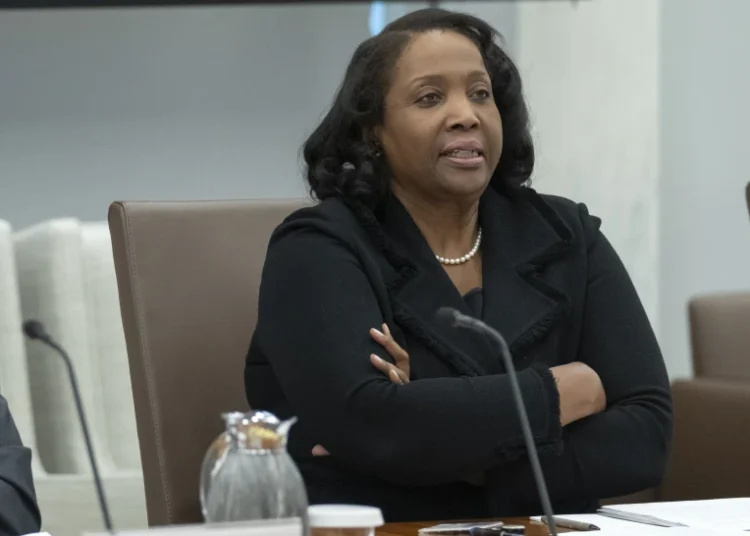
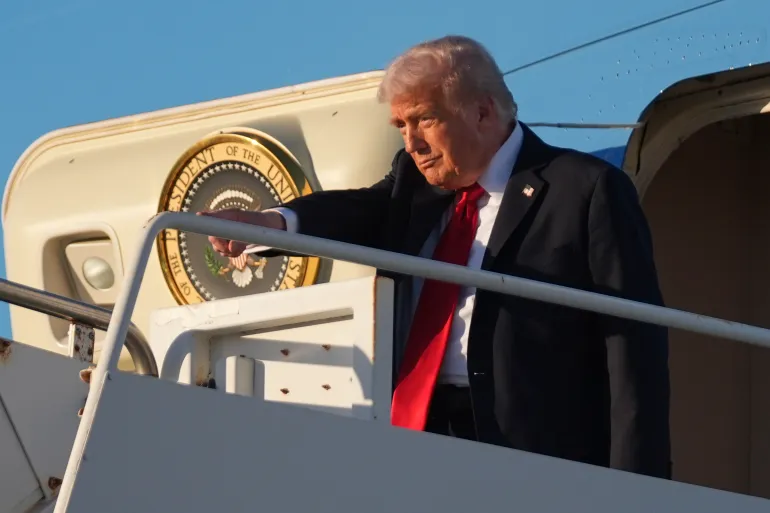
US President, Donald Trump has intensified his efforts to remove Federal Reserve Governor Lisa Cook, establishing a committee of inquiry to investigate allegations that she made false statements in mortgage applications.
In a presidential memorandum, Trump announced that the committee would hold a closed-door hearing at the White House on November 5, where Cook would be required to appear and respond to the allegations. The proceedings will be transcribed, with the memorandum stating that the hearing will not be open to the public.
“As President, it is my job to ensure the laws are faithfully executed, including by firing subordinates who cannot be trusted to tell the truth and follow the law.”
Donald Trump
The inquiry marks another step in Trump’s campaign to remove Cook from the Federal Reserve’s seven-member Board of Governors, raising fresh concerns about political pressure on the independence of the US Central Bank.
Cook’s Attorneys, Abbe Lowell and Norman Eisen, said they were assessing whether the proposed process would provide a genuine opportunity for their client to respond to the allegations.
“We have engaged with the White House to evaluate whether the process proposed has a possibility of being a genuine one and not simply a box checking exercise.
“Governor Cook welcomes the opportunity to present the facts so she can clear her name and demonstrate there is no legal basis to fire her.”
Abbe Lowell and Norman Eisen
The committee will comprise three Trump administration appointees; Kevin Hassett, the President’s top economic Adviser; Keith Sonderling, Acting Director of the Office of Government Ethics; and Andrea Lucas, Chair of the Equal Employment Opportunity Commission.
According to Trump’s memorandum, the committee will investigate the allegations and determine whether there is sufficient “cause” to remove Cook under the law governing the Federal Reserve.
The committee is expected to submit findings and a recommendation to the President following the hearing and the completion of the process outlined in the memorandum.
Mortgage Allegations At Core Of Dispute
Trump first attempted to remove Cook in August 2025, alleging that she had committed mortgage fraud by identifying two different properties as her primary residence in mortgage applications submitted in 2021.
Mortgage lenders may offer more favourable interest rates and terms for properties designated as primary residences than for investment or second homes.
Cook has denied wrongdoing and has not been charged with a crime in connection with the allegations.
Her legal team has previously described the discrepancy as an inadvertent error, arguing that other documents identified one of the properties as a vacation home.
In August 2025, Lowell and Eisen rejected the suggestion that the alleged discrepancy amounted to fraud. “An inadvertent error is not fraud, as the President and a third of his cabinet should know because they reportedly did the same thing,” they said.
The allegations have become the basis of a prolonged legal dispute over the president’s authority to remove members of the Federal Reserve’s governing board.
In June 2026, the US Supreme Court allowed Cook to remain in her position while legal proceedings continued, rejecting Trump’s request to overturn a lower court order that had blocked her removal.
The court’s ruling addressed the requirements surrounding the President’s attempt to dismiss a Federal Reserve Governor, including the need to follow appropriate procedures. It did not constitute a final determination that the mortgage allegations were either proven or disproven.
The latest committee of inquiry appears intended to provide the administration with a process for assessing whether the allegations meet the legal standard for removal.
Federal Reserve Independence Under Scrutiny
Trump’s renewed effort to remove Cook has intensified debate over the independence of the Federal Reserve, which sets monetary policy and influences borrowing costs across the US economy.
The President has repeatedly called for lower interest rates, arguing that monetary policy should support economic growth. Disagreements over the direction of interest rates have added to tensions between the White House and the central bank.
The dispute over Cook’s position therefore extends beyond the mortgage allegations, touching on the relationship between presidential authority and the institutional independence of monetary policymakers.
Cook was appointed to the Federal Reserve Board by former President Joe Biden and became the first Black woman to serve as a Governor of the central bank.
The attempt to remove her is also unprecedented in the Federal Reserve’s history. The Supreme Court noted in its June ruling that Trump’s earlier attempt marked the first time a President had sought to fire a sitting Federal Reserve Governor.
The court’s decision left room for further proceedings, with the administration required to follow the applicable legal standards and procedures.
The November 5 hearing will give the committee an opportunity to examine the evidence and hear Cook’s response before making its recommendation to Trump.
However, the process has already drawn scrutiny from Cook’s lawyers, who have questioned whether the inquiry will provide a fair and meaningful assessment of the allegations.
The outcome could have implications for both Cook’s future at the Federal Reserve and the broader debate over the extent to which a President can influence the leadership of an institution responsible for setting US monetary policy.
READ ALSO: EU, China Reach Preliminary Trade Agreement After Talks