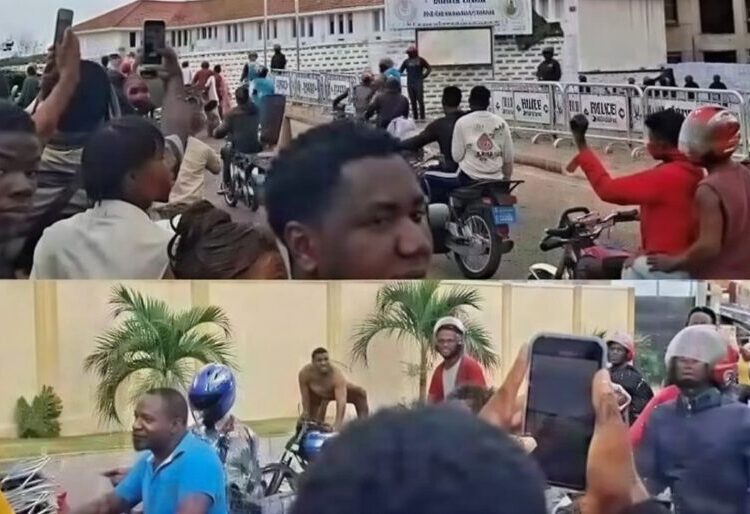
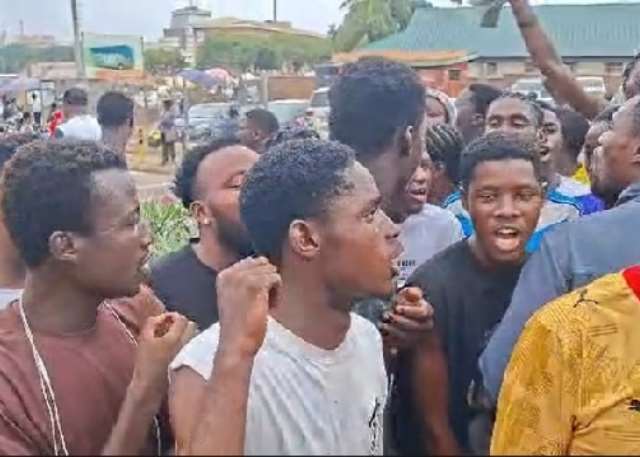
Security Consultant Richard Kumadoe has condemned the growing trend of party supporters gathering outside the Economic and Organised Crime Office to demand the release of arrested suspects, describing the practice as unlawful assembly that authorities should prosecute rather than tolerate.
Mr Kumadoe made the remarks during an exclusive interview with The Vaultz News, responding to the wave of political criticism EOCO has faced over its recent high-profile arrests.
Asked whether it was appropriate for party supporters to mass at EOCO’s premises whenever the agency arrests a suspect connected to their political affiliation, the former Special Officer with the Bureau of National Investigation answered without hesitation, framing the behaviour as a clear breach of the law rather than a legitimate form of protest.
“They need to arrest them and prosecute them. They have allowed it, and not punishing offences will always rationalise bad behaviour and promote antisocial tendencies in society. So once you allow it, one, two, three, four, five, people are rationalising it, and that is how they can assemble there and create a hormonal problem.”
Security Consultant Richard Kumadoe
Protests Do Not Influence Legal Outcomes, Kumadoe Says
Mr Kumadoe was firm in dismissing any notion that public demonstrations outside EOCO’s offices could sway the outcome of an ongoing case, arguing that the legal process unfolds independently of street pressure. “See, if you assemble there and begin to drum and dance, that will not release your client,” he said.
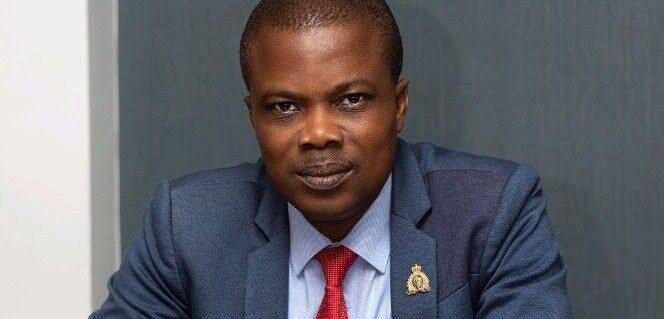
To support his argument, Mr Kumadoe pointed to comments made by Appiah Kubi, lawyer for Chairman Wontumi, who publicly disclosed that officers from the BNI and EOCO worked closely with him late into the night, as at 11:30pm and past midnight, to help satisfy his client’s bail conditions.
According to Mr Kumadoe, this disclosure helped clarify what actually happens behind the scenes during such cases, correcting what could otherwise have become a distorted public narrative about how officers handle detained suspects.
“If Appiah Kubi has not come out to say that, then people would have misconstrued this whole briefing and say all manner of negative things about the officers as if they don’t know what they are doing”.
Security Consultant Richard Kumadoe
Officers Understand the Legal Stakes, He Argues
Mr Kumadoe defended the professionalism of the officers involved in these cases, insisting they operate with full awareness of the legal consequences attached to any misconduct in how they treat suspects.
“But these are officers that were trained. They know exactly what they are doing. They know the ramifications of breaching the rights of people who come before them. They understand the atmosphere in the country. They know what to do, what not to do, knowing very well that they can be sued and the outcome of their work can be litigated in court.”
Security Consultant Richard Kumadoe
He characterised the practice of street protests outside investigative agencies as fundamentally misguided, calling for firmer action to bring it under control. “So, I think that is nonsense. It’s misbehaviour that needed to be curtailed or dealt with precisely. Until we are able to do that, you continue to see some of this misbehaviour in the streets,” he said.
A Broader Pattern in Ghana’s Political Climate
Mr Kumadoe’s remarks reflect growing concern among security professionals about how political mobilisation has increasingly extended into confrontations with state investigative institutions, particularly in cases involving prominent political figures.
His comments suggest that such demonstrations, rather than serving any legitimate protective function for the accused, may instead complicate the broader relationship between the public and law enforcement agencies tasked with pursuing accountability.
By citing the Wontumi case as an example of proper procedure unfolding away from public view, Mr Kumadoe underscored his broader point that legal processes, including bail negotiations and release conditions, are handled through direct engagement between lawyers and investigating officers rather than through public pressure or street demonstrations.
His comments add to an ongoing national conversation about the appropriate boundaries of political expression when it intersects with active criminal investigations, particularly as Ghana continues to grapple with a series of high-profile prosecutions that have drawn intense partisan reactions from supporters on multiple sides of the political divide.
READ ALSO: Power Lithium Battery Recycling Market Growth Accelerates Toward 2035