

IndexBox, a global market research firm has reports that the world power lithium battery recycling market has entered a pivotal expansion phase, projecting a compound annual growth rate (CAGR) of 20% to 25% between 2026 and 2035.
This rapid growth trajectory is expected to push the global market index to between 620 and 930 by 2035, measured against a 2025 baseline of 100.
Driven by an unprecedented convergence of electric vehicle (EV) battery retirements, expanding grid storage installations, and strict regulatory mandates, the market enters 2026 characterized by “broader demand fundamentals, more disciplined procurement behavior, and a more regionally diversified supply architecture.”
“The World Power Lithium Battery Recycling market is undergoing a structural transformation from a niche waste-management activity into a strategic pillar of the global battery and critical-minerals supply chain. As first-generation electric vehicle (EV) batteries from the 2018-2025 wave reach end-of-life, the volume of spent lithium-ion batteries entering recycling streams is set to surge, creating a robust feedstock base for recyclers worldwide.”
latest IndexBox report
The surge in market volume is largely anchored in the natural lifecycle completion of early-stage clean mobility technologies.
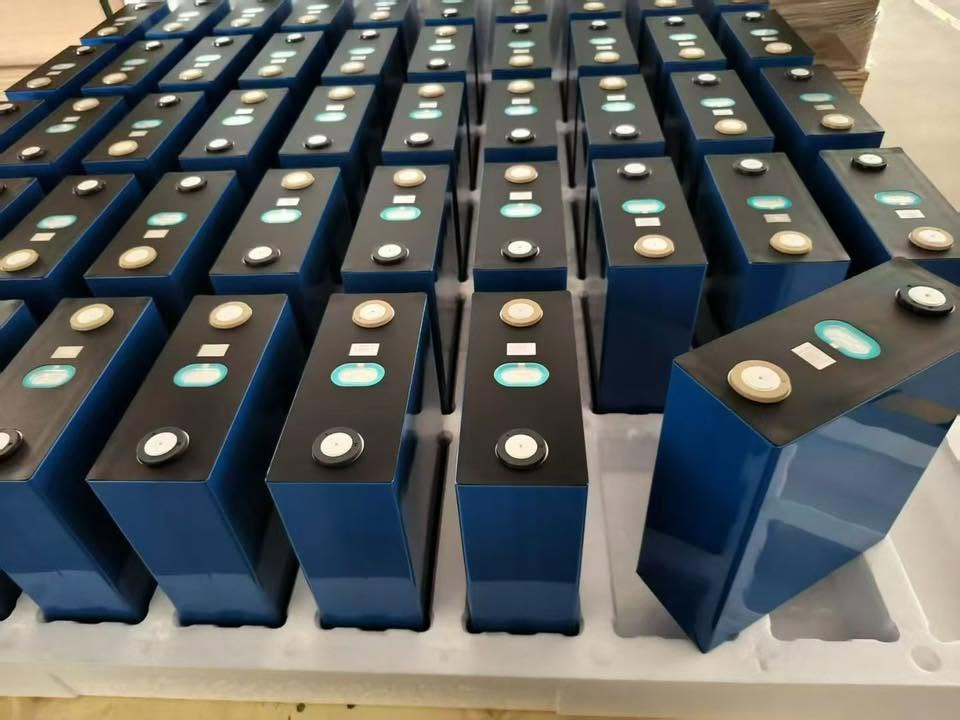
As power packs installed during the initial 2018–2025 EV adoption surge reach the end of their operational utility, the recycling ecosystem is transitioning from a localized waste handling activity into an essential industrial foundation.
This influx of spent power units across automotive, industrial, and stationary energy storage sectors provides an abundant feedstock base, allowing commercial processors to scale operations, improve recovery efficiency, and secure direct supply arrangements with battery cell manufacturers.
Regulatory Mandates and Regional Supply Architecture
Government directives and sustainability policies are playing a decisive role in shaping the global recycling framework.
Regulatory actions most notably the EU Battery Regulation featuring mandatory “recycled-content quotas and extended producer responsibility requirements” are compelling automakers and industrial operators to formalize end-of-life collection networks.
These regulatory frameworks force market participants to maintain direct accountability for spent power packs, ensuring critical minerals are recovered locally rather than discarded or exported without reprocessing.
At the same time, the geographic footprint of global processing infrastructure is undergoing a significant strategic realignment.
While the Asia-Pacific region currently dominates the sector by hosting “about 60-70% of global installed recycling capacity,” capital expenditure in Western Europe and North America is accelerating rapidly.
Mining conglomerates and battery cell manufacturers are actively integrating secondary refining facilities directly into their regional supply chains.
By establishing localized loops, industrial players aim to minimize international freight overhead, mitigate geopolitical supply risks, and meet strict domestic sourcing standards.
Technical Processing Routes and Critical Material Economics
The commercial economics of power battery recycling remain fundamentally anchored in raw material recovery values and spot market pricing.
Recovered commodities specifically cobalt, nickel, lithium, manganese, and graphite collectively “account for 70-80% of the value in recycled battery feedstocks.”
Consequently, operational profit margins are inherently tied to virgin metal benchmarks, leaving direct “price exposure to London Metal Exchange (LME) quotes for virgin metals the single largest profit driver for recyclers.“
High primary metal prices directly improve recycling unit economics, accelerating investment in high-yield extraction technology.
To capture this material value efficiently, processing operations rely on a sophisticated multi-stage sequence involving collection, sorting, discharging, mechanical dismantling, and chemical reprocessing.
Facilities deploy three primary industrial pathways: pyrometallurgical smelting, hydrometallurgical leaching, and emerging direct recycling methods.
While hydrometallurgy delivers high extraction purity for battery-grade nickel and lithium salts, direct recycling is attracting interest for its capability to refurbish cathode materials directly without total chemical degradation, yielding lower energy consumption and reduced chemical waste.
Structural Impacts on Global Energy Trends
The rapid acceleration of power lithium battery recycling carries profound implications for global energy trends, particularly regarding energy security, resource sustainability, and power grid decarbonization.
As renewable power generation expands, utility-scale battery energy storage systems (BESS) require vast quantities of critical minerals.
A mature recycling industry creates a dependable secondary supply pipeline that alleviates primary mining bottlenecks, stabilizes battery pack pricing, and prevents material shortages from delaying grid-scale storage deployments.

Furthermore, closed-loop battery reprocessing significantly lowers the carbon intensity of the broader clean energy transition.
Extracting critical metals through secondary hydrometallurgical refining requires up to 80% less energy than primary mining and refining operations, directly reducing the embedded Scope 3 emissions of electric vehicles and storage hardware.
By establishing resilient domestic secondary supply chains, energy-importing nations can buffer themselves against mineral concentration risks, fostering a circular energy economy capable of sustaining long-term net-zero goals.
READ ALSO: NPP Rejects Wontumi’s Conviction, Calls Judgment Travesty of Justice