Prof. Titus Beyuo, the Member of Parliament (MP) for Lambussie, has called for a strategic review of the Zipline drone delivery contract, urging the government to divert funds currently spent on the service to strengthen Ghana’s internal healthcare infrastructure.
He argued that prioritizing local blood banks and storage facilities over drone deliveries – which he asserts are being misused – would ensure a more efficient and sustainable nationwide blood distribution system.
Prof. Beyuo’s proposal follows recent revelations by Health Minister Hon. Kwabena Mintah Akandoh that Zipline has been routinely transporting a wide range of non-emergency items, including condoms, mosquito nets, and educational materials.
This mission drift, Prof. Beyuo insisted, undermines the service’s claim to be vital for emergency health logistics.
“This money, if given to the National Blood Service, could set up blood bank services across all districts. Blood could be stored locally and used where it is needed, rather than spending on drones to fly non-emergency items like condoms”
Prof. Titus Beyuo, MP for Lambussie
The MP’s call for a review is rooted in both the financial prudence of the contract and the operational output of the service. Prof. Beyuo cited specific underperformance issues at some of the drone delivery centers, pointing out that public spending must be scrutinized for value.
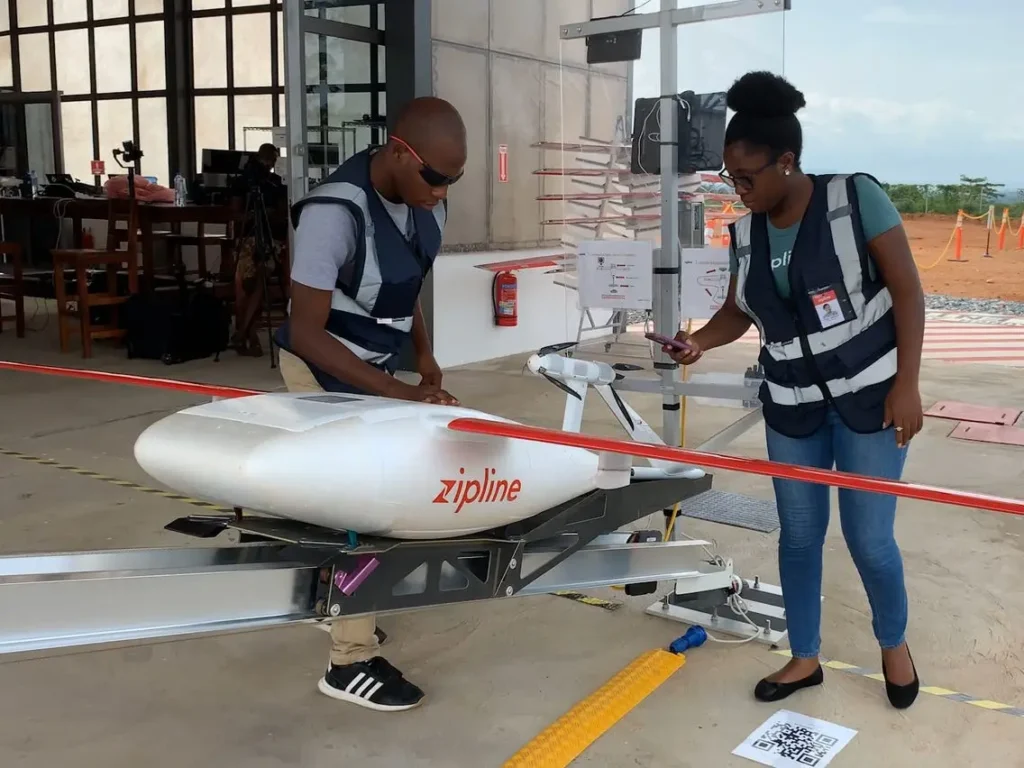
He noted that Zipline centers are contracted to maintain high activity levels that justify the high cost to the state. “Each of the centres should be delivering about 200 deliveries per day, but some centres are not doing up to 30 deliveries,” he revealed, stressing the urgent need for scrutiny to ensure prudence in public spending.


The Policy Solution
Prof. Beyuo criticized Zipline for straying so far from its original mandate of delivering blood and critical supplies in emergencies.
He lamented that the routine distribution of non-critical items, now confirmed by the Health Minister to include blood-donor cards, food and nutrition supplies, syringes and needles, textbooks, and uniforms, could easily be handled through Ghana’s existing, cheaper supply chain logistics.
“Why spend that amount of money flying condoms, flying textbooks? There is a need for us to review this,” he added, arguing that the system is currently over-engineered for the tasks it performs most frequently.
Prof. Beyuo maintained that the most efficient way to ensure timely access to life-saving blood is to invest directly in local infrastructure. Instead of relying on a centralized and expensive drone service for blood distribution, the allocated funds should be used to equip district hospitals with dedicated blood storage facilities.

This shift, he argued, would enable donations to be collected and distributed locally by the National Blood Service, cutting out the middle-man and the excessive cost of aerial delivery for non-emergency situations.
Strengthening the local blood bank infrastructure, the MP insisted, provides a sustainable solution that guarantees timely access to blood while making far more efficient use of the public purse.
Defending the Presidency on Petitions
Shifting away from health policy, Prof. Beyuo also weighed in on the charged political atmosphere surrounding the 10 separate petitions filed against the heads of the Electoral Commission (EC) and the Special Prosecutor (SP).
He strongly dismissed allegations that President John Dramani Mahama has a personal hand in orchestrating the removal of EC Chairperson Jean Mensa, her deputies, or Special Prosecutor Kissi Agyebeng.
“I am pretty sure his excellency has no personal vendetta against any of these people and wouldn’t get himself involved,” Prof Beyuo asserted. He warned political commentators against spreading false rumours and impugning motives without evidence.
The MP emphasized that the constitution provides a clear legal avenue for handling such petitions and urged all stakeholders to exercise restraint and allow the legal process to proceed fairly.

Prof. Beyuo’s contribution framed the Zipline debate as one of prioritizing structural health needs over expensive external contracts, while simultaneously urging political maturity regarding the petitions against independent state officials.
READ ALSO: US Congress Probes Alleged Persecution of Nigerian Christians