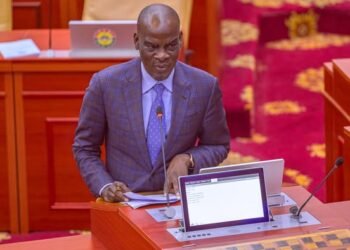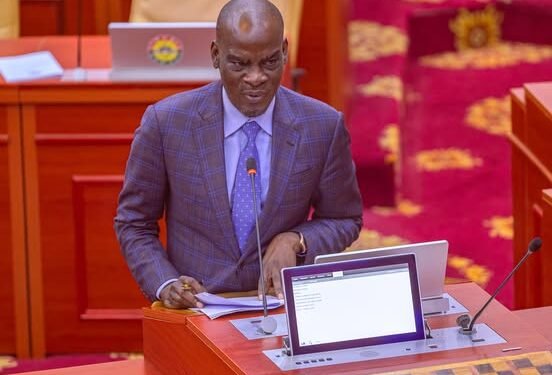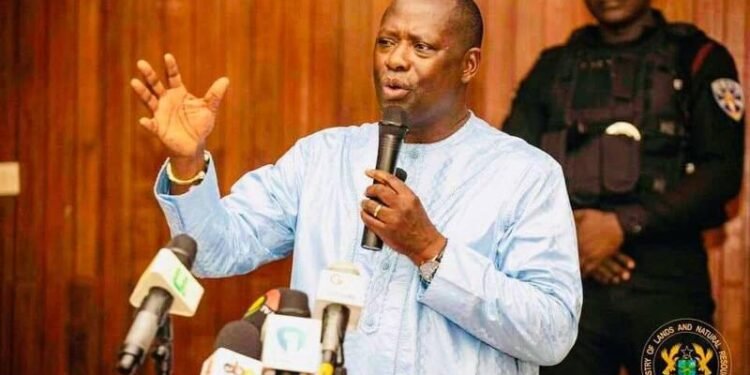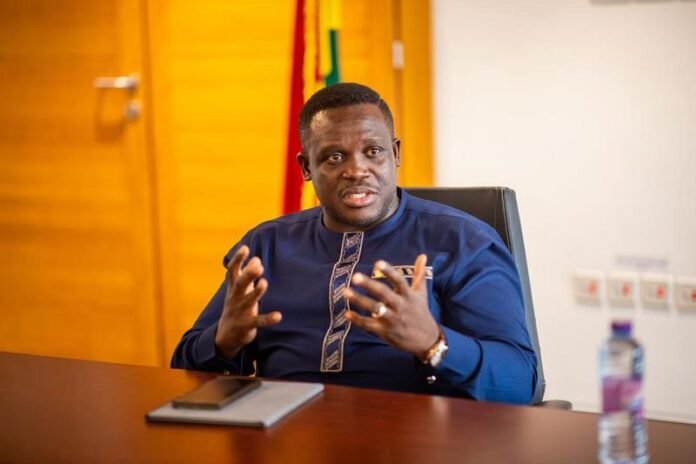
The Minister of Communications, Digital Technology, and Innovations, Hon. Samuel Nartey George, has announced an ambitious regional strategy aimed at drastically improving the quality of service and lowering the cost of data for Ghanaians next year, 2026.
He revealed that Ghana is spearheading a bulk data purchasing agreement with several landlocked West African nations to leverage economies of scale and finally unlock the vast capacity of undersea cables that currently remain largely unused.
Speaking on the challenges facing Ghana’s digital infrastructure, Hon. George confirmed that despite the presence of multiple high-capacity cables – including Equiano, 2Africa, and Main One – the country’s current domestic data demand is far too low to negotiate competitive bulk prices alone.
“The issue now is if your demand is high, you can negotiate lower bulk prices for bandwidth. The demand in Ghana is very low. You know, for all the complaints and all the concerns that are raised, the quantity of data used is small. What Equiano alone has Ghana is not even able to take 1%”
Hon. Samuel Nartey George, Minister of Communications, Digital Technology, and Innovations

The Minister detailed that under the SMART Africa initiative, he recently visited Burkina Faso to sign a roaming agreement and initiate conversations with landlocked countries, including Burkina Faso, Niger, and Mali, on how to collectively purchase bulk data.
According to Hon. George, the strategy involves these nations pooling their demand to secure lower price points, which Ghana would then benefit from. Ghana would act as a hub, transporting the purchased bandwidth to the landlocked countries via existing aerial fiber connections, such as power cables.
This regional collaborative approach is intended to overcome the local market inefficiency where low off-take volume results in higher per-unit pricing. Minister George expressed confidence that these regulatory conversations will lead to a better quality of service and experience for data consumers by next year.


MultiChoice Public Showdown
Addressing his controversial intervention into MultiChoice (DStv) pricing some months ago, Hon. Sam George defended his actions against critics who claimed he failed to achieve his stated goal of reducing prices.
He clarified that his public policy directive was the final resort after extensive, failed private negotiations, pointing out that the public conversation often overlooked the weeks of behind-the-scenes work with the Canal+ management.
“I didn’t just wake up and attack Multi-Choice or DSTV,” the Minister revealed, confirming the private discussions centered on the company’s pricing in the Ghanaian market. “It was only when we couldn’t make any headway that I issued a public policy directive to the regulator to say that, look, if they did not comply, we will take action.”
Minister George dismissed critics who argued that despite his achievement prices remain unchanged, suggesting that many noisy commentators do not actually use the service. He insisted that for the genuine DStv consumer, the result of the price intervention is a measurable improvement in value.
He argued that when consumers buy a bouquet, they are buying specific content – like the Champions League or Formula 1 – and if the price for that specific content or bouquet has dropped, the consumer is gaining.
He cited specific figures: “If I used to pay GHS 865, and now I’m paying, GHS 590 or something, am I paying more, am I paying less?”

The Minister concluded that the efficacy of the intervention is best judged by those who actually subscribe to the service, suggesting that the true value lies in the improved channel offerings and content accessibility for the price paid.
READ ALSO: Ghana’s Loans Set to Get Cheaper Overnight as Reference Rate Plummets to 15.9%