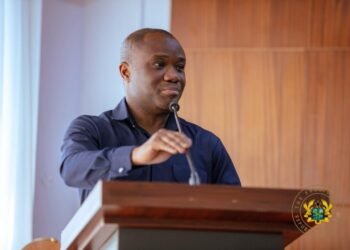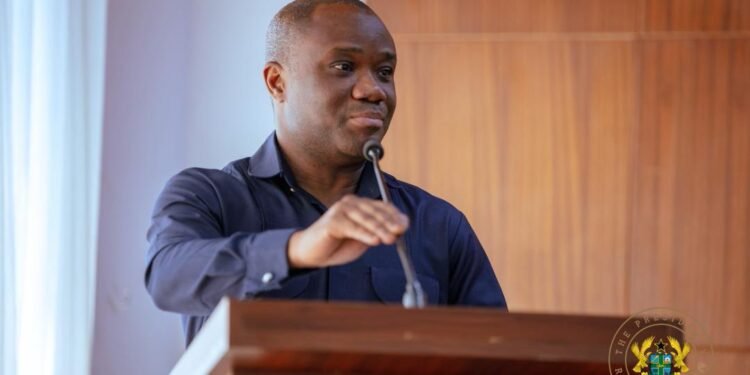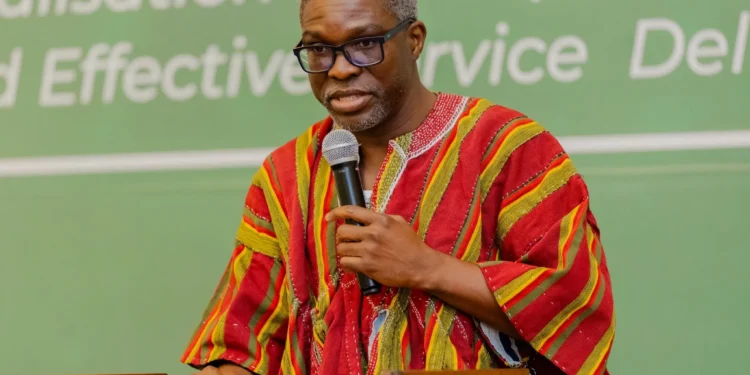
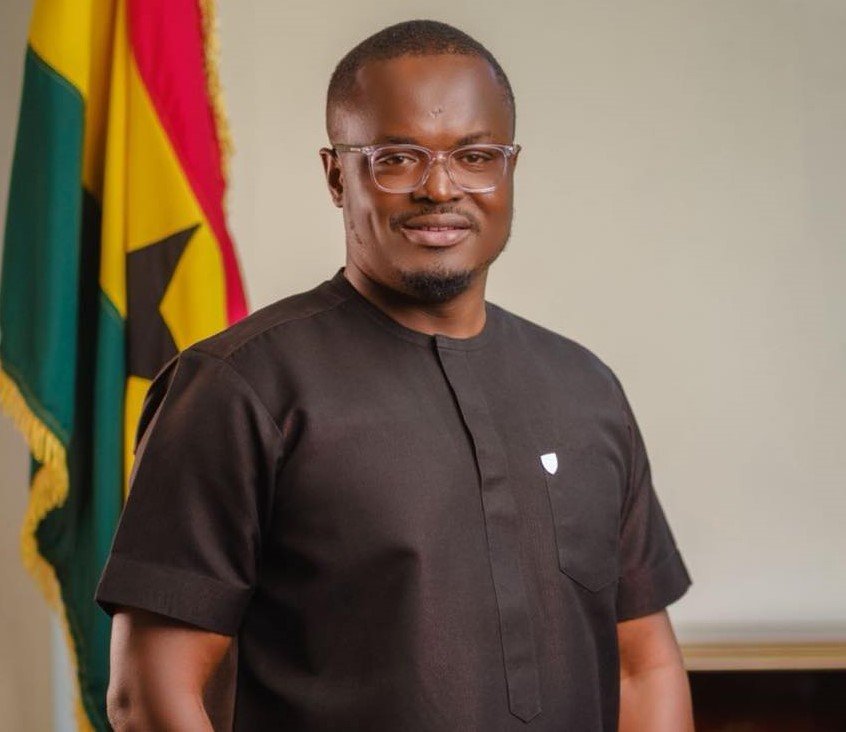
The Executive Secretary of the National Identification Authority (NIA), Yayra Koku, has delivered a striking endorsement of the government’s decision to undertake a new nationwide SIM card registration exercise in 2026, insisting that the 2022 registration process was incomplete and failed to meet the basic requirements of biometric identity verification.
His comments have added new clarity to a debate that has resurfaced after Communications Minister Hon. Samuel Nartey George announced plans for a fresh registration exercise beginning in the first quarter of 2026.
In a detailed statement, Yayra Koku revealed that the fingerprints collected during the 2022 SIM registration were never used to authenticate the identities of subscribers against the NIA’s database.
According to him, the Telecoms used a system that merely captured “a picture of your fingerprints” without comparing them to any authoritative biometric records. “Let me emphasize: captured fingerprints were not used to authenticate identities with any authoritative system,” he stressed.
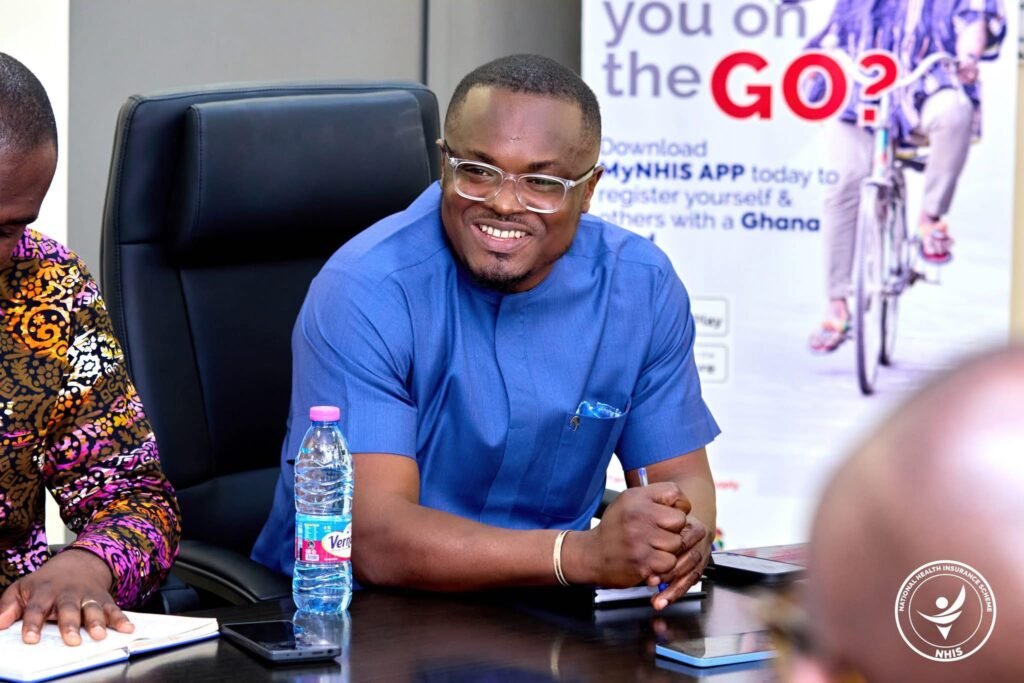
He also noted that a 2021 letter from former NIA Boss Prof. Ken Attafuah to the Telecoms Chamber had already confirmed this deficiency long before the 2022 exercise was rolled out. For the NIA Executive Secretary, the failure to authenticate biometrics fundamentally undermined the integrity of the entire exercise.
“You cannot confirm the identity of an individual without them undergoing biometric authentication, which includes fingerprint scanning, facial recognition with liveliness checks, iris scanning, etc.”
Yayra Koku, Executive Secretary of the National Identification Authority (NIA)
Without these verification steps, he argued, the previous system could not prove the true ownership of SIM cards or ensure that identities were accurately matched to the national registry.


New Exercise Neccessary
His comments were prompted by a set of questions from IMANI Founding President Franklin Cudjoe, who sought clarification on the new registration process. Responding directly to the concerns—many of which originated from a technology expert—Yayra Koku provided a structured breakdown of why the new exercise is necessary and what the previous one failed to achieve.
On whether the new registration is needed, he was unequivocal: “It is very necessary so that we know the true owners of SIMs and the devices they are using.” He explained that the old system validated only the Ghana Card PIN but did not authenticate biometric information, a limitation that made it impossible to establish the uniqueness and authenticity of each subscriber. This, he said, is the core reason the 2022 exercise fell short of its intended goals.
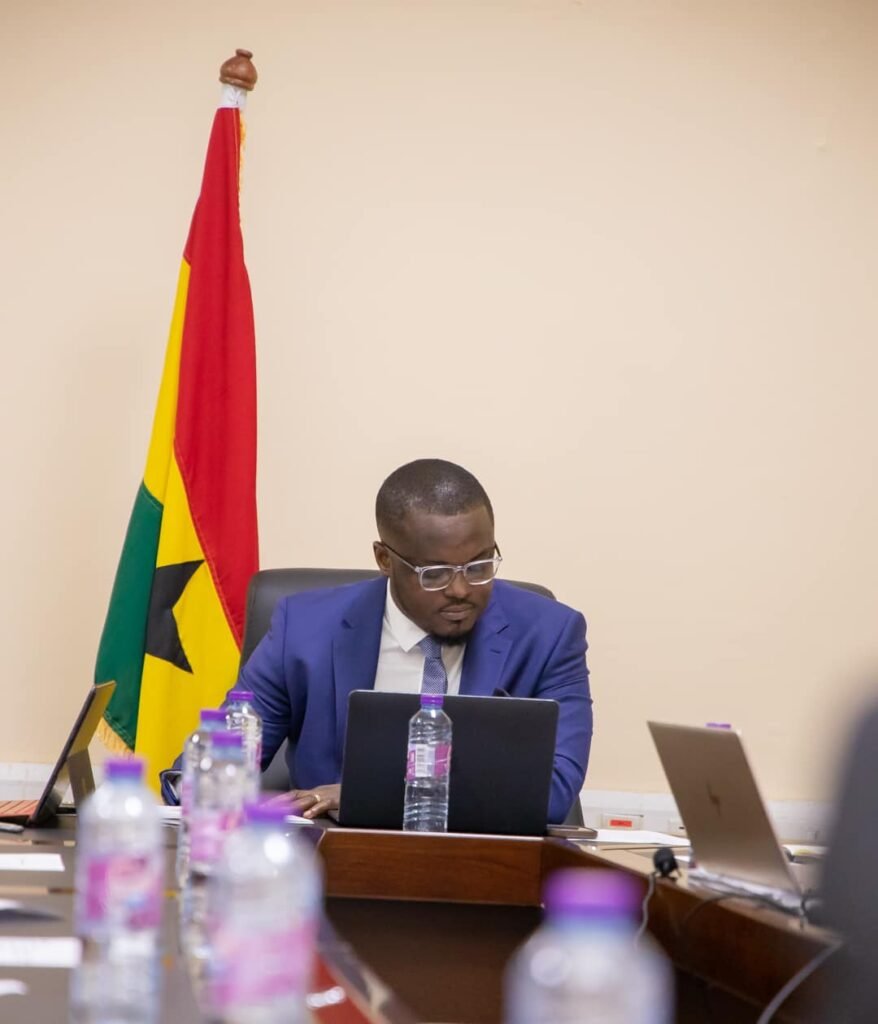
He also confirmed that a new system—capable of interfacing properly with the NIA’s biometric database—will be deployed for the upcoming registration. Addressing concerns about the integrity of existing data, he stated that while the old records still exist, “the majority lacks integrity.”
It is this deficiency, he added, that explains why only those who have already been successfully verified in the NIA system may not need to re-register, whereas those whose identities cannot be matched will be required to visit Telco offices—strictly by appointment—to complete the process.
On the question of whether a nationwide re-registration is the right approach, Yayra Koku insisted it is unavoidable. “That is the only way out. If it must be done, it must be done well,” he said.
He, however, clarified that the new exercise will not involve capturing new biometric data; rather, individuals will be verified biometrically against the NIA database to confirm authenticity. The aim, he noted, is not data recollection but proper identity validation—something the 2022 registration never achieved.
Summarizing the weakness of the previous exercise, he emphasized: “The old system didn’t biometrically verify from the NIA system. They only took a picture of your fingerprints and stored it.” For him, this single gap explains why criminals, especially those involved in mobile money fraud and SIM-based scams, continue to exploit loopholes in the system.
Commitment to Effective Collaboration
Communications Minister Hon. Samuel Nartey George welcomed the NIA’s clarity and expressed appreciation for the strengthened collaboration between the two institutions. He noted that Ghana now has a government “where the egos of the Communications Minister and the NIA Boss do not get in the way of doing what is right.”
According to him, the Ministry of Communications, Digital Technology and Innovations, working through the National Communications Authority (NCA), will partner closely with the NIA to bring “sanity to the ownership of SIM cards.”
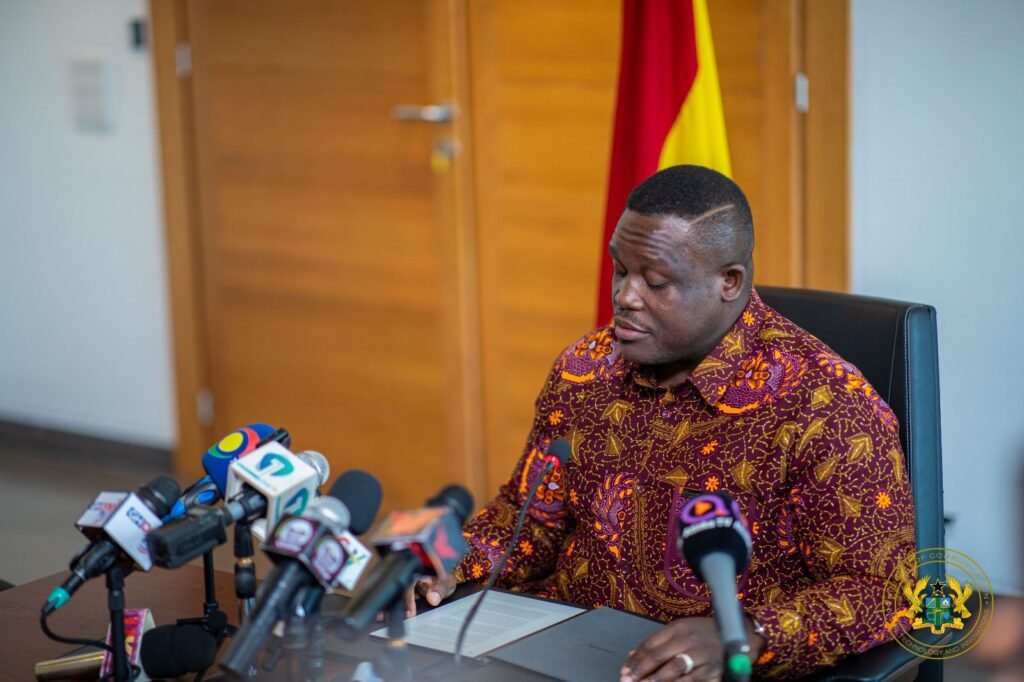
Hon. Sam George also highlighted that integrating the new SIM registration with the Central Equipment Identity Register (CEIR) will add an additional layer of security by helping track and regulate the devices associated with fraudulent activities.
He expressed gratitude to the NIA Boss, Yayra Koku, and the Minister of Interior, Hon. Muntaka Mubarak, saying their support is vital as the government builds a digital ecosystem anchored on trust, security, and proper identity management.
As the clock ticks toward the first quarter of 2026, when the new SIM registration is scheduled to begin, the NIA Executive Secretary’s position is unmistakable: the 2022 registration was incomplete, and a comprehensive, biometrically authenticated re-registration is the only path to safeguarding Ghana’s digital space from fraud and identity-related abuses.
READ ALSO: GoldBod Partners GSA for National Gold Scale Calibration