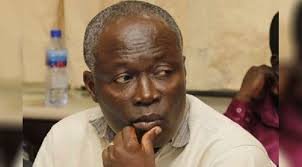
Nii Lante Vanderpuye, the National Coordinator of the District Road Improvement Programme (DRIP), has attributed the disastrous performance in the 2025 West African Senior School Certificate Examination (WASSCE) to a combination of detrimental policies undertaken by the former New Patriotic Party (NPP) administration and the growing national distraction posed by technology and social media.
Expressing little surprise at the sharp decline in results, Mr. Vanderpuye argued that the root causes are political interference that undermined academic rigor and a cultural shift that has destroyed critical study habits among the youth.
He contended that the disappointing academic outcomes are a direct consequence of “poor governmental interference in the management of education,” during the past administration. He asserted that certain decisions were taken specifically to make the Free Senior High School (SHS) policy politically appealing, even if detrimental to actual student learning.
“Education professionals whom we consulted when we were writing our manifesto think that there has been poor governmental interference in the management of education in the past. They added that the environment at the time wasn’t conducive for people to openly criticise what the government was doing with education”
Nii Lante Vanderpuye, DRIP National Coordinator

Mr. Vanderpuye specifically pointed to the promotion of past questions as a policy decision that directly compromised the quality of student preparation, arguing that allowing students to rely heavily on memorized answers, rather than mastering the foundational concepts, stripped the education system of its intellectual depth.
This approach, he claimed, focused on achieving surface-level results for political gain rather than ensuring students genuinely understood the “formulas and principles” required to tackle complex examination questions.
Social Media Crisis
Shifting his focus to the social factors, Mr. Vanderpuye stressed that the widespread adoption of technology and social media has created an enormous distraction that is fundamentally weakening the national reading culture and study discipline.


He lamented that young people’s attention has been diverted away from rigorous academic concentration by modern trends and digital platforms.

“I am not surprised by the result. As a nation, as parents and guardians, we have been taken in by modern trends and the technical innovations in our lives. Our children are not focusing enough on what will help them concentrate on their education”
Nii Lante Vanderpuye, DRIP National Coordinator
According to him, the growing obsession with digital devices and social media is making children academically “lazy,” with their attention captured more by tablets and online media than by dedicating time to their books.
He stressed that without deliberate efforts to manage technology in homes and learning environments, the performance outcomes are likely to worsen in subsequent years.
The scale of the failure underscored Mr. Vanderpuye’s concerns. The 2025 WASSCE recorded a disastrous outcome, particularly in Core Mathematics, where A1-C6 passes plummeted from 305,132 in 2024 to 209,068 in 2025 – a fall of more than 96,000 passes.

The overall pass rate stood at a disappointing 48.73%, meaning over half of all candidates failed to attain the minimum grades required for tertiary education. Further complicating the results was an alarming wave of examination malpractice: 6,295 candidates had their results cancelled entirely, with an additional 1,066 candidates remaining under investigation for unauthorized materials.
“One of the things we must look at critically is how to reconcentrate their focus on tablets and media,” Mr. Vanderpuye said, concluding that the data confirms the necessity for a national rethink on technology management and a renewed focus on technical education fundamentals, free from political interference for the future generations.
READ ALSO: Macron Presses Xi to ‘Overcome Differences’ in High-Stakes Beijing Talks