Ghana’s service sector, with its thriving performance in 2025, will receive a further boost through the Trade in Services for Development (TS4D) initiative.
This initiative aims to support Ghana in utilizing services for trade to foster growth and development. WTO and the World Bank have recognized that services, particularly the digital segment, have the potential to drive further growth and promote economic transformation.
In the 2026 Budget presented to Parliament by the Finance Minister, Dr Cassiel Ato Forson, announced that the services sector of the Ghanaian economy in 2025H1 was the fastest growing sector with digitalization being one of the main boosters.
“Mr. Speaker, the services sector remained the primary engine of growth, expanding by 8.8 percent in the first half of 2025, compared to 3.2 percent in the same period of 2024. This remarkable rebound demonstrates the renewed vitality of Ghana’s service economy, particularly in technology, finance, and education.”
Dr Cassiel Ato Forson, Minister of Finance

The Trade in Services for Development (TS4D) initiative is established by the World Trade Organization (WTO) and the World Bank to boost services growth in Ghana and other developing countries.
“Services have been the fastest-growing component of world trade over the last two decades. And the digital revolution has supercharged this trend.
“According to the WTO’s latest forecast, global commercial services trade is expected to grow by 4.6% in 2025 and 4.4% in 2026, in volume terms – far outpacing merchandise trade, which is expected to expand by only 2.4% this year and 0.5% next year.”
Ngozi Okonjo-Iweala, WTO Director-General
WTO revealed that “within this broader story, digitally delivered services stand out as the most dynamic segment, with projected growth rates of 6.1% in 2025 and 5.6% in 2026.”
The WTO and the World Bank are, therefore, emphasizing the importance of services trade for the future of trade. They aim to create a new era where developing countries will think strategically about trade, development, and cooperation. In establishing this new era, Mrs Okonjo-Iweala called for greater cooperation in future work.


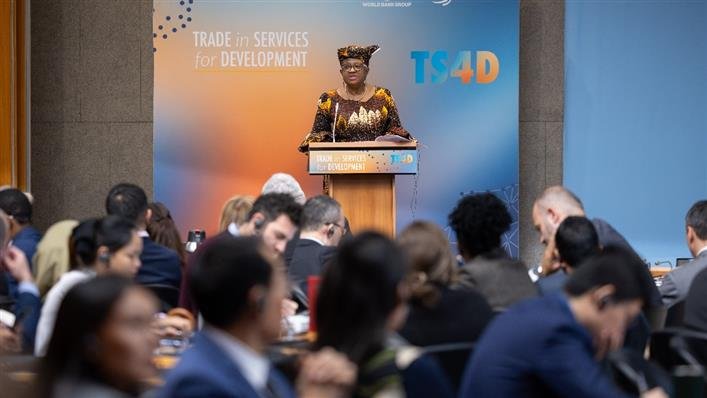
WTO’s TS4D Initiative
The initiative is a joint effort between the WTO and the World Bank with the sole purpose of building capacity programs for developing countries to grow the services sector, ensure economic growth, and promote global trade participation. The organizations use tools available to them, analysis, and policy support to assist developing countries in digital trade, export promotion, and regulatory best practices.
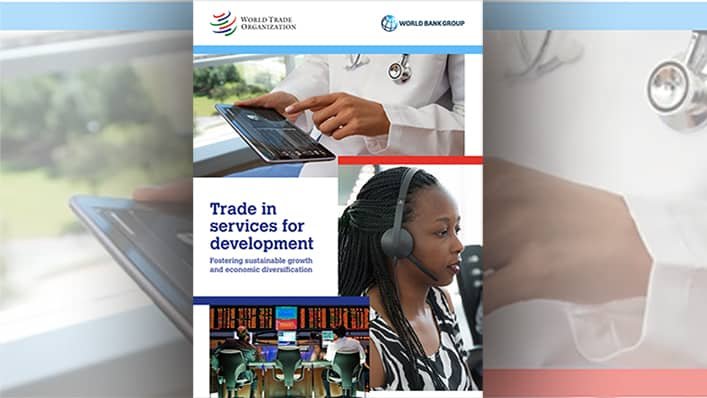
The TS4D initiative was conceived in 2023 when the WTO-World Bank co-published “Trade in Services for Development” and was launched in September 2024 to provide technical assistance, help countries identify their strength and weaknesses, and data tools to improve transparency and policy-making ability for service trade.
Specifically, it offers broader capacity building, a competitiveness dashboard, good regulatory practice to facilitate trade in services, export promotion strategies, data and analysis of service trade policies, and a digital trade focus.
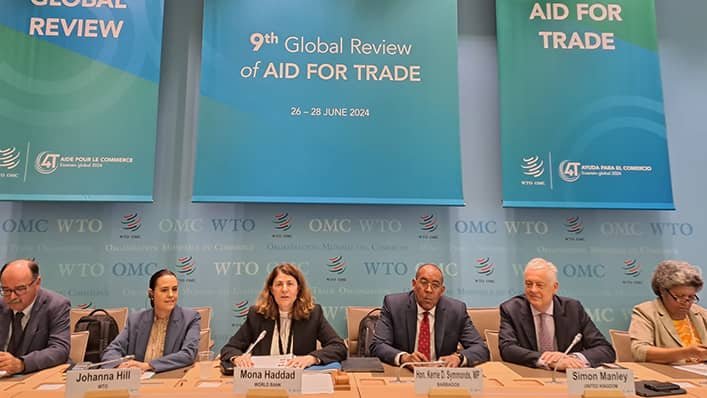
These are to unlock the growing potential of the global service market, support the WTO’s broader Aid for Trade agenda, and strengthen developing countries’ digital transformation to boost the services sector.
Challenges and Essential Strategies for Developing Countries
According to the WTO Director-General, “developing countries are increasingly seizing opportunities linked to services trade,” yet face countless trade barriers owing to multifaceted regulations, sectoral diversity, and disjointed policy responsibilities across ministries. She reiterated that “Services are now central to economic transformation in developing countries.”
Developing countries, therefore, need to incorporate service development initiatives into national development policies to ensure the right focus and commitment from governments are realized. The sector, especially the digital segment, is the new normal for growth with growing digitalization.
“That is why mainstreaming services into national development strategies is no longer optional. Services are a necessity for diversification, productivity, and resilience. The WTO also has an important role to play in providing targeted capacity building and technical assistance to help developing countries overcome challenges in leveraging services trade for growth.”
Ngozi Okonjo-Iweala, WTO Director-General
Ghana to Promote Services
Ghana has a lot to benefit from this initiative, as the performance of the service sector in 2025 confirms the need for the government to think of innovative ways to further boost sector growth. This is not to neglect the other sectors, but to promote competitiveness among them in terms of their share of GDP and economic growth, and development.
From the combined expertise of the WTO and the World Bank through TS4D, Ghana can identify regulatory and supply-side constraints and design policies to unlock the potential of services sector growth and trade.
Ghana has been a long-standing member of the WTO since 1995, benefited from the WTO’s Aid for Trade effort, and is actively engaged in the TS4D. Being a potential beneficiary of the TS4D, the government of Ghana is urged by experts to participate fully and boost the country’s service sector for economic growth to leverage trade for development in Ghana.
While the government focuses on boosting and transforming the agriculture and industry sector, the government has equally made assurances to focus equally on the service sector as digitalized service trade grows in the country and without.
READ ALSO: Cedi Wobbles, Stocks Rise: GSE Closes Week with Mixed Fortunes