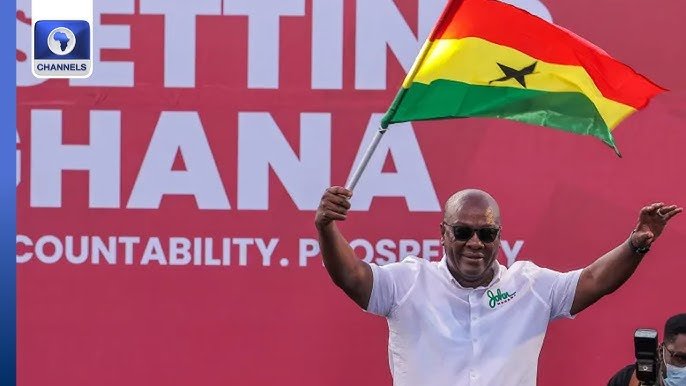
A year after the Electoral Commission declared President John Dramani Mahama the winner of Ghana’s 2024 general elections, new insights from Global InfoAnalytics’ post-election polling have shed clearer light on what propelled his emphatic return to office.
According to the Executive Director of Global InfoAnalytics, Mussa Dankwa, President Mahama’s victory was decisively shaped by floating voters and a significant tilt among politically non-aligned Ghanaians who broke overwhelmingly in his favour.
Mussa Dankwa explained that while both major parties retained strong support from their bases, the movement among swing voters proved pivotal. “Analysis of post-election polls shows that while 12% of NPP voters voted for JDM, 9% of NDC voters voted for DMB, resulting in a net advantage of +3% for JDM,” he noted.
According to him, while President Mahama secured 88% of NDC supporters, Dr. Bawumia retained 84% of NPP voters, asserting that the decisive break came from the middle: “Floating voters broke heavily for JDM, winning them by 26 points,” Dankwa said.
For Mussa Dankwa, the story was even more dramatic among voters who refused to disclose their political affiliation, as President Mahama won that group by 45 points.

Impact of Low Voter Turnout
These trends, Mussa Dankwa emphasized, were reinforced by the unusual voter turnout dynamics that shaped the 2024 race. Between former President Akufo-Addo’s 2020 tally and Dr Bawumia’s 2024 performance, 1.8 million votes disappeared.


“The drop in Nana Addo’s votes compared to Bawumia was voters who voted for Nana Addo and did not show up in the 2024 election to vote. They sat at home”.
Mussa Dankwah, Executive Director Global InfoAnalytics
He stressed that a presidential candidate’s total votes always reflect a coalition, not a party’s base alone. According to post-election surveys, of the 1.8 million absentee voters, approximately 48% were NPP supporters, 19% were NDC, 27% were floating voters, and 7% came from smaller parties.
This meant that 52% of these non-participants belonged to floating voters, NDC sympathizers, or supporters of other parties—groups that proved decisive in the overall election outcome.
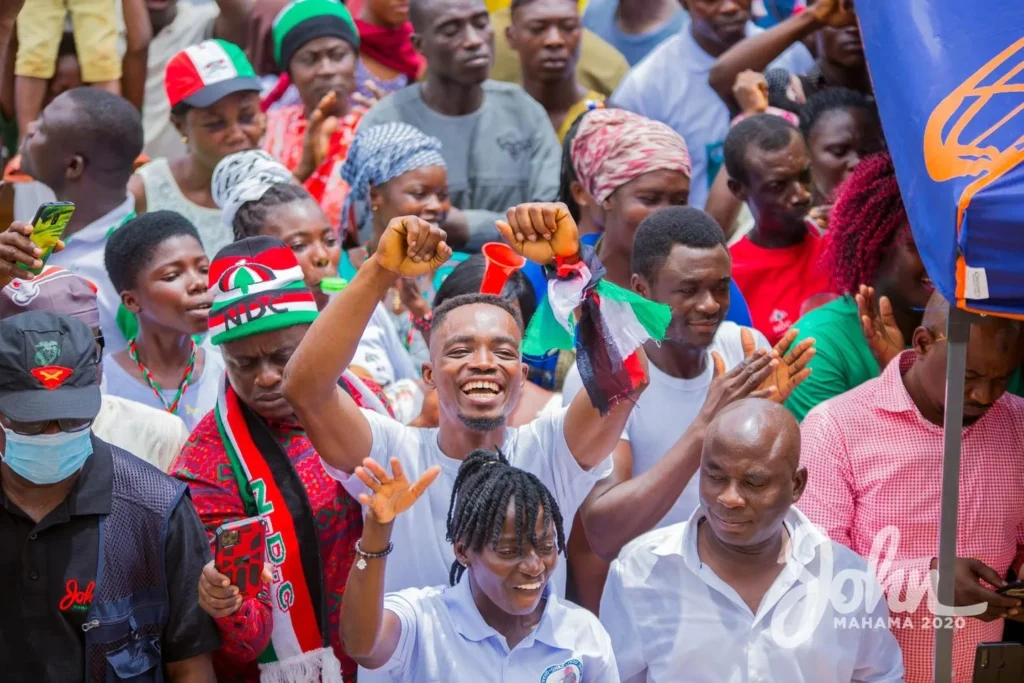
Public commentary has begun to connect these insights to the broader responsibilities of governance. Seasoned Activist and Legal Practitioner Oliver Barker-Vormawor, reflecting on the polling data, stressed that President Mahama’s mandate was largely powered by non-partisan and non-aligned Ghanaians.
“In my reading, ‘neutrals’ won you the election,” he said. He urged the government to govern with fairness and resist partisan pressure in public sector appointments.
Barker-Vormawor warned against the Ghanaian political tradition where “party people live on the principle that they and only they need to be attended to by new governments,” reminding the administration that the country belongs to all—“NPP, CPP, NDC and independents.”
His message was direct: “Treat every Ghanaian with care and respect! Let that be your lamppost. If you do, you build a legacy. If you don’t, you become like the short one who went home in disgrace.”
The 2024 election remains one of the most consequential since the start of Ghana’s Fourth Republic. Mahama’s 56.55 percent victory was not only a personal comeback—making him the first former president to return to office—but also reshaped Ghana’s political landscape.
His running mate, Professor Jane Naana Opoku-Agyemang, became the first woman elected Vice President. The National Democratic Congress secured about 185 of 276 seats in Parliament, delivering a rare two-thirds supermajority that granted the new administration unmatched legislative leverage.
Broader Voter Coalition
Dankwa’s data paints a clear picture: the Mahama coalition was broader, deeper, and more diverse than in previous cycles, with floating voters serving as its hinge. In a political environment long shaped by party loyalty and entrenched partisanship, this shift toward centrist and independent influence may signal a long-term transformation in voter behaviour.
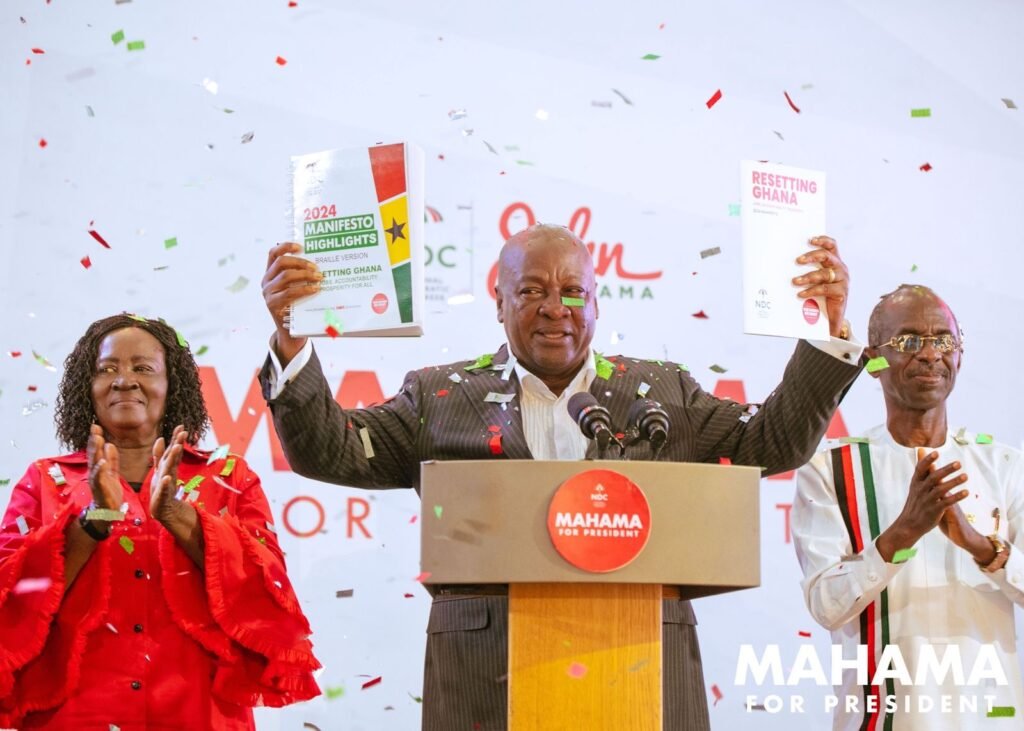
The results show that a significant portion of Ghanaians—beyond the partisan trenches—remain willing to swing elections based on performance, credibility, and national mood.
As the Mahama administration proceeds with its governance agenda, the polling insights stand as both an explanation of victory and a cautionary reminder. The coalition that delivered the presidency was not solely partisan.
It was a wide national alliance—rooted as much in disaffection, hope, and independent judgement as in party loyalty. Maintaining that coalition will depend largely on whether the new government can translate its historic mandate into inclusive governance, fairness, and the non-discriminatory public administration that many voters—especially neutrals—expect.
READ ALSO: BoG Battles Seasonality Storm as Cedi Slips Against Major Currencies