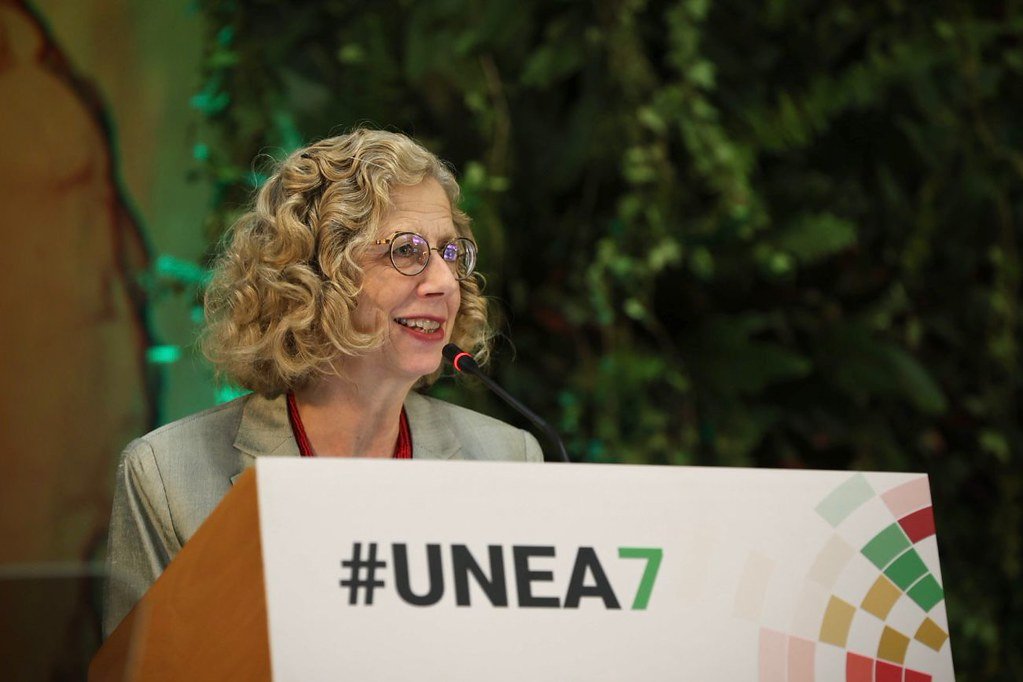
The seventh session of the United Nations Environment Assembly (UNEA-7) opened with a strong call for bold African leadership and accelerated climate finance as the continent navigates the widening gap between environmental ambitions and financial realities.
Addressing ministers, commissioners and delegates in Nairobi, Inger Andersen, Under-Secretary-General of the United Nations and Executive Director of the United Nations Environment Programme (UNEP), said Africa now stands at a defining moment in shaping global environmental action.
“I was very happy to see the G20, under South Africa’s leadership, declare clean air a global priority for the first time.
“This is to provide a real boost to tackling a deadly threat, including through the Africa Clean Air Programme.”
Inger Andersen, Under-Secretary-General of the United Nations
Her remarks come at a time when African cities face some of the world’s fastest-rising air pollution levels, with major implications for public health, urban development and agricultural productivity.
Climate Finance Still Far Below Global Need

While applauding progress made at the Africa Climate Summit, COP30 and other recent global climate meetings, Andersen stressed that climate finance remains dangerously inadequate. She reminded delegates that developing countries face rising adaptation costs that could reach up to US$365 billion per year by 2035.
“Developing countries will need adaptation finance of US$310 to US$365 billion per year by 2035, 12 times as much as current international public adaptation finance flows.”
Inger Andersen, Under-Secretary-General of the United Nations
COP30 delivered incremental progress, with commitments to mobilize at least US$1.3 trillion per year by 2035 and an agreement to triple adaptation finance.


Andersen also highlighted Brazil’s new Tropical Forests Forever Fund, which has already raised US$5.5 billion for forest conservation efforts, including in the Congo Basin, one of Africa’s most critical ecological strongholds.
African Innovation at Forefront of Climate Action
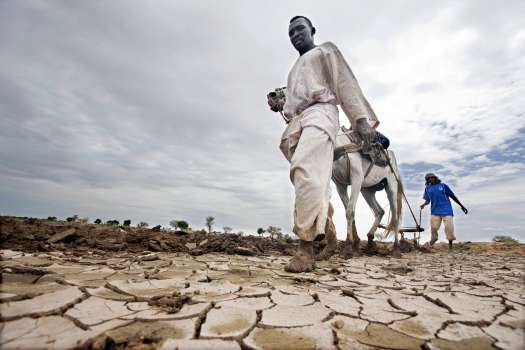
Beyond international pledges, Andersen praised Africa’s push for homegrown climate financing mechanisms.
She pointed to the Africa Climate Innovation Compact (ACIC) and the African Climate Facility (ACF), two major initiatives aimed at mobilizing US$50 billion annually to support climate technology, local innovation and resilience initiatives across the continent.
She said, “And Africa is pursuing scalable climate finance in further ways,” noting that these mechanisms demonstrate a strong commitment to innovative, locally grounded climate solutions.
With Ethiopia confirmed as the host of COP32 in 2027, a bid widely supported across the continent, Andersen believes this new era of African leadership could transform conversations around climate finance and environmental protection.
“Strong African leadership around the COP could help to boost climate finance and action in support of development.”
Inger Andersen, Under-Secretary-General of the United Nations
As African countries work to bridge their climate funding gaps, Andersen emphasized UNEP’s readiness to help Member States unlock innovation-driven financing solutions.
She outlined plans for regional climate innovation hubs designed to accelerate technologies in renewable energy, climate-smart agriculture and nature-based solutions.
Protecting Africa’s Biodiversity Requires Urgent Funding
Turning to biodiversity, Andersen underscored the continent’s global importance, noting that Africa hosts around 25 percent of the world’s biodiversity.
Yet, she warned that without dedicated financing, biodiversity loss will continue to undermine food systems, public health and economic stability.
“The commitment to establish an African Biodiversity Fund at the Africa Biodiversity Conference was another step forward.”
Inger Andersen, Under-Secretary-General of the United Nations
Andersen expressed hope that the fund would become operational quickly and reaffirmed UNEP’s readiness to help the African Union Commission design the financial architecture needed.
She also emphasized the need to integrate biodiversity financing into national budgets and economic planning. “UNEP can also provide guidance on integrating biodiversity finance into national budgets and accounting systems,” she said.
“I look forward to working with you on translating these recent commitments into accelerated progress towards Agenda 2030 and Africa’s Agenda 2063.”
Inger Andersen, Under-Secretary-General of the United Nations
Her message resonated across the assembly: Africa stands at a pivotal point, armed with new commitments, stronger leadership and bold initiatives.
The challenge now is to transform these into tangible results that advance a resilient, inclusive and nature-positive future for the continent.
READ ALSO: Fresh Hope for Economy as Ghana Signs Landmark Bilateral Debt Deal with Czech Republic