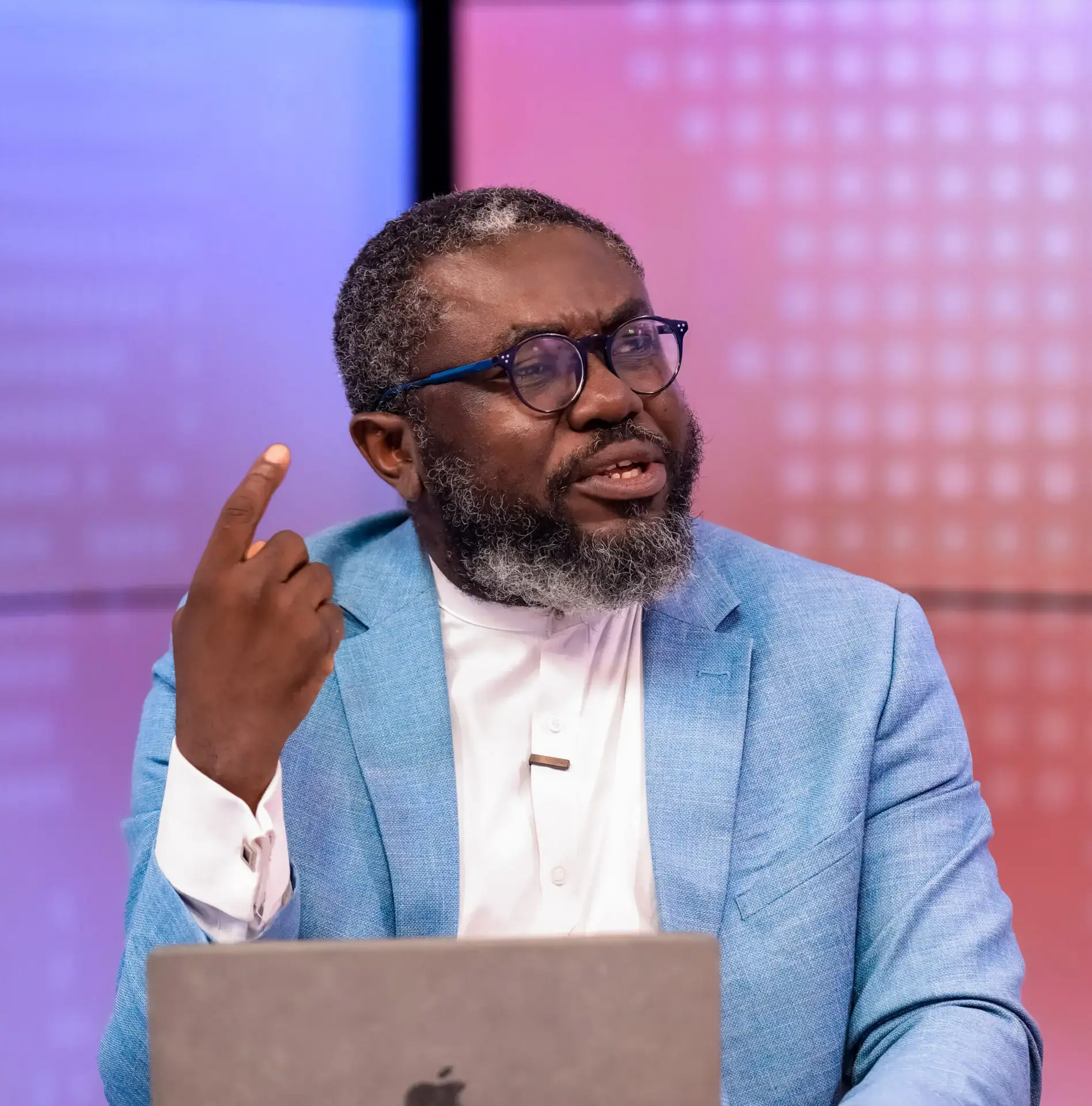
Activist and legal practitioner Osagyefo Oliver Barker-Vormawor has criticised Ghana’s extradition arrangements with the United States, describing them as one-sided, politically driven, and reflective of a deeper failure by the Ghanaian state to assert its sovereignty.
In a strongly worded public commentary, he argued that extradition is not a neutral legal process but a political tool that Ghana has consistently allowed to work against its own interests.
According to Barker-Vormawor, Ghana’s extradition laws give significant discretionary power to the executive, particularly the Minister for the Interior, to control the pace and outcome of extradition requests.
“Extraditions in Ghana are not just legal processes. They are extremely political,” he stated, explaining that the law empowers the minister to halt, delay, or suspend any extradition. In his view, this discretion provides Ghana with bargaining power that has gone largely unused.
He questioned why Ghana continues to comply readily with U.S. extradition requests while failing to secure the return of Ghanaian nationals allegedly wanted at home.
“If Ghana really wanted Ofori-Atta back, all the Minister of Interior needs to tell the US is that, bring Ofori-Atta before we send anyone else”.
Activist and legal practitioner Osagyefo Oliver Barker-Vormawor
He pointed out that Ghana has already extradited nine Ghanaian nationals to the United States within the year, mostly on fraud-related charges, yet has not received comparable cooperation in return.



A Pattern of Imbalance Cooperation
For Barker-Vormawor, this pattern highlights what he sees as an imbalance that undermines Ghana’s standing as a sovereign state. He argued that extradition should be reciprocal and negotiated, not automatic.
Beyond extraditions, Barker-Vormawor criticised Ghana’s broader posture in its dealings with the United States, noting that the country has accepted deportees from across West Africa as part of U.S. immigration enforcement efforts.
He suggested that Ghana’s willingness to comply without asserting conditions reinforces perceptions of weakness. A particularly troubling aspect of the situation, in his view, is that many of the individuals extradited from Ghana were not listed on any international wanted databases at the time.
“None of the people we sent to the US was put on any scam Interpol list,” Barker-Vormawor stated, implying that Ghana has gone beyond standard international policing cooperation. He argued that this over-compliance raises serious questions about how decisions to extradite are made and whose interests they ultimately serve.
Barker-Vormawor framed his critique as a leadership issue, insisting that Ghana’s conduct reflects a lack of confidence rather than a lack of legal authority. “We behave like we are not a nation too much,” he wrote, adding pointedly that assertiveness is a prerequisite for effective leadership.

“If you want to lead Ghana, act as leaders,” he said, urging policymakers to approach international relations with greater self-respect and strategic intent.
The 1931 Outdated Extradition Treaty
Tracing the roots of the current extradition framework, Barker-Vormawor pointed to a 1931 extradition treaty signed between the United Kingdom and the United States, at a time when Ghana was still under British colonial rule. He argued that Ghana’s continued reliance on this treaty is deeply problematic.
He contrasted Ghana’s position with that of the United Kingdom, which reassessed and terminated the same treaty decades later. “In 1971, the UK cancelled that treaty and negotiated a new one for themselves,” he said, questioning why Ghana continues to treat a colonial-era agreement as binding long after independence.
To him, this reflects a failure to critically review inherited legal frameworks that no longer serve national interests. Barker-Vormawor claimed that since Ghana’s continued application of that arrangement, more than 120 Ghanaians have been extradited to the United States, along with hundreds of other foreign nationals arrested in Ghana and handed over to American authorities.
In contrast, he asserted that the United States has never extradited an American citizen to Ghana under the same framework. “Zero Americans have been extradited to Ghana by America since 1931,” he stated.
He further claimed that no Ghanaian who has fled to the United States has ever been returned to Ghana to face justice, reinforcing his argument that the arrangement functions in only one direction.
Using a local expression to underscore his frustration, Barker-Vormawor described the situation as “Nkwasiabuo,” suggesting self-inflicted disadvantage. “Na only we dey that treaty inside,” he wrote, adding bluntly, “They don’t respect us.”

His comments have sparked renewed discussion about Ghana’s extradition policies, the balance between cooperation and sovereignty, and the need to renegotiate outdated international agreements.
While extradition is often presented as routine law enforcement cooperation, Barker-Vormawor insists it is fundamentally about power, negotiation, and national self-worth. For him, the solution lies not in rejecting international cooperation but in redefining its terms.
Ghana, he argued, must recognise its leverage, review inherited treaties, and engage global partners from a position of confidence. Until then, he warned, the country risks continuing a pattern of compliance that weakens its authority and undermines its dignity on the international stage.