The Ministry of Trade, Agribusiness, and Industry (MoTAI) has partnered with stakeholders to address the challenges identified in the agribusiness industry to promote the agricultural sector in general.
The Ministry has engaged with the Alliance for Green Revolution in Africa (AGRA) to strengthen institutional collaboration to boost policy efficiency in the sector. The Ministry also engaged with the farmers, policy actors, agribusiness owners, aggregators, processors, and development partners within the Volta and Oti regions.
These engagements are to redesign the agribusiness ecosystem through inclusive strategies to support the Ministry’s vision to expand agribusiness in Ghana. According to the Ministry, the engagements bring on board real challenges and solutions for growth.
Homogenizing Scattered Initiatives in the Industry
Speaking on behalf of the Ministry of Trade, Agribusiness, and Industry, Mr Kwame Oppong-Ntim, the Director of Agribusiness at the Ministry, the objective of the Ministry is to “harmonize previously fragmented initiatives implemented across various institutions.”
He pointed out that “successive governments have rolled out important agribusiness programs, but they were scattered. Now that our Ministry has been tasked to lead agribusiness, a national policy is needed to guide our decision.”

The national policy, which will incorporate the fragmented initiatives give a solution to the industry’s persistent challenges. The main challenges of the agribusiness industry include post-harvest losses, inadequate storage and cold storage chain systems, and inconsistent supply of raw materials, causing artificial glut and dearth.


“After harvest, we [Ghana] experience glut and months later scarcity. In between, a lot of produce gets spoiled. We want to strengthen cold storage facilities and processing units so that surplus produce can be preserved and processed.”
Mr Kwame Oppong-Ntim, Director of Agribusiness at the Ministry
IDIF to Boost Storage Capacity
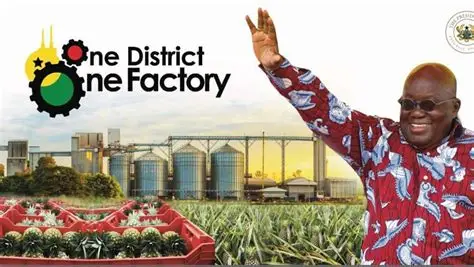
Mr Oppong-Ntim announced the government’s intention to use the 1-District-1-Factory (1D1F) Warehouses in the various regions to expand storage capacity.
The government, from the beginning, has pledged to use and complete all projects inherited to ensure continuity and value for money.
The already completed warehouses and the yet to be completed will all be serviced for farmers for storage. Though the purpose has changed, they will still serve Ghana to ensure the growth of the agriculture sector and the country.
Commodity-Ecology-Specific-Planting
According to the Director, the Policy will also emphasize “commodity specialization based on regional ecological strengths.”
“Each region has crops that perform exceptionally well. If tomatoes thrive in Agotime, we can establish tomato processing or storage facilities there. If rice performs well in the Volo or Aveyime enclave, rice mills can be sited in those areas.”
Mr Kwame Oppong-Ntim, Director of Agribusiness at the Ministry
This will ensure that the maximum yield is achieved and the factories established are constantly fed with the needed raw materials to keep running.
Protect Investment and Market linkages
The Ministry assures farmers of strengthened market linkages to effectively align the ecosystem players together for easy and faster operations. The Ministry also intends to create efficient measures for farmers to recoup investments made in their farming.
The policy would also prioritize technology through the linkage process to ensure improved efficiency. Youth participation, employment, and agro-processing expansion also form a priority.
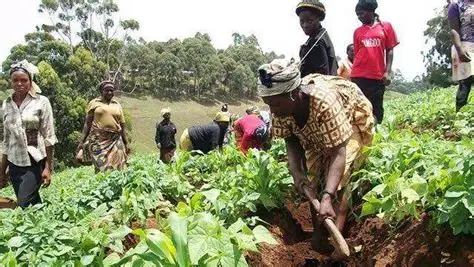
Improved road infrastructure is also key to reducing post-harvest losses for farmers. A reliable transport and road network enhances market access and processing centers.
“Imports occur largely because of shortages. Once production is stable and sufficient, we can gradually reduce imports without driving prices up.”
Mr Kwame Oppong-Ntim, Director of Agribusiness at the Ministry
AGRA has thrown its weight behind the Ministry to develop the national Agribusiness and Agro-Industry Policy to drive investment and transformation across the agriculture value chain.
“Our support is catalytic. We want to help the government develop a national policy that will guide agro-industry development, attract investment, and provide incentives.”
Dr Betty Annan, Country Director of AGRA Ghana
She stressed the need to engage with the primary stakeholders. According to him, “we cannot sit in Accra and design a policy for the entire country. we must listen to farmers, processors, traders, and industry players in every region.”